
When Hurricane season rolls around in South Florida, one question keeps homeowners up at night: will my home lose power, and for how long? Between June and November each year, residents across Palm Beach, Broward, and Miami-Dade counties face the real possibility of extended power outages that can last days or even weeks. A properly sized standby generator isn’t just a luxury—it’s essential infrastructure that protects your family’s comfort, safety, and your home’s valuable contents during these critical times.
Choosing the right generator size involves more than picking the biggest unit available. An oversized generator wastes money on both purchase and operation, while an undersized one leaves you without power when you need it most. This guide will walk you through the essential factors for selecting the perfect whole house generator for your South Florida home.
Understanding Generator Sizing Basics
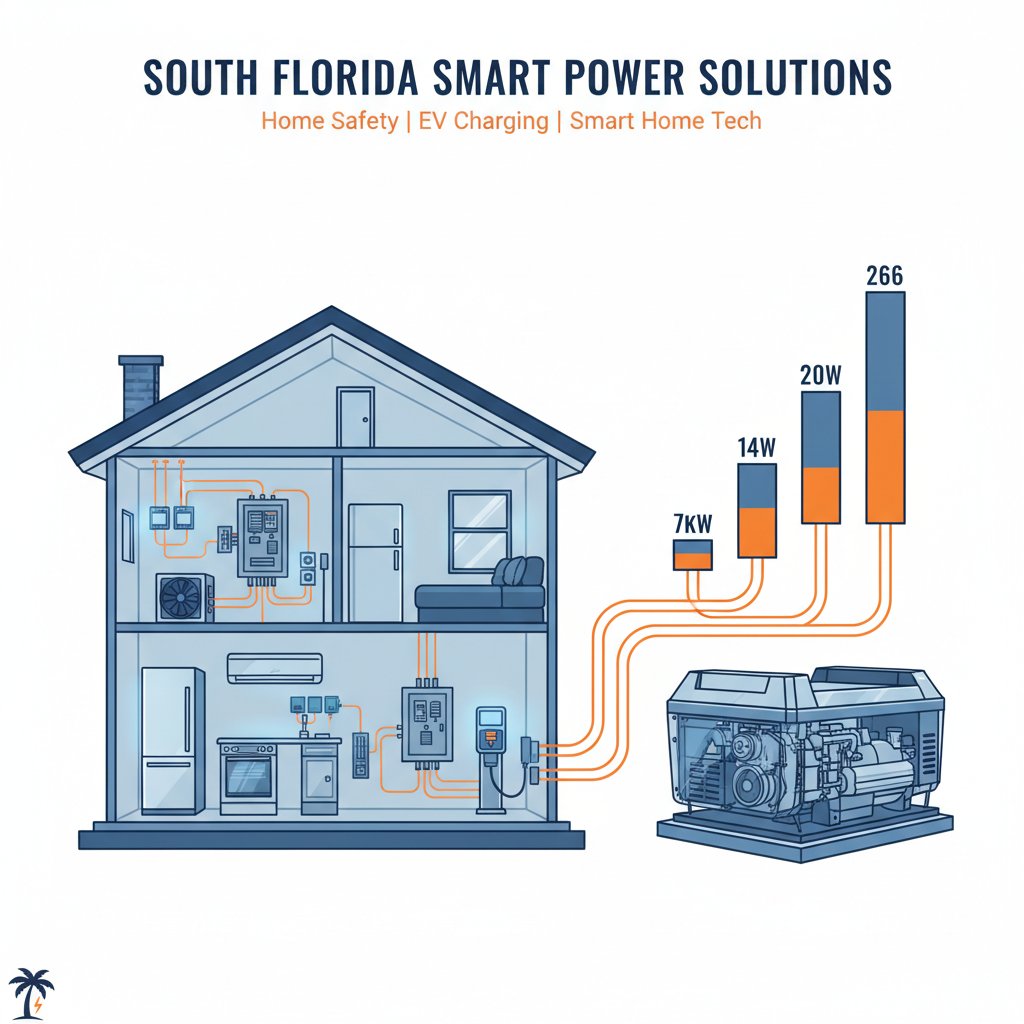
Standby generators are measured in kilowatts (kW), indicating how much electrical power they can produce. Residential units typically range from 7kW to 26kW, with some larger homes requiring even more capacity. The key is matching your generator’s output to your home’s electrical demand.
Unlike portable generators that require manual setup during emergencies, an automatic standby generator connects directly to your home’s electrical system and natural gas or propane supply. Within seconds of detecting a power outage, it automatically starts and restores electricity to your predetermined circuits or entire home.
Why Proper Sizing Matters
South Florida’s unique climate presents specific challenges. Our homes rely heavily on air conditioning—not just for comfort but for preventing mold growth in our humid environment. Refrigerators and freezers must stay running to preserve food. Medical equipment, security systems, and well pumps (in some areas) require continuous power. These aren’t optional luxuries; they’re necessities that must factor into your generator sizing calculations.
An undersized generator will struggle to start large appliances, may shut down under heavy loads, and won’t provide the coverage you’re counting on. Conversely, oversizing significantly increases your initial investment and ongoing fuel costs without providing additional benefits.
Calculating Your Home’s Power Requirements
Determining the right generator size starts with understanding your home’s electrical load. Here’s a systematic approach to calculate your needs:
Essential vs. Non-Essential Loads
First, distinguish between must-have and nice-to-have electrical loads. Essential loads typically include:
- Central air conditioning (your largest power consumer)
- Refrigerator and freezer
- Well pump (if applicable)
- Medical equipment
- Security and communication systems
- Lighting circuits
- Garage door opener
- Essential outlets for charging devices
Non-essential loads might include:
- Electric water heater (gas water heaters use minimal electricity)
- Pool pump and equipment
- Electric vehicle charging
- Multiple entertainment systems
- Workshop or hobby equipment
Understanding Starting vs. Running Watts
Appliances with motors require significantly more power to start than to run continuously. Your air conditioning system, for example, might need 7,000 watts to start but only 5,000 watts to run. This “surge” or “starting” wattage must be factored into your calculations, as your generator must handle these temporary spikes.
A qualified electrician performing a load calculation will measure both running watts (continuous power needed) and starting watts (surge capacity required) to recommend the appropriate generator size.
Generator Size Recommendations by Home Type
While every home differs, these general guidelines help narrow your options for standby generator installation:
Small Homes and Condos (Under 1,500 Square Feet)
A 10-14kW generator typically suffices for smaller residences. This capacity handles essential circuits including a smaller central AC unit, refrigerator, lighting, and critical outlets. Many condo owners in South Florida’s high-rises choose this range for their units.
Medium Homes (1,500-3,000 Square Feet)
Most homes in this category need 14-20kW generators. This range accommodates a 3-4 ton air conditioning system, all major appliances, lighting throughout the home, and several additional circuits for comfort and convenience during extended outages.
Large Homes (Over 3,000 Square Feet)
Larger residences common throughout Palm Beach County typically require 20-26kW units or larger. Homes with multiple AC zones, luxury amenities, or high-demand appliances may need even more capacity. These installations often power the entire home without requiring load management.
Homes with Special Considerations
Several factors increase power requirements beyond typical calculations:
- Electric vehicle charging: Level 2 EV chargers draw 7-19kW alone, significantly impacting generator sizing
- Home offices: Multiple computers, monitors, and networking equipment add to base loads
- Medical equipment: Oxygen concentrators, CPAP machines, and other devices require reliable power
- Electric cooking: Ranges and ovens draw substantial power if you prefer cooking during outages
- Pool systems: Pumps, heaters, and automated cleaning systems increase demands
South Florida-Specific Considerations
Our subtropical climate and hurricane exposure create unique requirements for backup generator installation that differ from homes in other regions.
Air Conditioning is Non-Negotiable
In northern states, homeowners might tolerate a few days without AC. In South Florida’s heat and humidity, losing climate control quickly becomes dangerous, especially for children, elderly residents, and those with health conditions. Indoor temperatures can exceed 90°F within hours, and humidity creates perfect conditions for mold growth that can permanently damage your home.
Your generator must have sufficient capacity to start and run your air conditioning system—your single largest electrical load. A 3-ton AC unit typically requires 5,000-6,000 running watts and 7,000-8,000 starting watts.
Hurricane Season Duration
Unlike brief winter storms elsewhere, hurricane-related outages in South Florida can last one to three weeks in severely affected areas. Your Generac generator installation must provide reliable, long-term operation, making fuel efficiency and capacity important factors beyond just meeting peak loads.
Flood Considerations
Generator placement matters critically in flood-prone areas. Units must be elevated on appropriate platforms and located away from potential flooding zones while meeting local setback requirements and noise ordinances that vary by municipality across Broward and Miami-Dade counties.
Professional Load Calculation: The Critical First Step
While online calculators provide rough estimates, professional load calculation by a licensed electrician ensures accuracy and compliance with local codes. This assessment includes:
- Reviewing your electrical panel and current capacity
- Measuring actual power draws from major appliances
- Calculating starting surge requirements
- Identifying potential electrical system upgrades needed
- Recommending transfer switch options
- Ensuring compliance with Florida Building Code requirements
This professional assessment protects your investment and ensures your home backup power system performs exactly as expected when storms threaten.
Transfer Switch Options
The transfer switch connects your generator to your home’s electrical system. Two main types serve different needs:
Automatic Transfer Switch
This sophisticated device monitors utility power continuously. When it detects an outage, it signals your generator to start and seamlessly transfers your home’s electrical load. When utility power returns, it transfers back and shuts down the generator. This automation provides protection even when you’re away from home.
Manual Transfer Switch
Less common for standby installations but occasionally used for smaller systems, manual switches require you to physically switch between utility and generator power. While less expensive, they eliminate the “automatic” advantage that makes standby generators so valuable.
Installation and Warranty Considerations
Quality installation matters as much as equipment selection. Proper standby generator installation requires:
- Licensed electrical contractor with generator expertise
- Permits and inspections per local requirements
- Proper concrete pad with adequate drainage
- Correct fuel line sizing and connection
- Appropriate transfer switch integration
- Testing and commissioning
At Global Power & AC Corp, we back our generator installations with an 8-year warranty, providing peace of mind that extends well beyond standard manufacturer coverage. Our same-day service availability means we’re ready when you need assessment, installation, or maintenance across all of South Florida.
Fuel Type Considerations
Most residential standby generators in South Florida operate on natural gas or liquid propane. Natural gas provides unlimited runtime through your utility connection but isn’t available in all areas. Propane requires tank installation and monitoring but offers complete independence from utility services. Your location and preferences will guide this choice, with both options providing reliable operation for properly sized units.
Making Your Final Decision
Selecting the right generator size balances several factors: your essential power needs, budget, fuel availability, and long-term plans for your home. Consider future changes like adding electric vehicle charging, pool equipment, or home additions that might increase electrical demands.
Working with experienced professionals ensures you neither overspend on unnecessary capacity nor compromise on essential coverage. The investment in proper sizing pays dividends in reliability, efficiency, and peace of mind for decades to come.
Ready to Protect Your South Florida Home?
Don’t wait until the next hurricane warning to think about backup power. Global Power & AC Corp’s experienced team provides comprehensive generator consultations, professional load calculations, expert installation, and ongoing maintenance throughout Palm Beach, Broward, and Miami-Dade counties. Our commitment to quality craftsmanship and customer care means your automatic standby generator will perform flawlessly when you need it most.
Contact us today for a free consultation and load assessment. We’ll help you choose the perfect generator size for your home’s specific needs, ensuring your family stays safe, comfortable, and connected no matter what storms come your way.
Frequently Asked Questions
How long does standby generator installation take?
Most residential standby generator installations take 1-3 days depending on site conditions, required electrical upgrades, and permit processing. Our team coordinates all aspects including permitting, utility coordination, and final inspections to streamline the process.
Can I run my entire house on a generator?
Yes, with proper sizing. A whole house generator in the 20-26kW range can power most modern South Florida homes completely, including air conditioning, all appliances, and electrical systems. Smaller generators power essential circuits through load management strategies.
How much does a whole house generator cost to operate?
Operating costs depend on fuel type, generator size, and electrical load. Natural gas generators typically cost $20-40 per day of continuous operation. Propane costs slightly more. Proper sizing improves efficiency and reduces fuel consumption.
Do I need permits for generator installation in South Florida?
Yes, all standby generator installations require electrical and building permits throughout Palm Beach, Broward, and Miami-Dade counties. Licensed contractors handle permit applications and coordinate required inspections as part of professional installation services.
How often should I service my standby generator?
Manufacturers recommend annual maintenance at minimum. In South Florida’s demanding climate, many homeowners schedule service twice yearly—before and after hurricane season. Regular maintenance ensures reliable operation and extends equipment life.
Will my generator work during flooding?
Properly installed generators on elevated platforms can continue operating during minor flooding, but submersion will damage any generator. Installation location and elevation are critical factors that licensed electricians address during site planning to protect your investment.