
Tesla ownership in South Florida has surged 340% since 2023, transforming the electric vehicle from luxury novelty to daily driver across Palm Beach, Broward, and Miami-Dade counties. With this shift comes a critical question: how do you efficiently charge your Tesla at home? The answer lies in professional Tesla Wall Connector installation, a Level 2 charging solution that transforms your garage into a personal refueling station.
Unlike the standard mobile connector that comes with your Tesla, the Wall Connector delivers faster charging speeds, weather-resistant durability, and seamless integration with your home’s electrical system. However, proper installation requires more than just mounting a device on your wall—it demands careful consideration of South Florida’s unique electrical requirements, hurricane-preparedness standards, and local building codes.
Understanding the Tesla Wall Connector
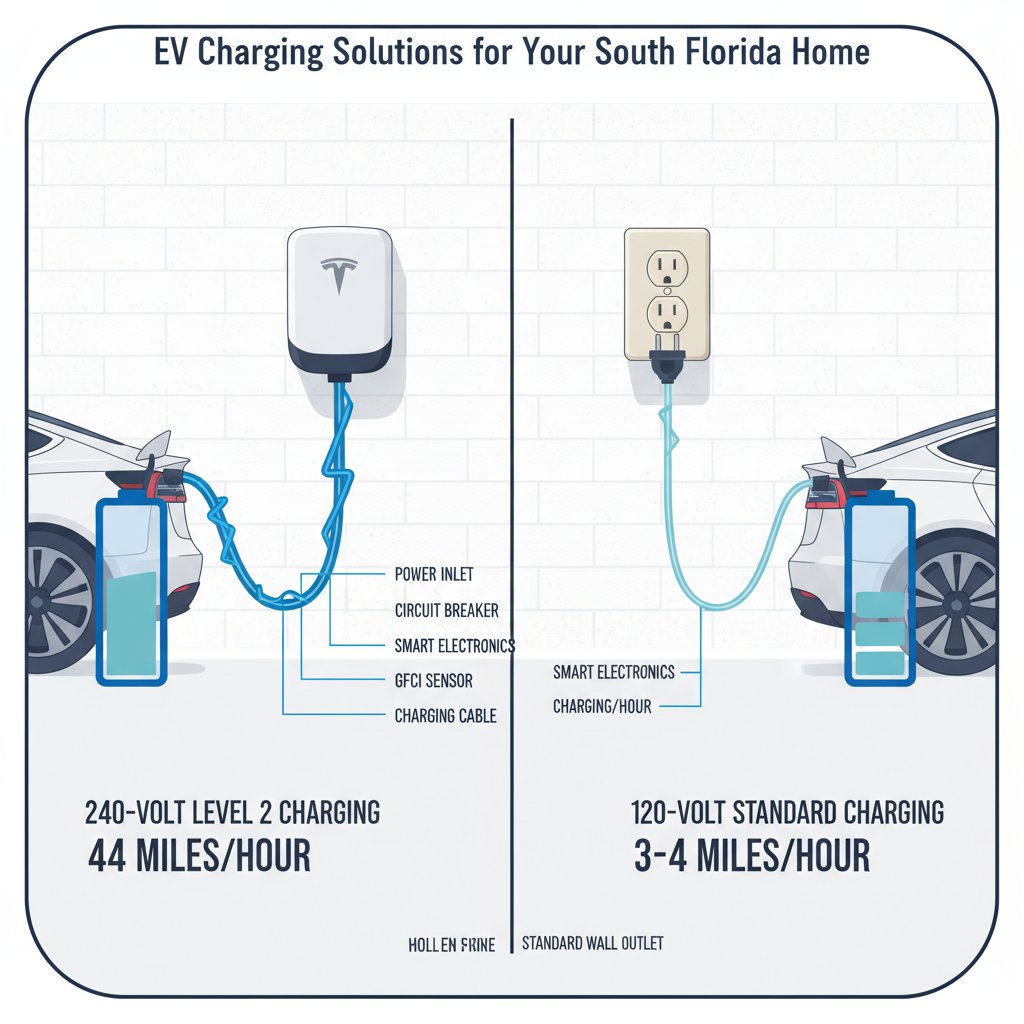
The Tesla Wall Connector represents the gold standard in home EV charging stations. This Level 2 charger operates on a 240-volt circuit, delivering up to 44 miles of range per hour of charging—significantly faster than the 3-4 miles per hour you’d get from a standard 120-volt outlet.
The 2026 model features enhanced connectivity options, allowing you to monitor charging sessions through the Tesla app, schedule charging during off-peak electricity rates, and receive notifications when charging completes. The sleek, compact design integrates seamlessly with modern home aesthetics while providing the robust performance needed for daily EV use.
For South Florida homeowners, the Wall Connector’s weather-resistant NEMA 3R rating offers protection against our tropical climate—withstanding humidity, rain, and salt air that can degrade lesser charging equipment over time.
Electrical Requirements for Tesla Charger Installation
Before installing a Tesla Wall Connector, your home’s electrical infrastructure must meet specific requirements. The charger typically requires a dedicated 60-amp circuit, though it can be configured for circuits ranging from 15 to 60 amps depending on your electrical panel’s capacity and your charging needs.
Assessing Your Electrical Panel
Most South Florida homes built before 2010 feature 100-amp or 150-amp electrical panels. While adequate for traditional household needs, adding a high-draw appliance like an EV charger often necessitates an electrical panel upgrade to 200 amps or more. This upgrade ensures your home can safely handle the increased electrical load without tripping breakers or creating fire hazards.
An experienced ev charger electrician will evaluate several factors:
- Current electrical panel capacity and available breaker spaces
- Distance from the panel to the proposed charging location
- Existing electrical load from air conditioning, pool equipment, and other high-draw appliances
- Condition of your main service line and meter base
- Compliance with current South Florida electrical codes
Circuit and Wiring Specifications
The Tesla Wall Connector installation requires dedicated wiring from your electrical panel to the charging location. Most installations use 6-gauge copper wire for a 60-amp circuit, though wire gauge requirements vary based on circuit amperage and run distance.
In South Florida, installations must comply with the National Electrical Code (NEC) as well as local amendments adopted by Palm Beach, Broward, and Miami-Dade counties. These codes mandate specific installation practices including proper wire sizing, conduit protection, GFCI protection for outdoor installations, and appropriate grounding methods.
The Installation Process
Professional tesla wall connector installation follows a systematic approach that ensures safety, code compliance, and optimal performance. Understanding this process helps homeowners prepare appropriately and set realistic expectations.
Step 1: Site Assessment and Permitting
A qualified electrician begins with a comprehensive site assessment, examining your electrical panel, proposed charger location, and the most efficient routing for new wiring. This assessment identifies potential challenges such as distance limitations, structural obstacles, or panel capacity issues.
Following the assessment, the electrician obtains necessary permits from your local building department. Permit requirements vary by municipality, but most South Florida jurisdictions require permits for Level 2 home ev charging station installations. Attempting unpermitted electrical work can result in fines, insurance complications, and safety hazards.
Step 2: Electrical Panel Work
If your panel has sufficient capacity and available breaker spaces, the electrician installs a new dedicated breaker for the charging circuit. However, if an electrical panel upgrade is necessary, this substantially increases project scope, timeline, and investment.
Panel upgrades typically involve coordinating with your utility provider to temporarily disconnect power, replacing the existing panel with a higher-capacity model, redistributing existing circuits, and updating the main service connection if needed. While more extensive, panel upgrades future-proof your home for additional electrical needs and often increase property value.
Step 3: Running the Circuit
The electrician runs appropriate wiring from the panel to your charging location, typically through attic spaces, crawl spaces, or along exterior walls using weatherproof conduit. South Florida’s strict wind-load requirements mandate secure mounting methods that can withstand hurricane-force winds.
For garage installations, wiring often runs through interior walls. For outdoor or carport installations, the electrician uses rigid metal or PVC conduit to protect wiring from physical damage and weather exposure.
Step 4: Mounting and Connection
The Wall Connector mounts to a sturdy backing surface—typically a concrete wall, wood stud, or specially installed mounting board. The electrician positions the charger at an optimal height (usually 48 inches from the ground to the center of the unit) and ensures the cable reaches comfortably to your vehicle’s charge port.
After mounting, the electrician makes final electrical connections, configures the charger’s amperage settings via internal DIP switches, and secures all connections according to manufacturer specifications.
Step 5: Inspection and Testing
Once installation is complete, your local building department conducts an electrical inspection to verify code compliance. The inspector examines panel work, wiring methods, grounding, and overall installation quality. After passing inspection, the electrician performs comprehensive testing to ensure proper operation, correct amperage delivery, and safety system functionality.
Cost Considerations for Tesla Charger Installation
The ev charger installation cost varies significantly based on several factors. Understanding these variables helps homeowners budget appropriately and avoid surprise expenses.
A straightforward installation with an existing 200-amp panel, available breaker space, and a short run from the panel to the charging location typically ranges from $1,200 to $2,000 for labor and materials, not including the Wall Connector unit itself (approximately $475 from Tesla).
However, installations requiring an electrical panel upgrade see substantially higher costs. Panel upgrades typically add $2,500 to $5,000 depending on panel size, complexity, and whether the main service line requires upgrading. Additional factors affecting cost include:
- Distance from panel to charger location (longer runs require more wire and labor)
- Installation complexity (exterior installations, difficult routing, concrete drilling)
- Required trenching for detached garages or outdoor parking areas
- Hurricane-resistant mounting hardware and conduit systems
- Additional subpanels if distance from main panel exceeds practical limits
Many South Florida utility companies offer rebates for Level 2 home EV charger installations. Florida Power & Light’s EVolve program, for example, has provided installation incentives for qualified customers. Additionally, federal tax credits may apply to EV charging equipment installation—consult a tax professional for current incentive eligibility.
Why Professional Installation Matters
The appeal of DIY installation may tempt electrically-inclined homeowners, but tesla charger installation demands professional expertise for several compelling reasons.
Licensed electricians carry appropriate insurance, understand nuanced code requirements, and possess specialized knowledge about high-amperage circuits. Improper installation can result in electrical fires, damage to your vehicle’s charging system, voided warranties, failed inspections, and potential liability issues.
In South Florida’s challenging climate, professional installation becomes even more critical. Electricians familiar with local conditions understand proper weatherproofing techniques, corrosion-resistant connection methods, and hurricane-preparedness standards that protect your investment during severe weather.
Working with a company that offers comprehensive warranties—like Global Power & AC Corp’s 8-year warranty—provides additional peace of mind. This coverage protects against installation defects and ensures long-term support if issues arise.
Maintaining Your Home EV Charging Station
Once installed, the Tesla Wall Connector requires minimal maintenance but benefits from periodic attention. Inspect the charging cable monthly for signs of wear, damage, or weathering. Check mounting hardware quarterly to ensure secure attachment, particularly after hurricane season.
Keep the charger’s exterior clean, wiping away salt residue, dirt, and debris that accumulate in our coastal environment. Monitor charging performance through the Tesla app—sudden changes in charging speed may indicate electrical issues requiring professional attention.
During hurricane preparation, consider unplugging the Wall Connector and securing the cable to prevent wind damage. While the unit itself is weather-resistant, protecting the cable from violent winds extends its lifespan.
Frequently Asked Questions
How long does Tesla Wall Connector installation take?
Most installations complete in 4-6 hours when no panel upgrade is required. If an electrical panel upgrade is necessary, expect 1-2 full days of work, plus additional time for utility coordination and inspections.
Can I install a Tesla Wall Connector in a condo or townhome?
Yes, but you’ll need HOA approval and must work with the association’s preferred contractors in some cases. Many South Florida HOAs have established EV charging policies addressing installation standards, aesthetic requirements, and electrical infrastructure considerations.
Will a Tesla Wall Connector work with other EV brands?
The Tesla Wall Connector uses a proprietary connector designed for Tesla vehicles. However, other EV owners can use it with appropriate adapters. Alternatively, consider a universal Level 2 charger if you own or plan to own non-Tesla EVs.
Do I need a permit for EV charger installation in South Florida?
Yes, most South Florida municipalities require electrical permits for Level 2 EV charger installations. Permits ensure code-compliant installation and are necessary for passing inspection and maintaining insurance coverage.
How does South Florida weather affect my charging equipment?
High humidity, salt air, and intense UV exposure can degrade improperly installed equipment. Professional installation using weather-resistant materials, proper sealing, and corrosion-resistant connections ensures long-term reliability in our tropical climate.
Ready to Install Your Tesla Wall Connector?
Transitioning to electric vehicle ownership represents a significant investment in sustainability and technology. Complementing that investment with professional tesla wall connector installation ensures safe, reliable, and efficient charging for years to come.
Global Power & AC Corp specializes in Level 2 EV charger installations throughout Palm Beach, Broward, and Miami-Dade counties. Our licensed electricians understand South Florida electrical codes, climate challenges, and the specific requirements of Tesla charging systems. We provide same-day service availability, comprehensive electrical assessments, transparent pricing, and an industry-leading 8-year warranty on all installation work.
Whether you need a straightforward charger installation or a complete electrical panel upgrade, our team delivers the quality craftsmanship and customer care South Florida homeowners trust. Contact Global Power & AC Corp today to schedule your consultation and take the next step toward convenient, efficient home EV charging.