
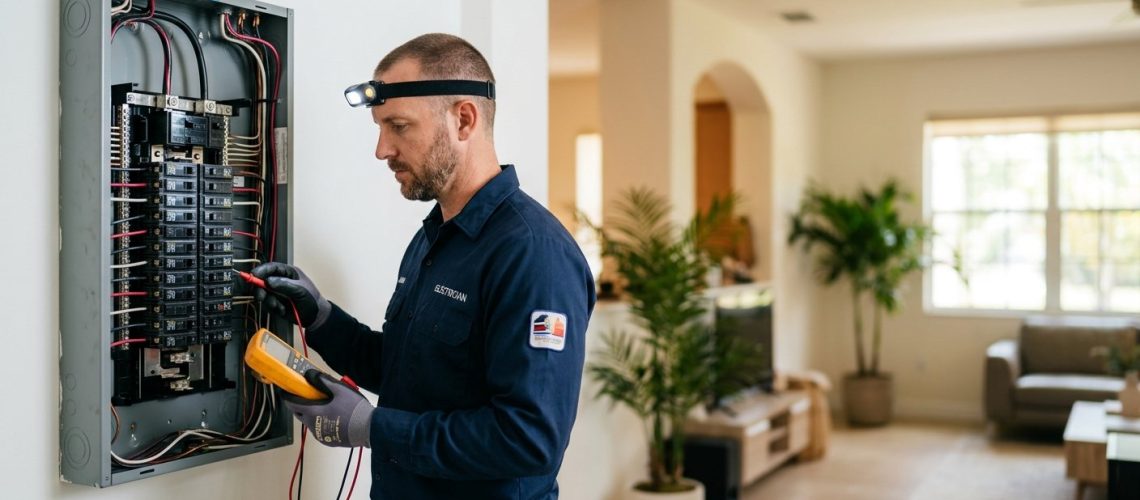
Whole-house rewiring is necessary when a home’s electrical wiring is outdated, damaged, or unable to safely meet modern power demands. Common signs include frequently tripping breakers, flickering lights, burning smells, discolored outlets, or wiring that’s more than 40 years old. South Florida homeowners — especially those in older Palm Beach, Broward, or Miami-Dade properties — should treat these warning signs as urgent safety concerns, not minor inconveniences.
- Aging wiring materials like aluminum or knob-and-tube pose serious fire and shock hazards in older homes.
- Flickering lights, tripping breakers, and burning odors are not normal — they signal potential wiring failure.
- South Florida’s humidity and hurricane conditions accelerate wiring deterioration over time.
- Whole-house rewiring is typically required to support modern demands like EV chargers, smart home systems, and updated panels.
- Only a licensed electrical contractor should assess and perform electrical wiring replacement in your home.
Why Electrical Wiring Doesn’t Last Forever
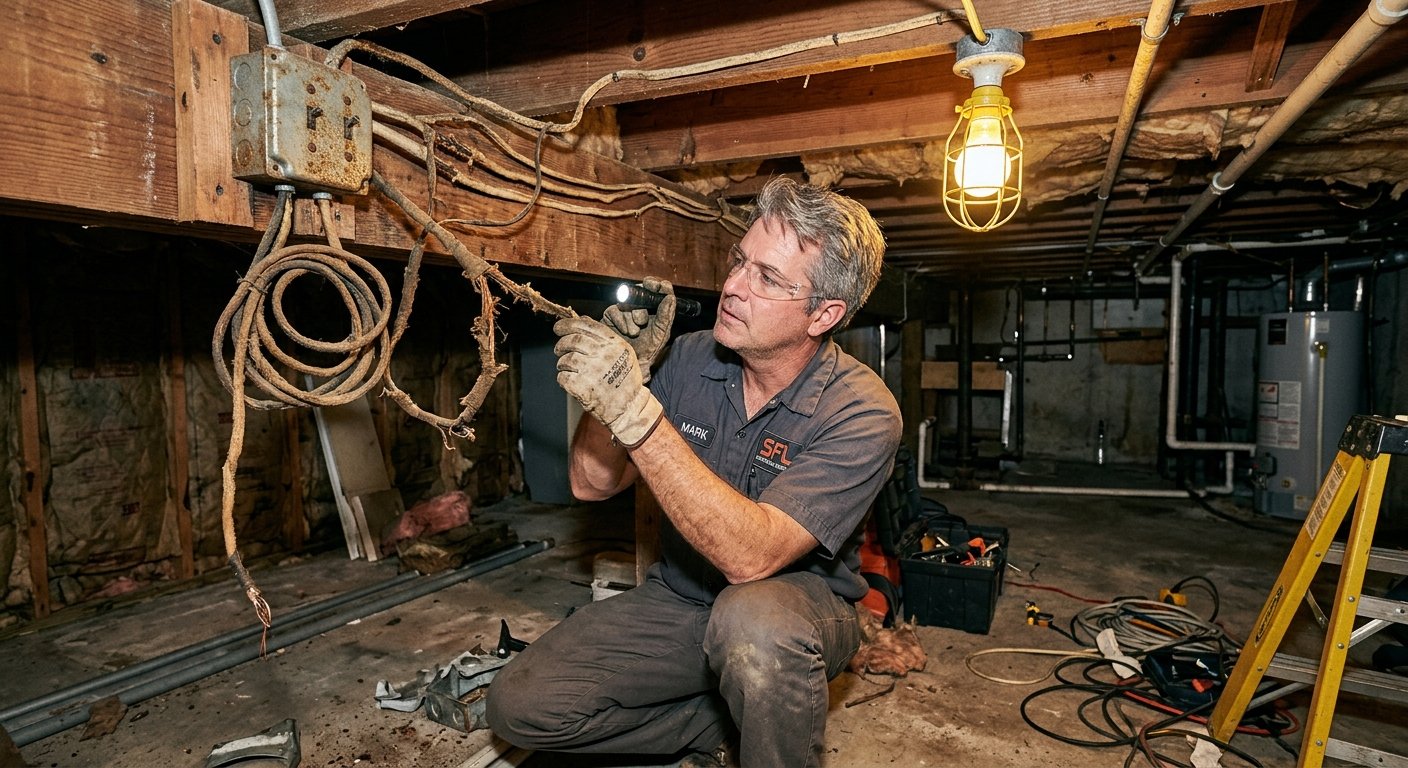
Every home’s electrical system has a lifespan. The wiring inside your walls quietly carries power day after day, but over decades it degrades. Insulation cracks, connections loosen, and materials that once met code become dangerously obsolete. The Electrical Safety Foundation International (ESFI) consistently identifies home electrical failures as a leading cause of residential fires in the United States — and outdated wiring is one of the top contributing factors.
In South Florida, the challenge is compounded. The combination of relentless humidity, salt air near the coast, and the stress that storm season places on electrical infrastructure means wiring here deteriorates faster than in drier climates. Homes built before 1990 in West Palm Beach, Fort Lauderdale, or Miami-Dade County are particularly worth examining — especially if no major electrical work has been done since construction.
Warning Signs That Point to Rewiring
Some warning signs are subtle. Others are hard to ignore. Knowing what to look for can be the difference between a planned upgrade and an emergency call at 2 a.m.
Frequently Tripping Circuit Breakers
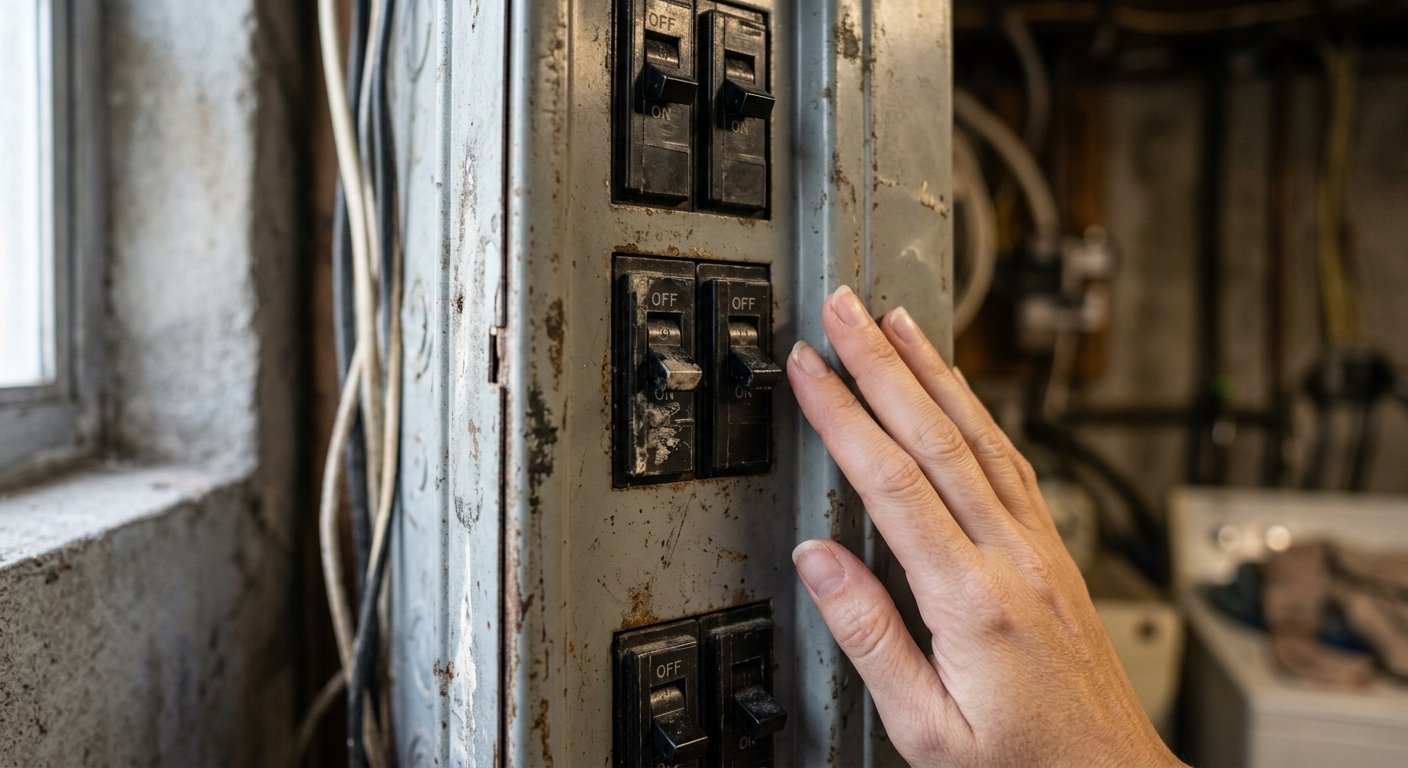
An occasional tripped breaker is normal. Breakers that trip repeatedly — especially on circuits that don’t seem overloaded — suggest the wiring itself is the problem. This can indicate deteriorated insulation, loose connections, or an electrical panel that simply can’t handle your home’s current demands. If your breaker panel is also outdated, you may need both an electrical panel upgrade alongside rewiring.
Flickering or Dimming Lights
Lights that flicker when you run an appliance are telling you something. This typically points to inadequate wiring capacity or faulty connections. In an older home, it often means the wiring can’t handle the electrical load modern households place on it — and that’s a wiring problem, not a lighting one.
Burning Smell or Discolored Outlets
Scorch marks, discoloration around outlet covers, or a faint burning odor anywhere in your home are serious red flags. These signs indicate arcing — where electricity is jumping across a gap in a damaged wire or connection. This is a fire hazard that requires immediate attention from a licensed professional.
If you notice a burning smell coming from your walls, outlets, or electrical panel, do not wait. Turn off power to the affected area if it’s safe to do so, and call a licensed electrical contractor right away. This is not a “monitor it” situation.
Outlets That Are Ungrounded or Two-Pronged
Two-pronged outlets throughout your home are a clear indicator of aging wiring — likely from an era before grounding was standard. Ungrounded circuits create shock and fire risks, and they’re incompatible with modern electronics. Replacing two-pronged outlets without rewiring the circuit is only a partial fix.
Aluminum or Knob-and-Tube Wiring
Homes built before the 1970s may contain knob-and-tube wiring, which lacks a ground wire and has insulation that deteriorates significantly with age. Some mid-century homes also used aluminum branch-circuit wiring, which expands and contracts with temperature changes and is associated with a higher fire risk than copper. The U.S. Consumer Product Safety Commission has documented the elevated hazard associated with aluminum wiring in homes. If your home has either type, a full home electrical wiring inspection is overdue.
Knob-and-tube wiring was never designed to be covered with insulation — a common modification in older Florida homes. Adding blown-in insulation over this type of wiring can create dangerous heat buildup and dramatically increase fire risk.
When a Rewire Becomes the Right Move
Not every electrical issue requires rewiring the entire home. But certain situations make it the most practical and safe path forward.
Schedule a Professional Inspection
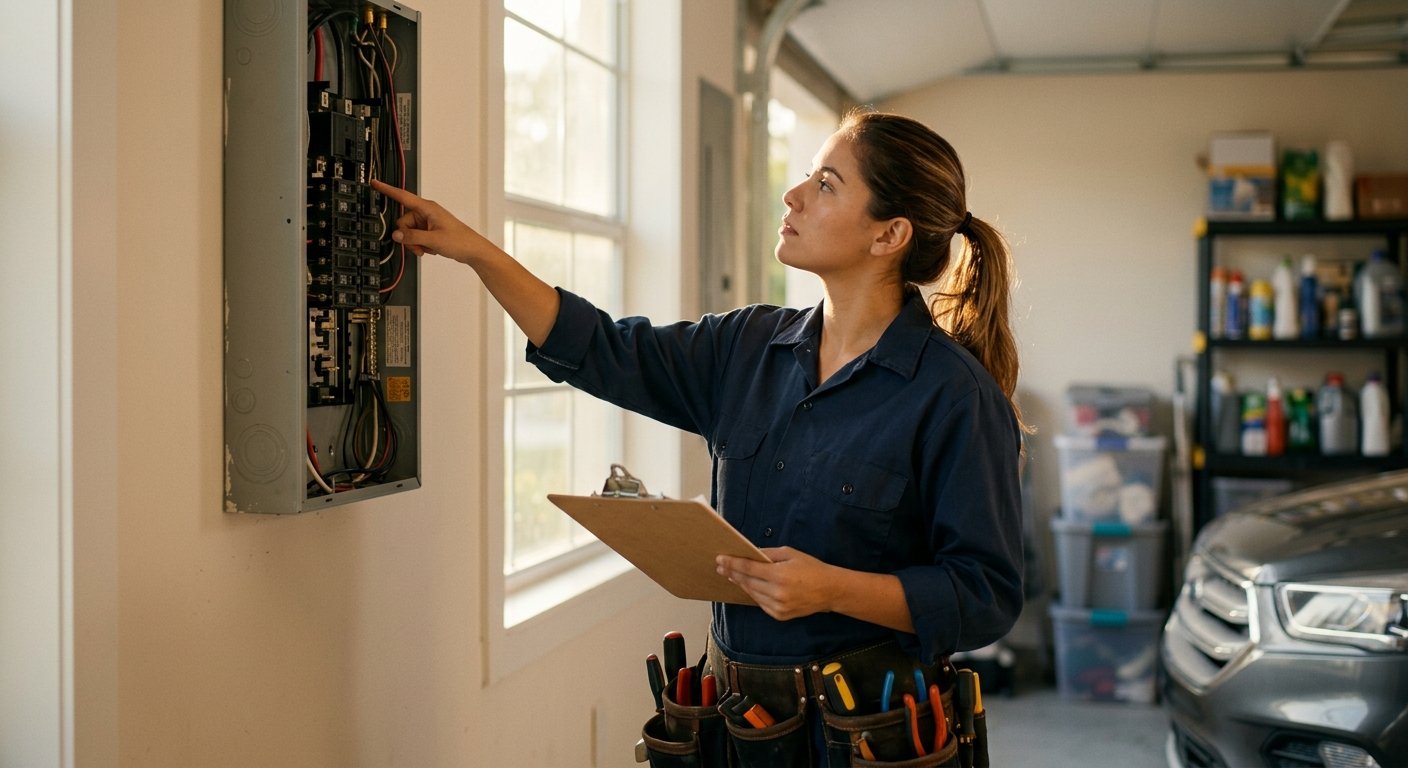
A licensed electrician performs a full assessment of your wiring, panel, outlets, and load capacity. This gives you a clear picture of what needs attention and whether a full electrical wiring replacement is warranted.
Review the Scope and Permit Requirements
Whole-house rewiring in Florida requires permits and must comply with the National Electrical Code as adopted by state and local authorities. Your contractor handles this — never skip the permit process.
Plan for Modern Upgrades Simultaneously
With walls open, it makes sense to add circuits for an EV charger, upgrade to a smart panel, or prepare for smart home integration. This is the most cost-effective window to future-proof your electrical system.
Inspection and Sign-Off
After installation, a municipal inspection confirms the work meets code. A reputable contractor stands behind the work — at Global Power & AC Corp, all workmanship is backed by an 8-year warranty.
Rewiring and South Florida’s Unique Electrical Demands
Homeowners across Palm Beach, Broward, and Miami-Dade counties live with conditions that place above-average stress on electrical systems. High humidity promotes corrosion in connections and junction boxes. Frequent thunderstorms and the ever-present threat of hurricanes mean power surges are a regular reality, not a rare event.
Beyond storm preparedness, the shift toward energy-intensive lifestyles is real. More households are adding EV charger installations, integrating smart home electrical systems, and running multiple high-draw appliances simultaneously. Older wiring simply wasn’t designed for this load. A home rewire doesn’t just fix existing hazards — it positions your home to handle the demands of the next 30 to 40 years.
Older wiring wasn’t designed for the electrical demands of modern South Florida living — from EV chargers to smart systems to storm-season power fluctuations.
Rewiring vs. Partial Repairs: What’s the Difference?
| Consideration | Partial Repairs | Whole-House Rewiring |
|---|---|---|
| Best for | Isolated circuit issues in newer homes | Aging, damaged, or insufficient wiring throughout |
| Addresses root cause? | Sometimes | Yes |
| Code compliance | Limited to repaired circuits | Full home brought to current code |
| Supports EV/smart home upgrades? | Rarely without additional work | Yes, can be integrated during rewire |
| Long-term value | Lower — may need more repairs soon | Higher — complete solution with warranty |
Frequently Asked Questions
How do I know if my home needs a full electrical wiring replacement or just repairs?
If your home is more than 40 years old and has never been rewired, or if you’re experiencing multiple warning signs — tripping breakers, flickering lights, ungrounded outlets, or wiring made of aluminum or knob-and-tube materials — a full rewire is likely the safer and more economical choice long-term. A professional electrical wiring inspection will give you a definitive answer.
How long does whole-house rewiring take?
The timeline depends on the size and age of the home, but most single-family homes in South Florida can be rewired within three to seven days. Larger or more complex properties may take longer. Your electrician should provide a clear project timeline before work begins.
Will whole-house rewiring require opening my walls?
Some wall access is typically required, though skilled electricians minimize disruption as much as possible. In many cases, new wiring can be routed through existing pathways with targeted access points rather than full wall removal. Your contractor will explain the specific approach for your home’s construction type.
Is a permit required for home rewiring in Florida?
Yes. Electrical rewiring in Florida requires a permit pulled by a licensed electrical contractor, and the completed work must pass a municipal inspection. This protects you as the homeowner and ensures the work meets the Florida Building Code’s electrical standards. Never hire anyone who suggests skipping this process.
Can I add an EV charger or smart home system during the rewiring process?
Absolutely — and it’s the ideal time to do it. With access already established during the rewiring project, adding dedicated circuits for an EV charger or integrating infrastructure for smart home devices is far more efficient and cost-effective than scheduling separate work later.
Is Your Home’s Wiring Overdue for an Inspection?
Don’t wait for a tripped breaker or burning smell to find out your wiring is a hazard — contact Global Power & AC Corp today for a professional assessment, and get peace of mind backed by our 8-year workmanship warranty and same-day service availability across Palm Beach, Broward, and Miami-Dade counties.

About Global Power & AC Corp
Global Power & AC Corp is a trusted electrical contractor serving homeowners and businesses throughout South Florida's Palm Beach, Broward, and Miami-Dade counties. The company specializes in residential electrical services including panel upgrades, EV charger installation, standby generators, smart home integration, and comprehensive electrical safety solutions. With a commitment to quality craftsmanship backed by an 8-year warranty and same-day service availability, Global Power & AC Corp combines family-owned values with corporate-level professionalism to deliver reliable electrical solutions tailored to South Florida's unique climate challenges. Visit globalpowerpb.com →