
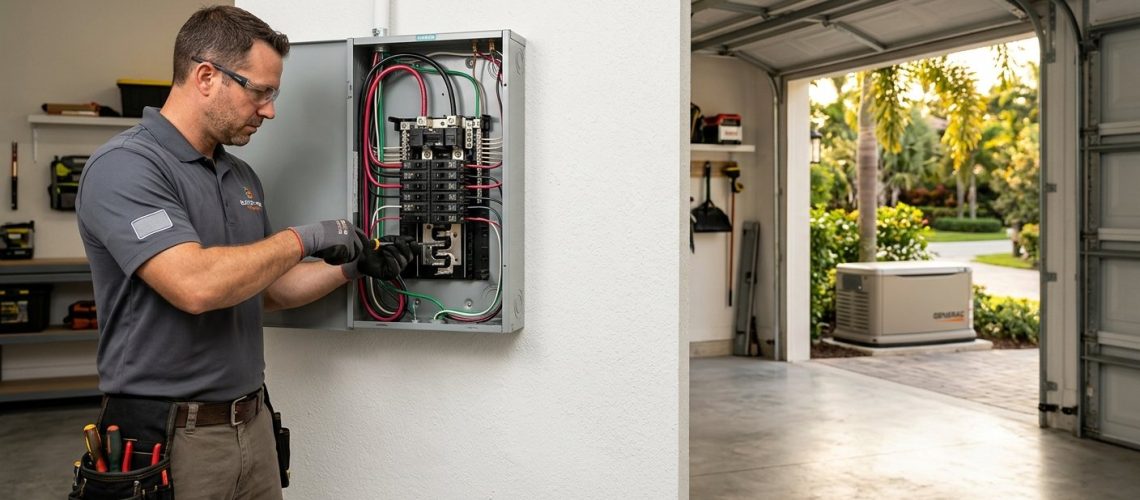
Choosing the right transfer switch for your home generator means matching the switch type — manual or automatic — to your power needs, budget, and how quickly you need backup power restored. For whole-house coverage and seamless protection during South Florida’s hurricane season, an automatic transfer switch connected to a standby generator is the most reliable choice for most homeowners.
- Transfer switches come in two main types: manual and automatic — each suits different budgets and protection needs.
- Automatic transfer switches (ATS) restore power within seconds without any action from you.
- The switch’s amperage rating must match or exceed your electrical panel’s capacity.
- All transfer switch installations require a licensed electrical contractor and proper permits in Florida.
- An 8-year workmanship warranty from your installer protects your investment long-term.
Why a Transfer Switch Is Non-Negotiable
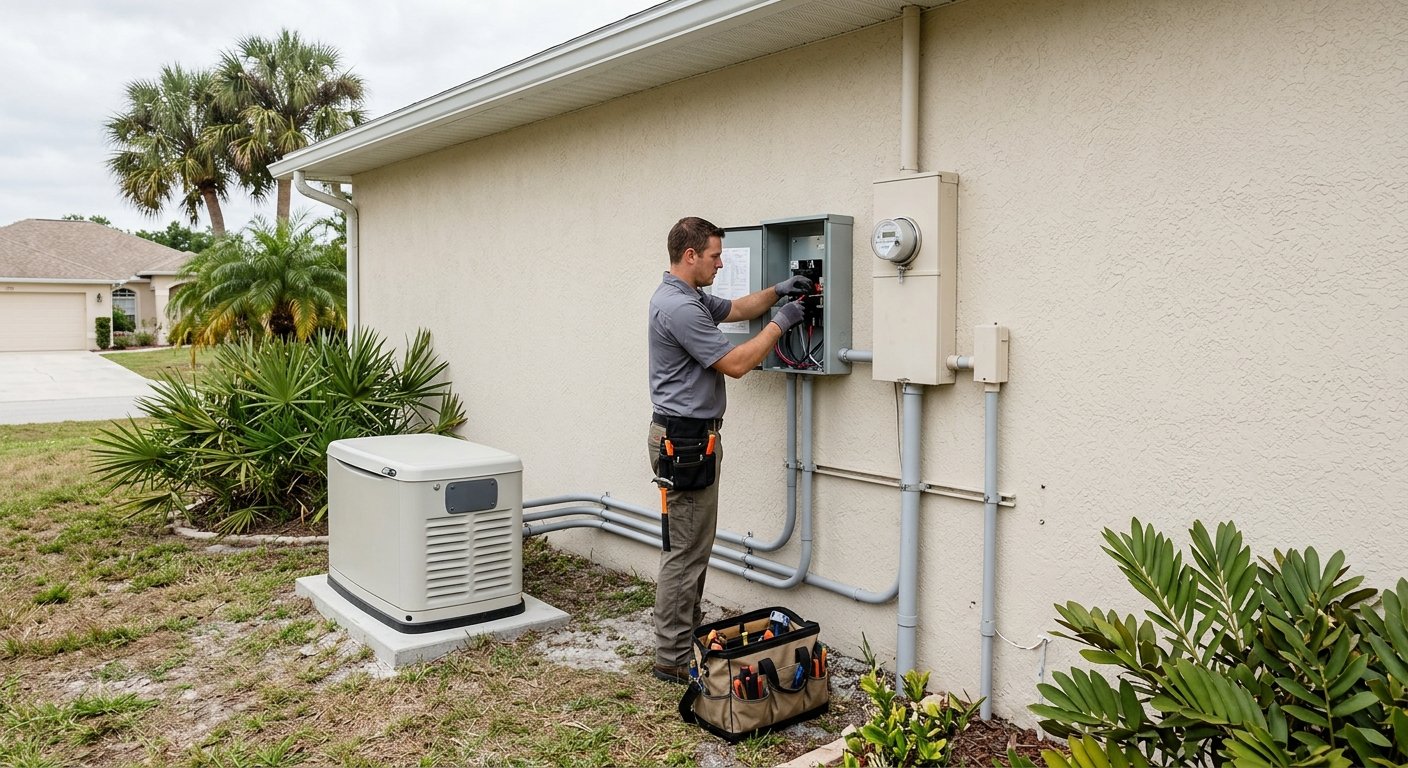
Plugging a portable generator directly into a wall outlet — a dangerous practice known as backfeeding — can energize utility lines and put repair crews at serious risk of electrocution. Florida law and the National Electrical Code (NFPA 70) require a properly installed transfer switch to isolate your home’s electrical system from the utility grid whenever a generator is connected. Beyond safety, a transfer switch protects your appliances and generator from damaging voltage spikes when utility power is restored.
In Palm Beach, Broward, and Miami-Dade counties, summer storms and hurricane threats make home backup power not a luxury but a practical necessity. Understanding your transfer switch options is the first step toward a system that actually works when you need it most.
Never connect a generator to your home without a transfer switch. Backfeeding can kill utility workers and is illegal under Florida electrical code. Always hire a licensed electrical contractor for this installation.
Manual vs. Automatic Transfer Switches
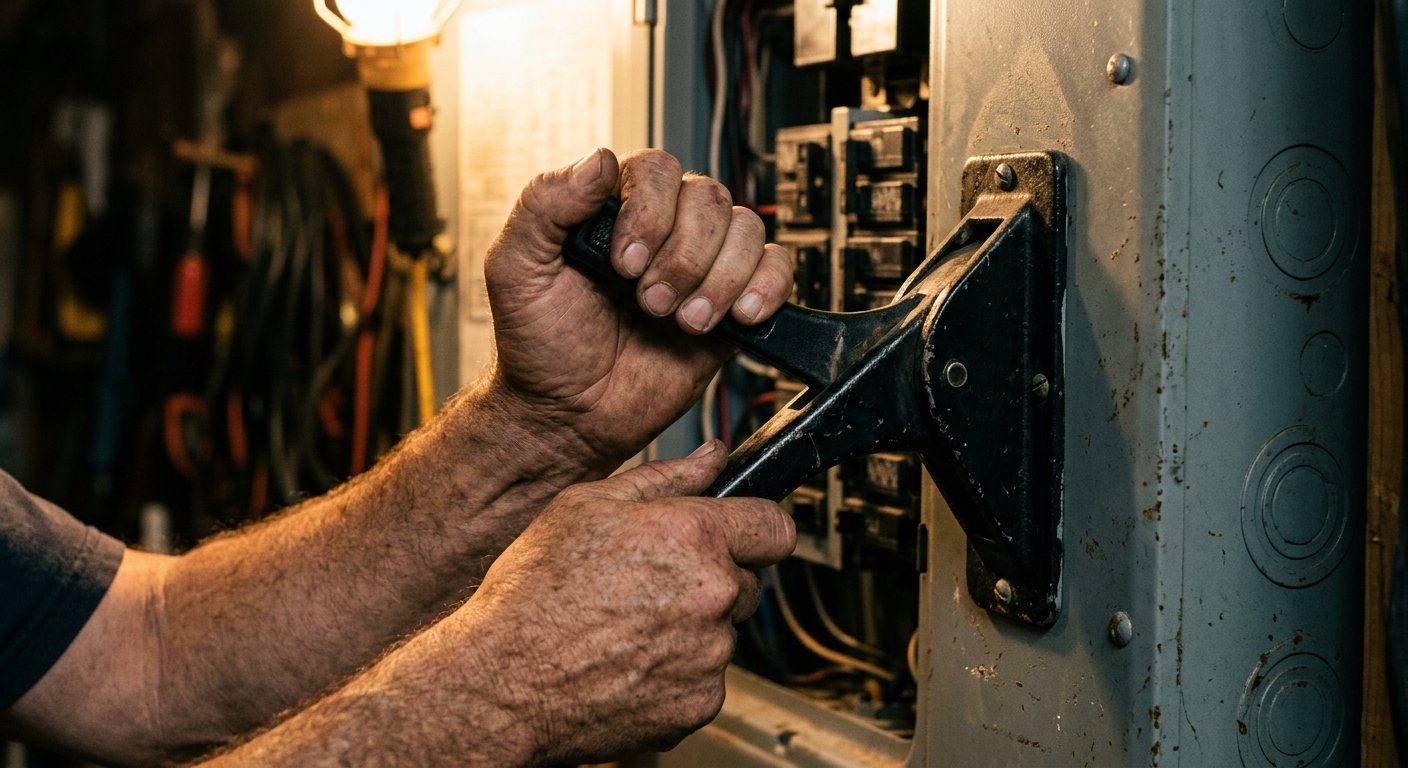
The core decision every homeowner faces is whether to install a manual transfer switch (MTS) or an automatic transfer switch (ATS). Both safely isolate your generator from the utility grid, but they operate very differently.
Manual Transfer Switches
A manual transfer switch requires you to physically flip the switch — typically located in or near your electrical panel — after starting your portable generator. These units are more affordable upfront and are a popular choice for homeowners who want to protect a limited number of critical circuits: refrigerator, lights, a window AC unit, and phone charging, for example.
- Lower installation cost compared to automatic systems
- Compatible with portable generators
- You must be home and physically present to activate
- Typically covers 6 to 10 selected circuits
- Requires manual generator startup and fuel management
Automatic Transfer Switches
An automatic transfer switch monitors utility power continuously. The moment it detects an outage, it signals a standby generator to start and transfers the electrical load — usually within 10 to 30 seconds — without any action from you. When grid power returns, it transfers back automatically and shuts the generator down. For families who travel frequently or for elderly residents who may not be able to manage a manual system, an ATS connected to an automatic standby generator is the clear choice.
- Fully automatic operation — no action needed during an outage
- Works with natural gas or propane standby generators
- Can protect your entire home’s electrical load
- Often integrates with smart home monitoring systems
- Higher upfront cost, but unmatched convenience and protection
| Feature | Manual Transfer Switch | Automatic Transfer Switch |
|---|---|---|
| Activation | Homeowner must flip switch | Activates within seconds automatically |
| Generator type | Portable generator | Standby generator |
| Circuits protected | Selected circuits only | Whole house possible |
| Upfront cost | Lower | Higher |
| Best for | Budget-conscious, DIY prep | Full protection, frequent travelers |
Sizing Your Transfer Switch Correctly
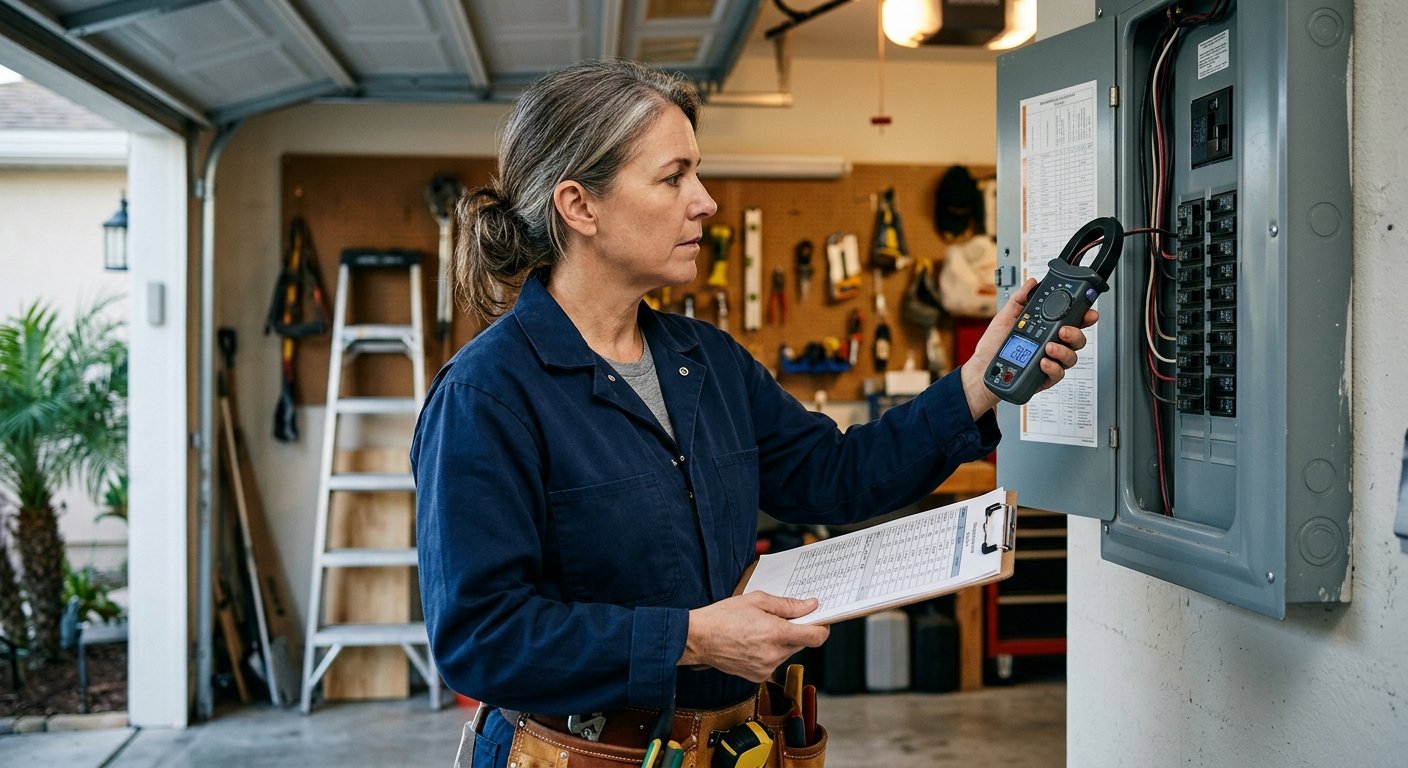
A transfer switch must be sized to match your electrical panel and generator. If your home has a 200-amp electrical panel, you need a transfer switch rated for at least 200 amps. Installing an undersized transfer switch is a code violation and a fire hazard.
Whole-House vs. Selected-Circuit Panels
Whole-house transfer switches replace or connect directly to your main electrical panel and allow every circuit in your home to be powered by the generator — assuming the generator is large enough to carry the load. Selected-circuit or load-center transfer switches are smaller sub-panels that accommodate only the circuits you specify during installation.
To determine which approach fits your home, a licensed electrician will calculate your total electrical load by reviewing your appliances, HVAC system, well pump (if applicable), and other major draws. This load calculation ensures your generator and switch are correctly paired — and it is required by Florida building code before a permit is issued.
If you are planning a generator electrical connection for a whole-house system, coordinate the transfer switch sizing with your panel capacity. Homes with older 100-amp panels in Boca Raton, Delray Beach, and similar communities often benefit from a simultaneous panel upgrade to maximize generator compatibility and home electrical safety.
The Installation Process: What to Expect
Transfer switch installation is not a DIY project. Florida requires permits and inspections for this type of generator electrical connection, and only a licensed electrical contractor can pull those permits on your behalf. Here is what a professional installation typically involves:
Site Assessment
An electrician evaluates your existing panel, generator placement, fuel source, and load requirements to recommend the right transfer switch type and size.
Permit Application
Your contractor submits permit applications to your local municipality — a required step in Palm Beach, Broward, and Miami-Dade counties before any work begins.
Switch and Panel Work
The transfer switch is installed and wired to your electrical panel. For automatic systems, the control wiring to the generator is also connected at this stage.
Generator Connection
The generator is connected to the transfer switch via a dedicated conduit and wiring run, keeping the installation clean, weather-resistant, and code-compliant.
Inspection and Testing
A municipal inspector approves the work, and your electrician performs a full test — simulating an outage to confirm the system transfers correctly and reliably.
A transfer switch is only as good as its installation — proper sizing, permitting, and testing are what separate a reliable backup system from a code violation.
Smart Home Integration and Future Upgrades
Modern automatic transfer switches can communicate with smart home systems, sending outage alerts to your phone, reporting generator runtime, and even integrating with load management apps. If you are investing in a smart home electrical system, choosing a transfer switch with connectivity options now saves significant cost later when you want to add monitoring or automation features.
The U.S. Department of Energy recommends homeowners consider whole-house standby systems with automatic transfer switches as part of comprehensive emergency preparedness, particularly in areas prone to prolonged outages — a description that applies directly to South Florida’s Atlantic hurricane season.
Frequently Asked Questions
Can I install a transfer switch myself in Florida?
No. Florida requires a licensed electrical contractor to install transfer switches and to pull the necessary permits. Unpermitted electrical work can void your homeowner’s insurance, create safety hazards, and cause costly problems when you sell your home. Always hire a licensed professional for this work.
What size transfer switch do I need for a 200-amp panel?
You need a transfer switch rated for at least 200 amps to match a 200-amp panel. Your electrician will also verify that your generator’s output capacity is sufficient to carry the loads you plan to run. Undersizing either component is a code violation and a safety risk.
How long does transfer switch installation take?
A straightforward manual transfer switch installation for selected circuits can be completed in a single day. A whole-house automatic transfer switch connected to a new standby generator typically takes one to two days, plus permit processing time, which varies by municipality in Palm Beach, Broward, and Miami-Dade counties.
Will an automatic transfer switch work during a hurricane?
Yes — that is exactly what it is designed for. As long as your standby generator has fuel and is properly maintained, an automatic transfer switch will activate the moment utility power fails, keeping your home powered through extended outages without any manual intervention on your part.
Can I add EV charging to a home with a generator and transfer switch?
Yes, but it requires careful load planning. EV chargers draw significant power, and your electrician must account for this when sizing both the transfer switch and the generator. Visit our EV charger installation page to learn how we integrate charging solutions with whole-home backup systems.
Ready to Protect Your Home with the Right Transfer Switch?
Our licensed team serves homeowners throughout Palm Beach, Broward, and Miami-Dade counties — with same-day service available and an 8-year warranty on all workmanship.

About Global Power & AC Corp
Global Power & AC Corp is a trusted electrical contractor serving homeowners and businesses throughout South Florida's Palm Beach, Broward, and Miami-Dade counties. The company specializes in residential electrical services including panel upgrades, EV charger installation, standby generators, smart home integration, and comprehensive electrical safety solutions. With a commitment to quality craftsmanship backed by an 8-year warranty and same-day service availability, Global Power & AC Corp combines family-owned values with corporate-level professionalism to deliver reliable electrical solutions tailored to South Florida's unique climate challenges. Visit globalpowerpb.com →