
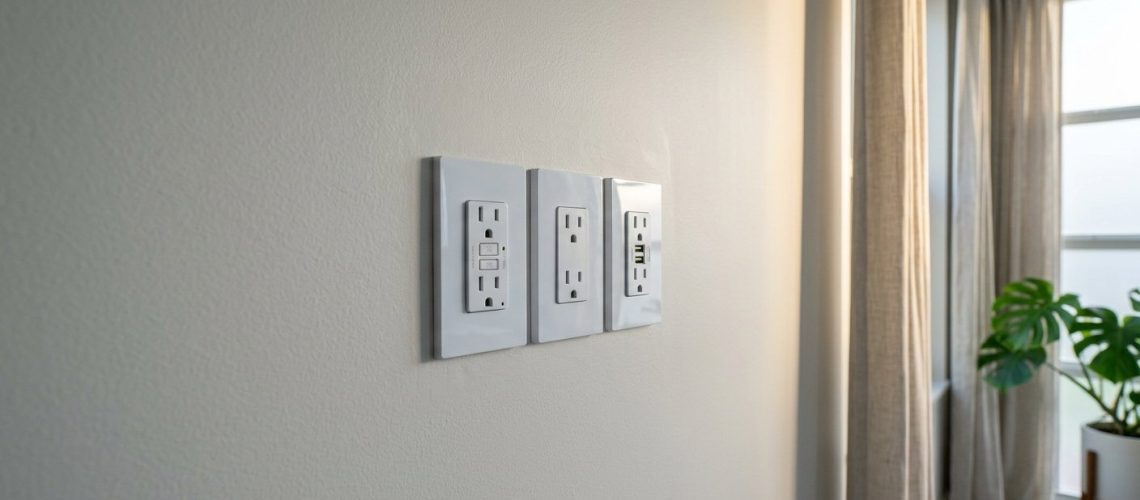
South Florida homeowners should know at least six common outlet types: standard duplex outlets, GFCI outlets, AFCI outlets, GFCI/AFCI combination outlets, USB outlets, and 240-volt outlets for heavy appliances. Each serves a specific safety function, and choosing the wrong one — or ignoring code requirements — can create real hazards in the humidity and storm-prone conditions of Palm Beach, Broward, and Miami-Dade counties.
- GFCI outlets are required by code in kitchens, bathrooms, garages, and all outdoor locations in Florida homes.
- AFCI outlets protect against arc faults — a leading cause of residential electrical fires — and are required in most living areas.
- South Florida’s humidity and storm activity accelerate outlet wear, making regular inspection essential.
- USB and smart outlets offer modern convenience but require proper residential electrical installation to ensure safety.
- 240-volt outlets must be matched precisely to the appliance they serve — never assume one size fits all.
Why Outlet Types Matter More in South Florida
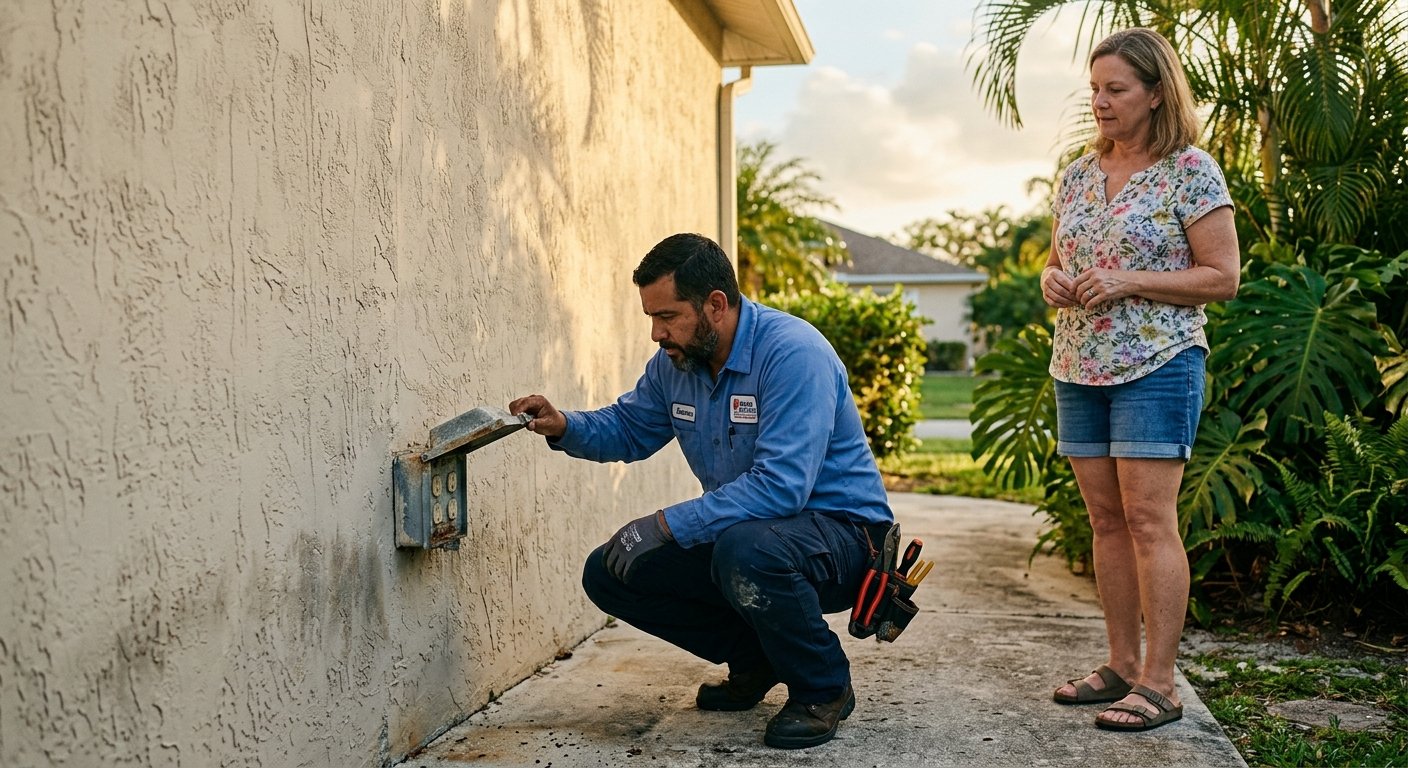
Most homeowners don’t think about electrical outlets until something goes wrong. In South Florida, that complacency carries real risk. The region’s extreme humidity, frequent lightning strikes, and hurricane-season surge activity put more stress on residential electrical systems than nearly anywhere else in the country. Outlets degrade faster here, and the consequences of an outdated or incorrect outlet type — electrical shock, fire, or equipment damage — are compounded by our wet climate.
Beyond safety, Florida’s electrical code sets specific requirements about which outlet types belong in which rooms. Understanding the basics helps you spot problems early, ask better questions when hiring an electrician, and protect your family and property year-round.
Florida’s high humidity creates conditions where moisture intrusion into unprotected outlets is a persistent hazard — especially in garages, lanais, and any space near a pool or laundry area. Always verify that the correct outlet type is installed in these locations.
Standard Duplex Outlets (15A and 20A)
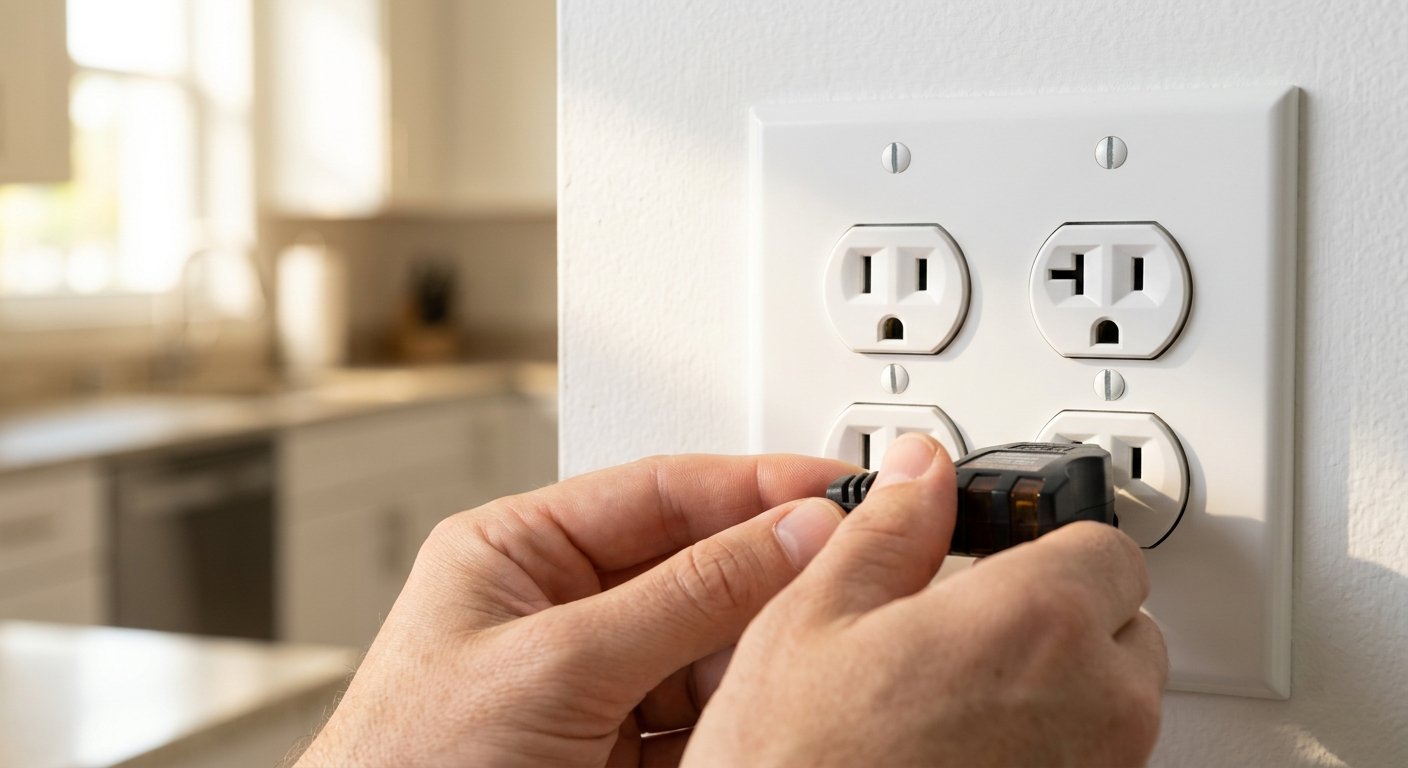
The standard two- or three-prong duplex outlet is what most people picture when they think of a wall outlet. In residential settings, these are typically rated at 15 amps on a 15-amp circuit. A 20-amp version — identifiable by a small horizontal slot on one side — is required in kitchens and laundry rooms where higher-draw appliances operate.
These outlets seem simple, but placement and amperage matching matter for home electrical safety. Plugging a high-draw appliance into a 15-amp circuit without proper protection is a common cause of tripped breakers and, over time, wire damage. If your kitchen outlets aren’t the 20-amp variety, that’s worth discussing with a licensed electrician.
GFCI Outlets: Non-Negotiable Near Water

Ground Fault Circuit Interrupter (GFCI) outlets are among the most important safety innovations in modern residential electrical installation. They monitor the flow of electricity and trip within milliseconds if they detect a ground fault — a situation where current is taking an unintended path, often through a person. According to the U.S. Consumer Product Safety Commission, GFCIs have dramatically reduced electrocution deaths in the United States since their introduction.
Florida’s electrical codes, aligned with the National Electrical Code (NEC), require GFCI protection in bathrooms, kitchens (within six feet of a sink), garages, outdoor areas, crawl spaces, and near pools or spa equipment. In South Florida, where pools are common and outdoor living spaces are used year-round, GFCI compliance isn’t optional — it’s a baseline for safe electrical code compliance.
GFCI outlets have a “Test” and “Reset” button on their face. If your GFCI outlet won’t reset or trips constantly, it may indicate moisture intrusion, a wiring fault, or end-of-life wear — all worth a professional inspection.
Test your GFCI outlets monthly by pressing the “Test” button — the outlet should lose power. Press “Reset” to restore it. If it doesn’t respond correctly, the outlet may have failed and should be replaced by a licensed electrician.
AFCI Outlets: Protecting Against Hidden Fire Hazards
Arc Fault Circuit Interrupter (AFCI) protection addresses a different hazard: electrical arcing caused by damaged, deteriorating, or loose wiring. An arc fault can ignite surrounding materials without ever tripping a standard breaker. The National Fire Protection Association identifies electrical failures and malfunctions — including arc faults — as a leading cause of home structure fires in the U.S.
Under current NEC guidelines adopted by Florida, AFCI protection is required in bedrooms, living rooms, dining rooms, hallways, and most other living areas. AFCI protection can be provided either at the breaker panel or through AFCI outlets at the first outlet in a circuit. For older homes in Boca Raton, Delray Beach, or Fort Lauderdale where wiring has aged, adding AFCI protection can be one of the highest-value safety upgrades available.
If your home was built before AFCI requirements took effect and hasn’t been updated, it’s worth asking about an electrical panel upgrade that incorporates AFCI breakers throughout.
GFCI/AFCI Combination Outlets
Combination GFCI/AFCI outlets provide both forms of protection in a single device. They’re particularly useful in areas where both requirements apply — like a kitchen near aging wiring — and in situations where adding a dual-function breaker isn’t practical. These outlets are slightly more complex to install correctly, making proper residential electrical installation by a licensed professional especially important.
240-Volt Outlets for Appliances and EV Chargers
Large appliances — electric dryers, ranges, water heaters, and air compressors — require 240-volt outlets, which use a dedicated double-pole breaker and specific plug configurations. Not all 240-volt outlets are interchangeable: a dryer outlet and a range outlet are wired differently and have different plug shapes for a reason.
This same category of outlet is central to Level 2 EV charging. If you’re adding a home EV charger for a vehicle, you’ll need a dedicated 240-volt circuit with the correct amperage for your charger. Our team handles EV charger installation throughout Palm Beach, Broward, and Miami-Dade counties, ensuring the outlet, circuit, and panel capacity are all properly matched.
| Outlet Type | Typical Voltage/Amperage | Common Application | Code Requirement? |
|---|---|---|---|
| Standard Duplex (15A) | 120V / 15A | General living areas | No special requirement |
| Standard Duplex (20A) | 120V / 20A | Kitchen, laundry | Required in kitchens/laundry |
| GFCI | 120V / 15A or 20A | Bathrooms, kitchens, outdoors | Required near water sources |
| AFCI | 120V / 15A or 20A | Bedrooms, living rooms | Required in most living areas |
| 240V Outlet | 240V / 30A–50A | Dryers, ranges, EV chargers | Dedicated circuit required |
| USB/Smart Outlet | 120V / 15A or 20A | Modern convenience charging | No special requirement |
USB and Smart Outlets: Modern Convenience Done Right
USB outlets replace one or both standard plugs with built-in USB-A or USB-C charging ports. They eliminate the need for bulky adapters and are popular in bedrooms and home offices. Smart outlets take this further, adding Wi-Fi or Bluetooth connectivity so you can control and monitor connected devices remotely.
These upgrades are low-voltage by nature, but they still require correct wiring and a compatible electrical box. Improperly installed smart outlets can cause overheating or create interference with other circuits. For South Florida homeowners integrating smart home technology, professional installation ensures both safety and reliability.
Outdoor and Weatherproof Outlets
South Florida’s year-round outdoor lifestyle means lanais, patios, and pool decks often need powered outlets. Any outdoor outlet must be GFCI-protected and installed in a weatherproof enclosure rated for wet or damp locations. “In-use” covers — the bubble-style covers that protect the outlet even when a plug is inserted — are required in wet locations per Florida electrical code. Given our hurricane exposure, outdoor outlet boxes should also be inspected after any major storm to check for water intrusion or physical damage.
In South Florida, every outdoor outlet without GFCI protection and a proper weatherproof cover is a safety problem waiting for the next rainstorm.
Signs Your Outlets Need Attention
Outlets don’t always fail dramatically. Watch for these warning signs:
- Discoloration or scorch marks around the outlet face
- Outlets that feel warm to the touch when nothing is plugged in
- Plugs that fall out easily due to worn contacts
- Frequent tripping of GFCI or AFCI outlets in the same room
- Sparking when inserting a plug
- Outlets with only two prongs (ungrounded) in areas requiring three-prong grounded outlets
Any of these symptoms warrants a call to a licensed electrician. For older homes throughout Boynton Beach, West Palm Beach, and surrounding communities, a full outlet inspection can surface issues before they become emergencies. This is also a smart time to discuss whether your home’s panel is keeping up with modern electrical demands — learn more on our electrical panel upgrades page.
Frequently Asked Questions
How do I know if my South Florida home meets current electrical outlet codes?
The best way is to schedule an inspection with a licensed electrical contractor familiar with Florida’s adoption of the National Electrical Code. Key indicators include whether bathrooms, kitchens, garages, and outdoor areas have GFCI protection, and whether living areas have AFCI protection. Homes built before the 2000s often require updates to achieve current electrical code compliance.
Can I replace a standard outlet with a GFCI outlet myself?
While some homeowners attempt DIY outlet replacements, Florida law requires electrical work to meet code, and unpermitted or incorrect installations can create safety hazards and insurance complications. A licensed electrician ensures the outlet is wired correctly and that any downstream outlets on the same circuit receive proper protection.
What outlet do I need for a Level 2 EV charger?
Level 2 EV chargers typically require a dedicated 240-volt circuit, commonly at 40 to 50 amps depending on the charger model. The outlet type, wire gauge, breaker size, and available panel capacity all need to align. A professional EV charger installation assessment will confirm what your home’s existing electrical system can support.
How often should I test GFCI outlets in my home?
The U.S. Consumer Product Safety Commission recommends testing GFCI outlets monthly. Press the “Test” button to cut power, then “Reset” to restore it. If the outlet doesn’t respond correctly or trips repeatedly without an obvious cause, it should be inspected and likely replaced by a licensed professional.
Are smart outlets safe for South Florida’s storm season?
Smart outlets installed correctly are safe, but South Florida’s frequent lightning and power surge activity makes whole-home surge protection an important companion upgrade. A licensed electrician can install surge protection at the panel level to safeguard smart outlets and all connected electronics during storm season. For homes that need reliable backup power, our standby generator options are worth exploring as well.
Get the Right Outlets Installed Right
Whether you need a GFCI update, an EV charger circuit, or a full outlet inspection, our licensed team serves Palm Beach, Broward, and Miami-Dade counties with same-day availability and an 8-year warranty on workmanship.

About Global Power & AC Corp
Global Power & AC Corp is a trusted electrical contractor serving homeowners and businesses throughout South Florida's Palm Beach, Broward, and Miami-Dade counties. The company specializes in residential electrical services including panel upgrades, EV charger installation, standby generators, smart home integration, and comprehensive electrical safety solutions. With a commitment to quality craftsmanship backed by an 8-year warranty and same-day service availability, Global Power & AC Corp combines family-owned values with corporate-level professionalism to deliver reliable electrical solutions tailored to South Florida's unique climate challenges. Visit globalpowerpb.com →