
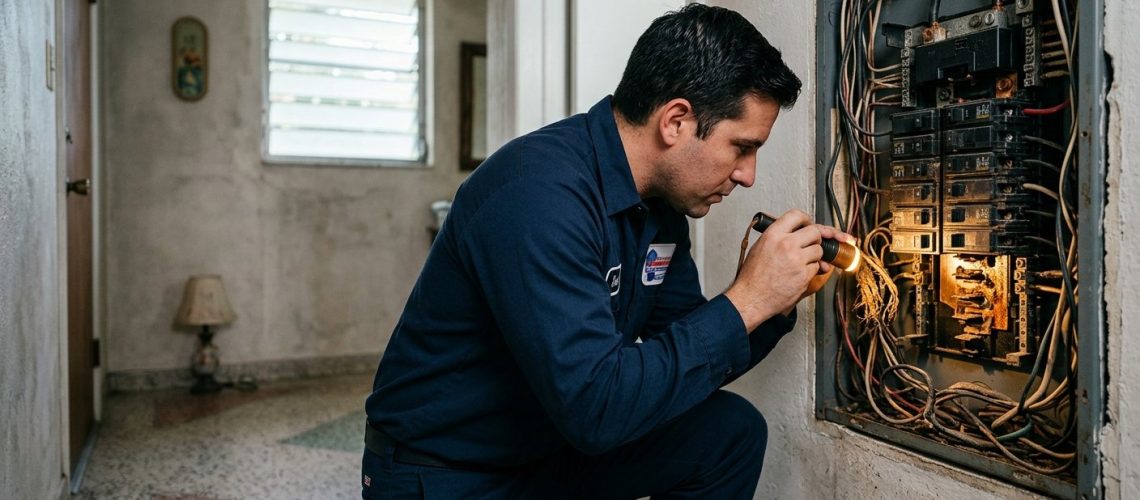
Aging electrical systems in South Florida homes pose serious fire and safety risks — especially in homes built before 1990, where outdated wiring, undersized panels, and corroded connections are common. Homeowners in Palm Beach, Broward, and Miami-Dade counties should schedule a professional electrical safety inspection if their home is more than 25 years old or shows warning signs like flickering lights, tripped breakers, or burning smells.
- Homes built before 1990 in South Florida frequently have outdated wiring types that no longer meet modern safety standards.
- South Florida’s humidity, storms, and heat accelerate electrical system wear faster than in drier climates.
- Warning signs like frequently tripped breakers, warm outlets, and flickering lights signal it’s time for a professional inspection.
- Old electrical panel replacement can significantly reduce fire risk and support modern appliances and EV chargers.
- A licensed electrical contractor can identify hidden hazards before they become emergencies.
Why Older South Florida Homes Face Greater Electrical Risk
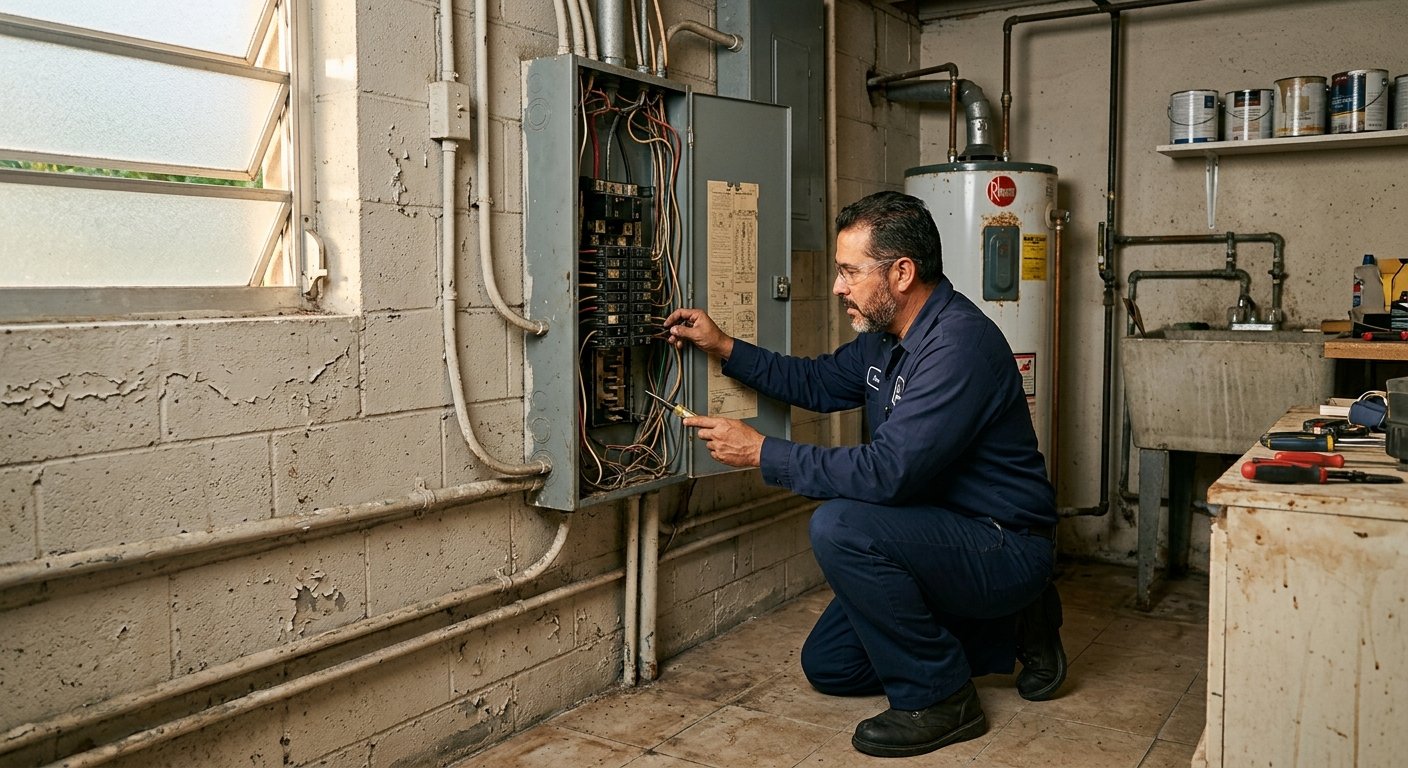
Many homes throughout West Palm Beach, Fort Lauderdale, Boca Raton, and surrounding communities were built during South Florida’s rapid growth era of the 1960s through 1980s. The electrical systems in these homes were designed for a fraction of today’s power demands — no high-definition televisions, smart appliances, electric vehicle chargers, or whole-home air conditioning systems running simultaneously. The result? Systems pushed far beyond their original capacity.
South Florida’s environment compounds these risks significantly. Humidity, salt air near the coast, intense heat, and frequent thunderstorms create conditions that corrode wiring connections, degrade insulation, and stress electrical panels in ways that homeowners in drier regions simply don’t face. What might last decades in a temperate climate can deteriorate much faster here.
According to the U.S. Fire Administration, electrical fires are responsible for thousands of residential fires each year nationwide — and older wiring is one of the leading contributing factors. Don’t wait for a close call to take action.
The Most Common Electrical Hazards in Older Homes
Aluminum Wiring
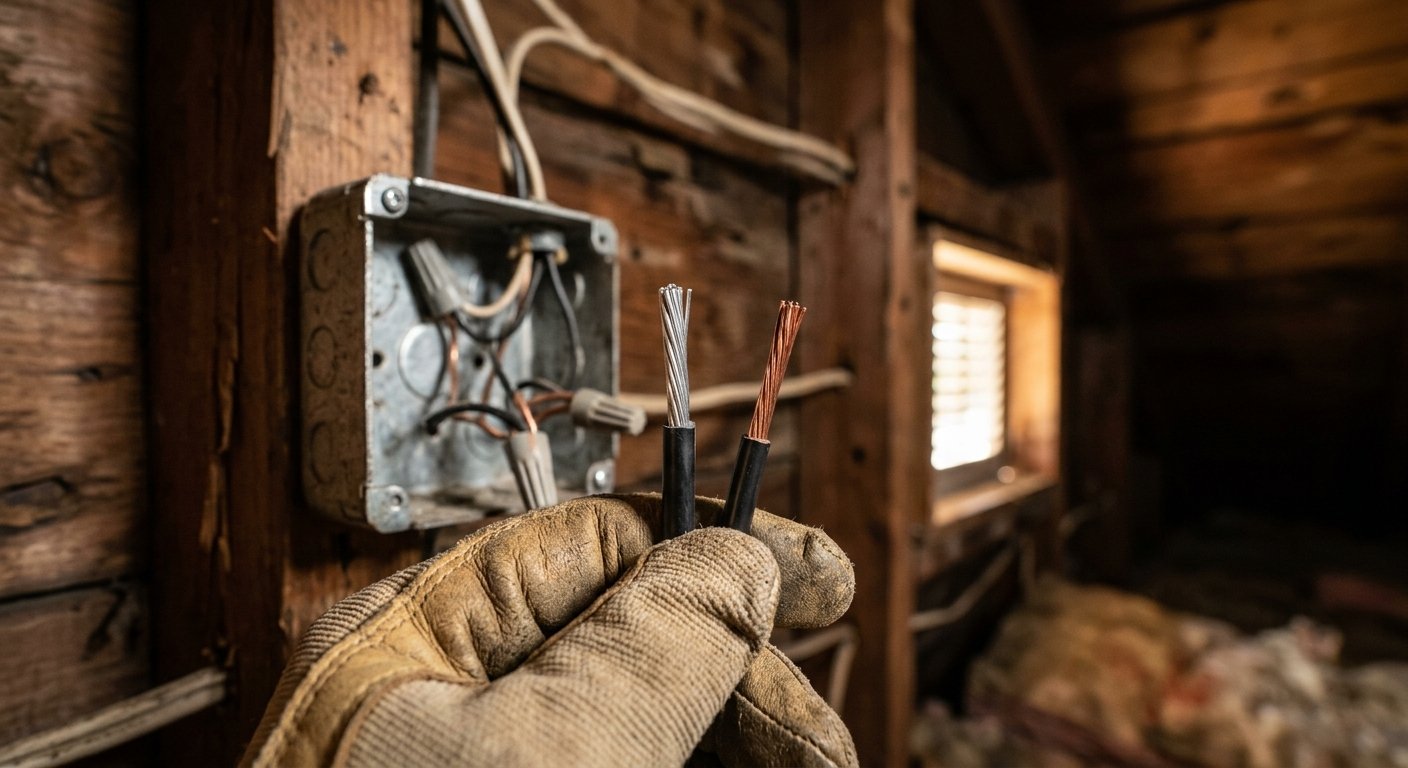
Homes built between roughly 1965 and 1973 may contain aluminum branch circuit wiring, which was used as a cost-saving alternative to copper during that era. Aluminum wiring expands and contracts more with heat changes and can loosen at connection points over time, creating dangerous arcing risks. The U.S. Consumer Product Safety Commission has long warned homeowners about the increased fire risk associated with aluminum wiring in homes. If your South Florida home was built during this period and hasn’t been inspected recently, this is a priority concern.
Outdated Electrical Panels
Federal Pacific Electric (FPE) and Zinsco panels — installed widely through the 1970s and 1980s — have been linked to breaker failures that allow circuits to carry more current than they safely should. These older panels may not trip properly during an overload, meaning they fail at their most important job: protecting your home from electrical fires. An electrical panel upgrade is one of the most impactful safety improvements a homeowner can make in an aging property.
Knob-and-Tube Wiring
Found in homes from the early- to mid-20th century, knob-and-tube wiring lacks a grounding conductor and was not designed to handle modern electrical loads. In South Florida’s older neighborhoods — particularly historic areas of Miami-Dade and parts of Palm Beach County — this wiring type occasionally turns up during renovations or inspections. It should be evaluated and addressed by a licensed professional.
Inadequate Grounding and No GFCI Protection
Proper grounding and ground fault circuit interrupter (GFCI) protection are essential in South Florida’s environment, especially near pools, bathrooms, kitchens, and any area exposed to moisture. Homes built before modern electrical codes required these safeguards routinely lack them. GFCI outlets protect against dangerous shock hazards by cutting power the instant a fault is detected.
Test your GFCI outlets monthly by pressing the “Test” button and verifying the outlet loses power, then pressing “Reset.” If it doesn’t respond correctly, have it replaced by a licensed electrician.
Warning Signs You Shouldn’t Ignore
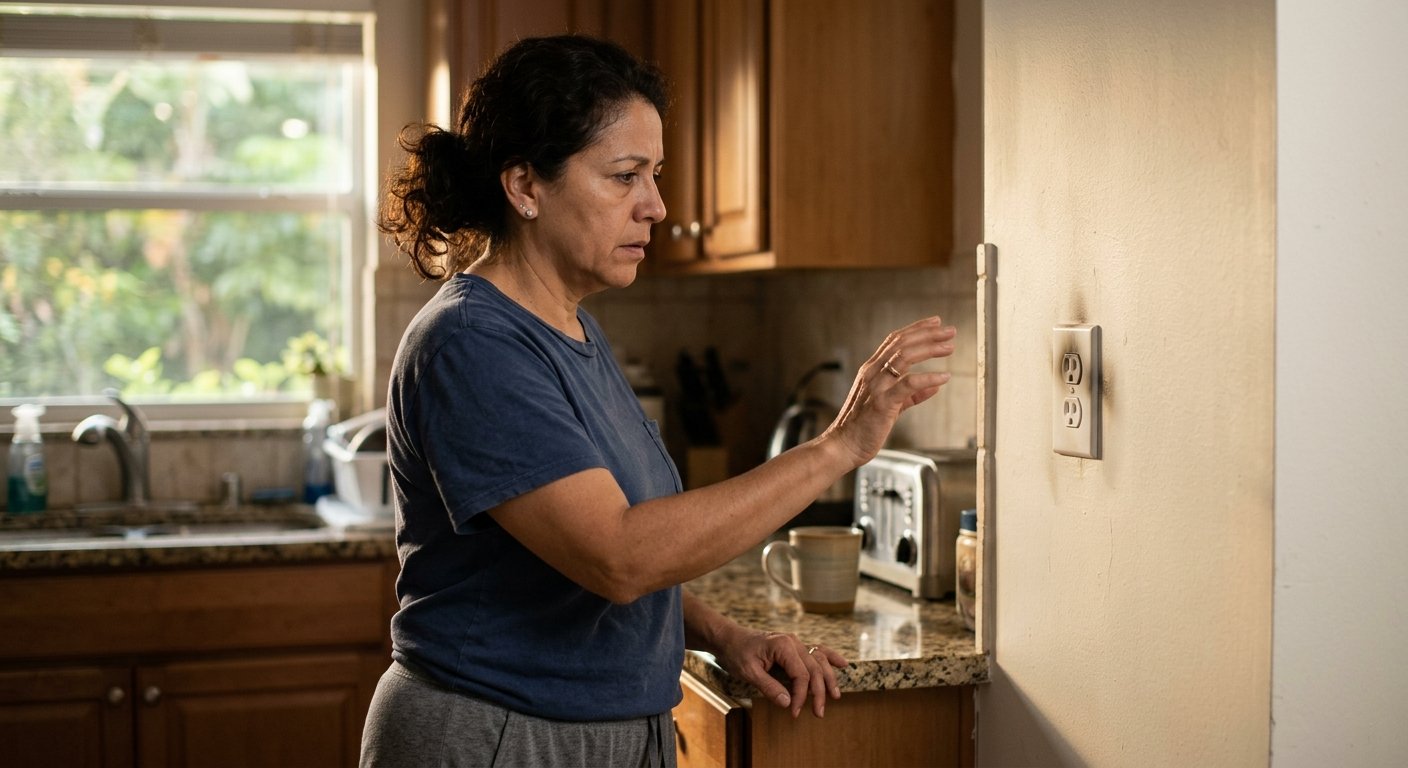
Many homeowners live with early warning signs of electrical hazards without realizing the danger. If you notice any of the following in your Palm Beach, Broward, or Miami-Dade home, it’s time to call a professional for a residential electrical inspection:
- Frequently tripping circuit breakers or blown fuses
- Flickering or dimming lights — especially when appliances turn on
- Outlets or switch plates that feel warm to the touch
- Burning or unusual odors near outlets, panels, or fixtures
- Discolored or scorched outlet covers
- Buzzing, crackling, or sizzling sounds from walls or panels
- Outlets that spark when plugging in devices
- A panel with no room for additional breakers
These symptoms indicate your electrical system is under stress. Ignoring them doesn’t make the problem go away — it increases the risk of a serious electrical fire or shock incident.
An aging electrical system doesn’t announce failure with a warning label — it shows it through symptoms that homeowners too often dismiss as minor inconveniences.
How South Florida’s Climate Accelerates Electrical Wear
South Florida’s unique climate creates challenges that make regular electrical maintenance more important here than nearly anywhere else in the country. High humidity encourages corrosion at wire connections and inside electrical panels. Salt air — particularly within a few miles of the coast in areas like Delray Beach, Boynton Beach, and Fort Lauderdale — accelerates the oxidation of metal components. Hurricane season brings power surges and outages that stress electrical infrastructure year after year.
These conditions make it essential for South Florida homeowners to stay proactive rather than reactive. A comprehensive electrical safety inspection can identify corrosion, deteriorated insulation, loose connections, and other climate-related damage before it becomes a crisis.
Schedule a Professional Inspection
Have a licensed electrician assess your home’s wiring, panel, outlets, and grounding — especially if the home is 25+ years old or you’ve never had one done.
Address Panel Issues First
If your inspector identifies an outdated or faulty panel, prioritize replacement. The panel is the heart of your home’s electrical system and the first line of defense against overloads.
Upgrade Wiring Where Needed
Aluminum wiring, knob-and-tube systems, or wiring without proper grounding should be evaluated for repair or replacement by a licensed professional.
Install GFCI and AFCI Protection
Ensure all wet areas have GFCI outlets and consider arc fault circuit interrupters (AFCIs) for bedrooms and living areas to protect against hidden wiring arc faults.
Plan for Modern Demands
If you’re adding an EV charger, smart home devices, or a standby generator, make sure your panel and wiring are upgraded to handle the additional load safely.
The Case for Smart Home Electrical Upgrades
Addressing hazards in aging systems also opens the door to meaningful upgrades. Once wiring and panels are brought up to modern standards, homeowners can integrate smart home technology — smart lighting, automated circuit monitoring, and whole-home surge protection — that actively helps protect against electrical hazards in real time. Learn more about what’s possible with smart home electrical integration for your South Florida property.
This is also the right time to plan for EV charging infrastructure, whole-home generators for hurricane season, and energy-efficient upgrades — all of which require a solid, up-to-date electrical foundation to operate safely and reliably.
Frequently Asked Questions
How do I know if my South Florida home has dangerous electrical wiring?
Common warning signs include frequently tripped breakers, flickering lights, warm outlets, burning odors, and a panel that’s more than 25-30 years old. The most reliable way to know is to schedule a professional residential electrical inspection with a licensed contractor who can assess your wiring type, panel condition, grounding, and overall system safety.
What is old electrical panel replacement and do I really need it?
Old electrical panel replacement means swapping out an outdated or failing breaker panel for a modern unit with adequate capacity and safety features. If your home has a Federal Pacific Electric, Zinsco, or fuse-box-style panel — or a panel that’s undersized for today’s electrical loads — replacement is strongly recommended. It’s one of the most important electrical fire prevention measures an older home can benefit from.
How often should I schedule an electrical safety inspection?
The National Fire Protection Association recommends having your electrical system professionally inspected every 10 years for most homes, and every 5 years for homes 25 years or older. In South Florida, where humidity and storm activity accelerate system wear, inspections on the shorter end of that range are a smart precaution.
Is electrical wiring inspection required when buying or selling a home?
A standard home inspection covers basic electrical observations, but it’s not the same as a dedicated electrical wiring inspection by a licensed electrician. If you’re buying an older home in Palm Beach, Broward, or Miami-Dade County, commissioning a separate electrical inspection before closing is one of the best investments you can make to avoid inheriting expensive — or dangerous — problems.
Can I address electrical hazards myself to save money?
Minor tasks like replacing a light switch or outlet cover may be manageable for experienced DIYers, but anything involving the electrical panel, wiring, grounding, or new circuit installation should always be handled by a licensed electrical contractor. Improper electrical work in Florida can void homeowner’s insurance, fail code inspections, and — most importantly — create serious fire and shock hazards.
Protect Your Home Before a Hazard Becomes a Crisis
Global Power & AC Corp is a licensed and insured electrical contractor serving homeowners and businesses throughout Palm Beach, Broward, and Miami-Dade counties — backed by an 8-year warranty on workmanship and same-day service availability.

About Global Power & AC Corp
Global Power & AC Corp is a trusted electrical contractor serving homeowners and businesses throughout South Florida's Palm Beach, Broward, and Miami-Dade counties. The company specializes in residential electrical services including panel upgrades, EV charger installation, standby generators, smart home integration, and comprehensive electrical safety solutions. With a commitment to quality craftsmanship backed by an 8-year warranty and same-day service availability, Global Power & AC Corp combines family-owned values with corporate-level professionalism to deliver reliable electrical solutions tailored to South Florida's unique climate challenges. Visit globalpowerpb.com →