
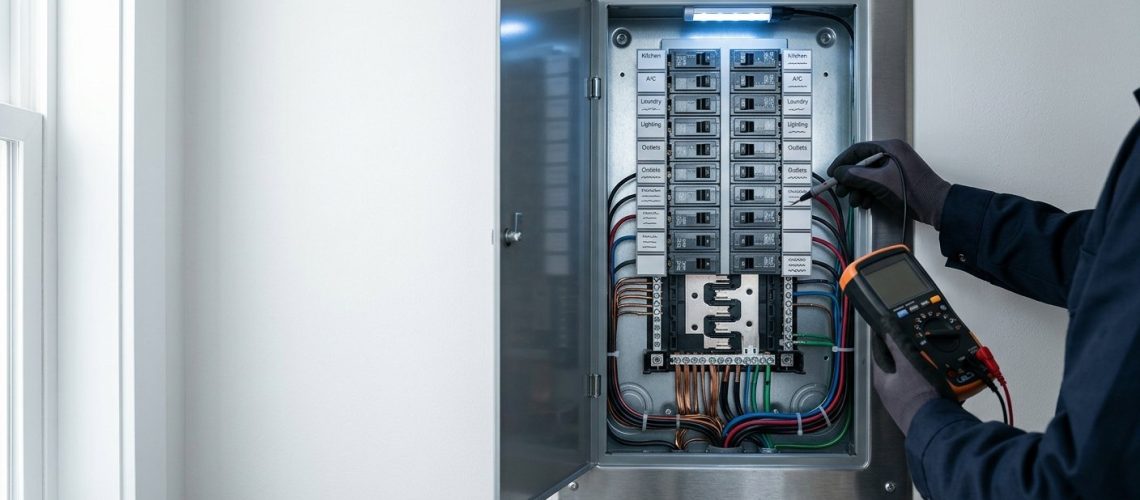
Your home’s electrical panel is the central hub that controls every circuit in your house. Reading it correctly means identifying breaker positions, understanding amperage ratings, recognizing warning signs, and knowing when a panel has reached the end of its safe service life. For South Florida homeowners, understanding your panel is a foundational piece of home electrical safety.
- Every breaker in your panel has a labeled amperage rating — mismatched breakers and wiring are a leading cause of residential electrical fires.
- Panels 25 years or older, or those using recalled brands like Federal Pacific or Zinsco, should be evaluated by a licensed electrician promptly.
- South Florida’s humidity, thunderstorms, and hurricane season accelerate wear on electrical components faster than in most other regions.
- A tripped breaker that won’t reset — or one that trips repeatedly — is your panel’s way of telling you something needs professional attention.
- An electrical safety inspection is the most reliable way to determine whether your panel needs repair, upgrade, or replacement.
What You’re Actually Looking At
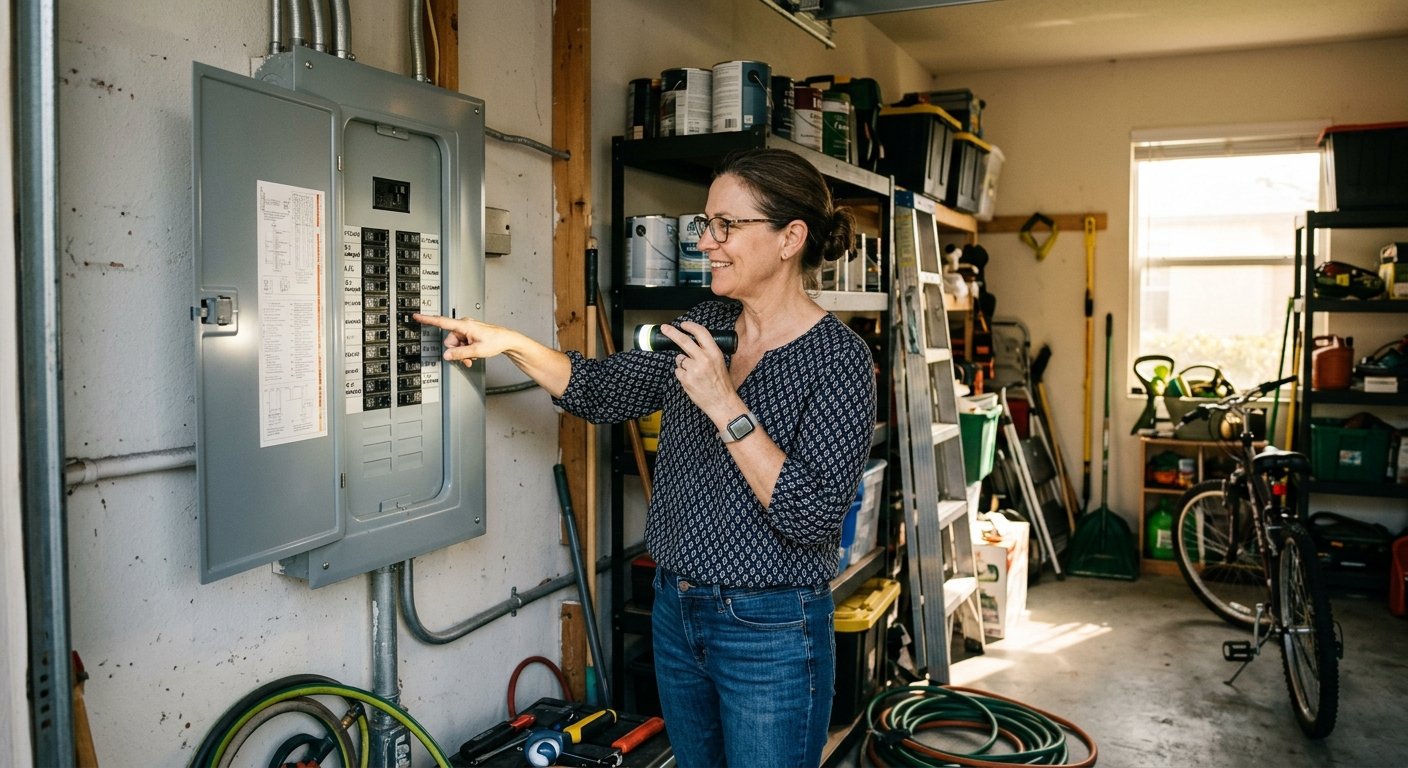
Open your panel door and you’ll find a metal box with rows of switches — those are your circuit breakers. At the top sits the main breaker, which controls power to the entire home and is typically rated at 100, 150, or 200 amps. Below it are individual branch circuit breakers, each protecting a specific area or appliance in your home.
Each breaker should have a number stamped on it indicating its amperage: 15A or 20A for most standard outlets and lighting circuits, 30A or 50A for large appliances like electric dryers or ranges. You’ll also notice a directory card — usually affixed to the inside of the panel door — that lists which breaker controls which area. If yours is blank, inaccurate, or missing entirely, getting it updated is a simple but important safety step.
Test your directory by turning off one breaker at a time and walking through the house to note which outlets and fixtures lose power. Update the label immediately — a well-marked panel saves time and stress during every future outage or service call.
The Three Positions Every Breaker Has
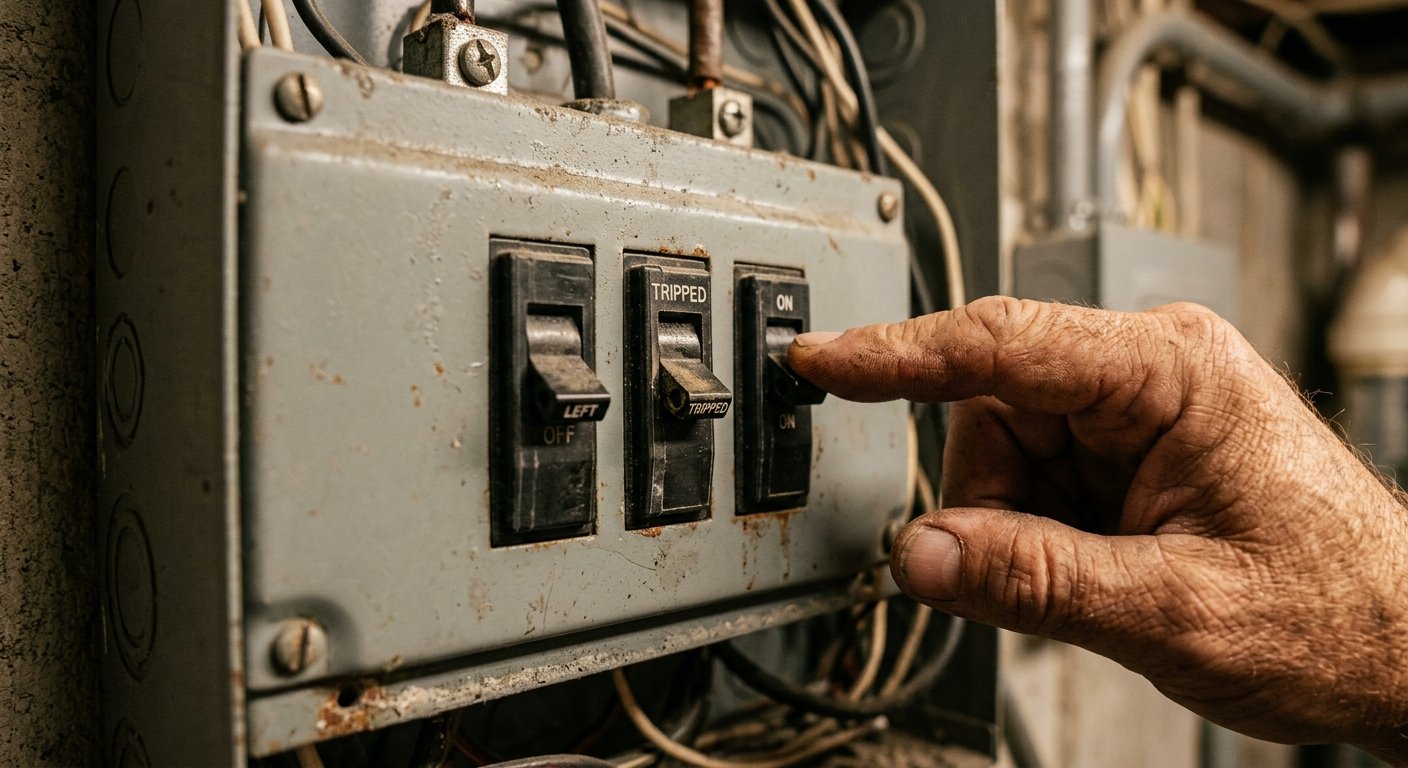
Circuit breakers operate in three positions, and knowing them helps you respond correctly when something goes wrong in your home.
- ON: The breaker is fully engaged and power flows to that circuit normally.
- OFF: The breaker has been manually switched off, cutting power deliberately.
- TRIPPED: The breaker has automatically shut off due to an overload or fault. A tripped breaker sits noticeably between ON and OFF — sometimes with a red indicator window visible on the breaker face.
To reset a tripped breaker, push it firmly to the OFF position first, then switch it fully back to ON. If it trips again immediately or within minutes, stop. That circuit has a problem — an overloaded circuit, a short, or potentially a failing breaker — and forcing it back on can create a fire hazard. That’s the moment to call a licensed electrician.
Never insert a higher-rated breaker to “fix” a circuit that keeps tripping. A 20A breaker protecting 15A wiring can allow the wiring to overheat without the breaker ever tripping — one of the more dangerous and invisible hazards in residential electrical systems.
Warning Signs Your Panel Is Telling You Something
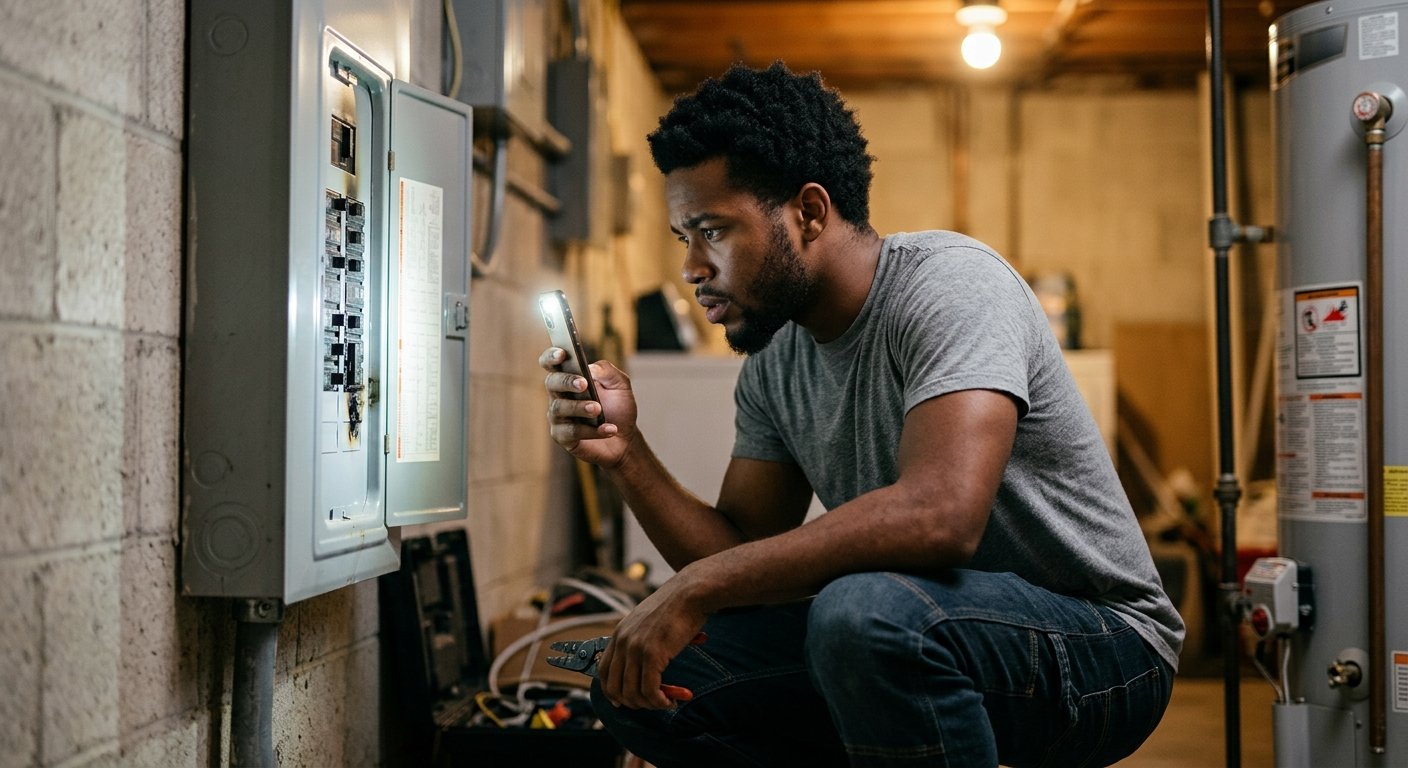
Your panel communicates distress through physical signs that are easy to recognize once you know what to look for. According to the U.S. Fire Administration, electrical failures or malfunctions are among the leading causes of residential structure fires — making panel awareness a genuine safety priority, not just routine maintenance.
Watch for these red flags during a visual inspection:
- Burn marks or scorch discoloration around any breaker or on the panel interior
- A burning or metallic smell coming from the panel area
- Breakers that feel warm or hot to the touch
- Rust, corrosion, or moisture inside the panel — especially common in South Florida’s humid coastal climate
- Double-tapped breakers (two wires connected to a single breaker terminal not rated for it)
- Breakers that won’t hold their position or toggle loosely
Any of these signs warrants a professional electrical safety inspection — not a DIY fix. These are symptoms of underlying issues that require licensed evaluation.
Panel Age and Brand Matter Enormously
Not all panels age gracefully. Some were poorly designed from the start. Two brands in particular — Federal Pacific Electric (Stab-Lok panels) and Zinsco — have well-documented histories of breaker failure and fire risk. If your Palm Beach, Broward, or Miami-Dade County home was built between the 1950s and 1980s, there’s a real possibility one of these panels is still in service.
Even well-made panels have a finite service life. The National Fire Protection Association (NFPA) recommends that electrical systems in older homes be regularly inspected by a qualified electrician. Panels showing signs of aging, frequent tripping, or capacity limitations are strong candidates for an old electrical panel replacement.
Locate Your Panel
Usually found in a garage, utility closet, hallway, or exterior wall. In condos, it may be inside a bedroom or kitchen closet.
Identify the Main Breaker Amperage
Look for the number stamped on the large breaker at the top. Common ratings are 100A, 150A, and 200A. Homes with EV chargers or major upgrades often need 200A minimum.
Inspect Branch Breakers
Look at each individual breaker — check that wires aren’t doubled, breakers move cleanly, and no discoloration is present.
Review the Directory
Confirm that the label matches actual circuits. Unlabeled or incorrectly labeled panels create dangerous confusion during emergencies.
Document and Contact a Pro
If you spot any warning signs, take a photo and contact a licensed electrician. Don’t attempt to open the panel beyond the door cover.
When Reading Becomes Upgrading
Understanding your panel is the first step. Acting on what you find is the next. Many South Florida homeowners discover their panels simply can’t support modern electrical loads — EV chargers, smart home systems, whole-home generators, and upgraded HVAC equipment all draw significantly more power than homes built decades ago were designed to deliver.
A circuit breaker panel upgrade isn’t just about capacity. It’s about safety, code compliance, and protecting your home’s value. Florida’s electrical inspection requirements are enforced through local building departments aligned with the National Electrical Code (NEC), and permitted panel work ensures your home meets current standards — something insurers and future buyers will verify.
If you’re planning to add an EV charger, integrate smart home electrical systems, or install a standby generator, your existing panel is the starting point of that conversation. A thorough electrical panel upgrade evaluation will determine whether your current service can handle the added load or whether a service upgrade is required first.
Your panel isn’t just a box of switches — it’s the safety system standing between your home’s wiring and a potential fire.
South Florida Factors That Accelerate Panel Wear
Palm Beach, Broward, and Miami-Dade counties present unique challenges for electrical systems. High humidity levels accelerate corrosion on panel components, bus bars, and wire terminals. Salt air — particularly within a few miles of the coast — compounds this effect. Hurricane season introduces surge risks and physical damage that can compromise panel integrity in ways that aren’t always obvious immediately after a storm.
Homeowners in this region benefit from more frequent electrical inspections than the national average would suggest. The combination of aging housing stock, tropical climate stressors, and increasingly power-hungry households creates conditions where electrical panels simply work harder and wear faster.
Frequently Asked Questions
How do I know if my electrical panel needs to be replaced?
Key indicators include panels over 25 years old, frequent breaker trips, burn marks or corrosion inside the panel, Federal Pacific or Zinsco brand labeling, or insufficient amperage for your home’s current electrical load. A licensed electrician can assess whether repair, upgrade, or full replacement is warranted.
Is it safe to reset a tripped breaker myself?
Yes — once. Push the breaker firmly to OFF then back to ON. If it trips again, do not reset it a second time. Repeated tripping signals an overloaded circuit, a short circuit, or a failing breaker that needs professional diagnosis before it’s safe to use again.
What amperage panel do I need for a modern South Florida home?
Most updated homes benefit from a 200-amp service, especially if you plan to add an EV charger, whole-home generator, or expand smart home systems. Older homes on 100-amp service often cannot support these additions safely without a panel upgrade.
Do electrical panel upgrades require permits in Florida?
Yes. Panel replacements and service upgrades require permits through your local building department in Palm Beach, Broward, and Miami-Dade counties. Permitted work is inspected to verify code compliance — protecting you legally and ensuring your homeowner’s insurance remains valid.
How often should a home electrical panel be inspected?
The NFPA recommends inspections for older homes, and most electricians suggest a professional home electrical safety review every 5 to 10 years — or immediately after purchasing an older home, following storm damage, or before adding major electrical loads like EV chargers or generators.
Get a Professional Panel Evaluation in South Florida
Whether you spotted a warning sign or simply want peace of mind, our licensed team is ready to inspect your panel, answer your questions, and provide honest recommendations — backed by our 8-year workmanship warranty and same-day service availability throughout Palm Beach, Broward, and Miami-Dade counties.

About Global Power & AC Corp
Global Power & AC Corp is a trusted electrical contractor serving homeowners and businesses throughout South Florida's Palm Beach, Broward, and Miami-Dade counties. The company specializes in residential electrical services including panel upgrades, EV charger installation, standby generators, smart home integration, and comprehensive electrical safety solutions. With a commitment to quality craftsmanship backed by an 8-year warranty and same-day service availability, Global Power & AC Corp combines family-owned values with corporate-level professionalism to deliver reliable electrical solutions tailored to South Florida's unique climate challenges. Visit globalpowerpb.com →