
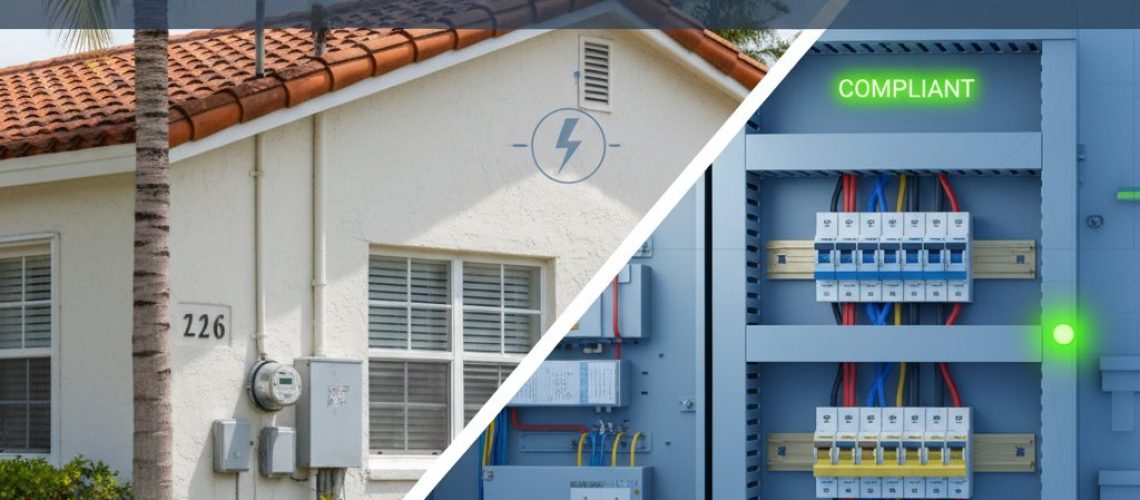
If you own a home built before 1990 in Palm Beach, Broward, or Miami-Dade counties, there’s a strong possibility your electrical system doesn’t meet current safety standards. While older homes have undeniable charm and character, their electrical infrastructure often falls short of modern electrical code compliance requirements—and that creates serious safety concerns for South Florida homeowners.
The good news? Understanding electrical code compliance doesn’t have to be overwhelming. Let’s explore what older homeowners need to know about bringing their electrical systems up to current standards and why this matters more than you might think.
Understanding Electrical Code Compliance in South Florida
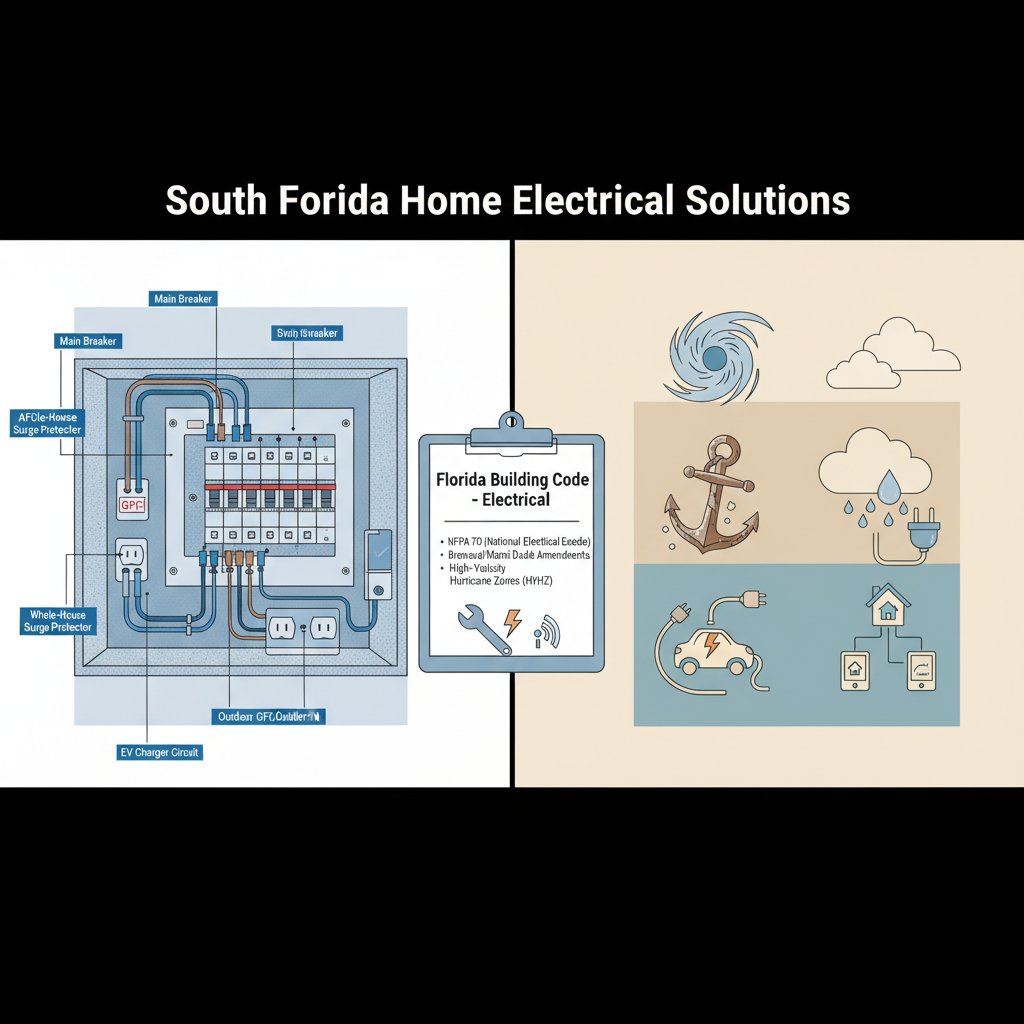
South Florida electrical codes have evolved significantly over the past few decades. These changes weren’t arbitrary—they reflect our growing understanding of electrical safety, increased power demands from modern appliances, and the unique environmental challenges our region faces.
The Florida Building Code, which incorporates the National Electrical Code (NEC), serves as the foundation for all electrical work throughout the state. However, local jurisdictions in Palm Beach, Broward, and Miami-Dade counties often adopt additional amendments that address region-specific concerns like hurricane preparedness, saltwater corrosion, and high humidity exposure.
Here’s what makes older homes particularly vulnerable: electrical systems installed decades ago were designed for a completely different lifestyle. Homes built in the 1960s through 1980s typically featured 60-100 amp service panels, which were adequate when households owned fewer electronic devices. Today’s average South Florida home requires 200 amp service to safely power air conditioning systems, smart home devices, electric vehicle chargers, pool equipment, and modern kitchen appliances.
Common Code Violations Found in Older South Florida Homes
During electrical safety inspections, licensed electricians consistently identify several recurring issues in older South Florida properties:
Outdated Electrical Panels and Fuse Boxes
Many homes still operate with Federal Pacific Electric (FPE) or Zinsco panels, both of which are now recognized as serious fire hazards. These panels fail to trip properly during electrical overloads, allowing dangerous heat buildup. A fuse box upgrade or complete electrical panel upgrade is essential for home electrical safety.
Aluminum Wiring
Popular during the 1960s and 1970s due to copper shortages, aluminum wiring expands and contracts differently than copper, creating loose connections over time. This leads to overheating at connection points and significantly increases fire risk—especially problematic in South Florida’s temperature fluctuations.
Insufficient Grounding
Older homes frequently lack proper grounding systems, which are crucial for protecting residents from electrical shock and ensuring proper function of modern electronics. Current electrical code compliance requires grounded outlets throughout the home and ground fault circuit interrupter (GFCI) protection in wet areas.
Two-Prong Outlets
While charming in their vintage simplicity, ungrounded two-prong outlets don’t provide the safety features required by modern electrical codes. These outlets should be replaced with properly grounded three-prong versions or GFCI-protected outlets.
Inadequate Circuit Protection
Older homes often have too few circuits for today’s electrical demands, leading to overloaded circuits. Modern codes require dedicated circuits for major appliances, separate circuits for kitchen countertop outlets, and arc fault circuit interrupter (AFCI) protection in living areas.
When Does Your Older Home Need to Meet Current Codes?
This question confuses many homeowners. Generally, if your electrical system was legally installed when your home was built, you’re “grandfathered in”—meaning you’re not automatically required to update it simply because codes have changed.
However, electrical inspection requirements do apply in several circumstances:
- Home sales: Many buyers request electrical safety inspections, and lenders may require code compliance updates before approving mortgages
- Major renovations: Any significant remodeling triggers permitting requirements, which means bringing affected electrical systems up to current standards
- Additions or upgrades: Adding square footage or installing new electrical services (like EV chargers) requires compliance with current codes
- Insurance requirements: Some insurers refuse coverage or charge higher premiums for homes with outdated electrical systems, particularly those with known problematic panels
- Hurricane hardening: South Florida’s hurricane mitigation programs often include electrical system upgrades as qualifying improvements
Even without these triggering events, proactive old electrical panel replacement makes financial and safety sense. Outdated electrical systems are the second leading cause of home fires in the United States, accounting for approximately 51,000 fires annually.
South Florida’s Unique Electrical Challenges
Our subtropical climate and severe weather patterns create electrical challenges that homeowners in other regions don’t face. Understanding these factors helps explain why electrical code compliance matters even more in South Florida.
Humidity and Corrosion
Constant humidity exposure accelerates corrosion on electrical connections, particularly in older systems with outdated materials. Saltwater air in coastal areas of Palm Beach, Broward, and Miami-Dade counties compounds this problem. Corroded connections increase resistance, generate heat, and create fire hazards.
Hurricane and Storm Preparedness
South Florida electrical codes now emphasize hurricane resilience. This includes proper grounding to handle lightning strikes, surge protection requirements, and secure mounting of electrical equipment. Older homes rarely incorporate these protective measures, leaving them vulnerable during our intense summer thunderstorm season and hurricane threats.
Air Conditioning Demands
Running central air conditioning essentially year-round places enormous demands on electrical systems. Older panels and wiring configurations weren’t designed for this constant, heavy load. Modern electrical panel upgrades ensure your system can safely handle South Florida’s cooling requirements.
The Electrical Inspection Process
A comprehensive electrical safety inspection examines your home’s entire electrical infrastructure. Licensed electricians evaluate:
- Service entrance and meter base condition
- Main panel capacity, type, and condition
- Circuit breaker functionality and proper sizing
- Wire gauge appropriateness for circuit loads
- Grounding and bonding systems
- GFCI and AFCI protection presence where required
- Outlet and switch condition throughout the home
- Signs of overheating, arcing, or previous amateur repairs
Following inspection, you’ll receive a detailed report identifying safety concerns, code violations, and recommended upgrades prioritized by urgency. This roadmap helps you make informed decisions about which improvements to tackle first.
Benefits of Bringing Your Electrical System Up to Code
While the upfront investment in electrical upgrades may seem substantial, the benefits extend far beyond simple compliance:
Enhanced Safety
Modern circuit breakers, proper grounding, and GFCI/AFCI protection dramatically reduce fire and shock risks. For families, this peace of mind is invaluable.
Increased Home Value
Updated electrical systems are major selling points. Homes with modern electrical infrastructure sell faster and command higher prices than comparable properties with outdated systems.
Lower Insurance Premiums
Many insurance companies offer discounts for homes with updated electrical panels and whole-house surge protection. Some insurers require these updates to maintain coverage.
Support for Modern Technology
Planning to install an EV charger, smart home system, or home office equipment? These technologies require robust electrical infrastructure that only modern systems provide.
Energy Efficiency
Newer electrical components reduce energy waste through improved connections and better circuit management, potentially lowering your monthly utility bills.
Working with Licensed Electrical Professionals
Electrical code compliance isn’t a DIY project. South Florida’s electrical codes are complex, and mistakes can be dangerous and expensive. Licensed electricians bring essential expertise to ensure work meets all applicable standards.
When selecting an electrical contractor, look for:
- Valid Florida state licensing and local permits
- Comprehensive liability insurance and workers’ compensation coverage
- Established reputation with verifiable customer reviews
- Transparent pricing and detailed written estimates
- Warranty coverage on parts and labor
- Same-day service availability for urgent needs
At Global Power & AC Corp, we understand the unique challenges South Florida homeowners face with aging electrical systems. Our team provides thorough electrical safety inspections, transparent assessments, and quality workmanship backed by an 8-year warranty—giving you confidence that your electrical upgrades are done right the first time.
Planning Your Electrical Upgrade
If inspection reveals your older home needs electrical updates, prioritize safety-critical items first. Essential upgrades typically include:
- Panel replacement: Upgrading from outdated or undersized panels to modern 200-amp service
- Grounding system installation: Ensuring proper grounding throughout your home
- GFCI/AFCI protection: Installing required safety devices in appropriate locations
- Aluminum wiring remediation: Addressing connection points or complete rewiring if necessary
- Surge protection: Whole-house surge protectors defend against South Florida’s frequent lightning strikes
Many homeowners spread electrical upgrades across multiple phases to manage costs while systematically improving safety. A qualified electrician can help you develop a phased approach that addresses the most critical issues immediately while planning for comprehensive updates over time.
Frequently Asked Questions
Do I legally have to update my old electrical system if it still works?
Generally, no—unless you’re selling, renovating, or your insurance company requires it. However, even if not legally required, updating outdated electrical systems significantly improves safety and functionality. Many older systems pose fire hazards even when they appear to work normally.
How much does it cost to bring an older South Florida home up to electrical code?
Costs vary widely based on your home’s size, current system condition, and required upgrades. A basic electrical panel upgrade typically ranges from $2,000-$4,000, while comprehensive whole-house rewiring can cost $8,000-$15,000 or more. Most homes fall somewhere between these extremes, requiring selective upgrades rather than complete rewiring.
Can I sell my South Florida home without updating the electrical system?
Yes, but it may complicate the sale. Buyers often request electrical inspections, and lenders may require certain updates before approving mortgages. Homes with known electrical issues typically sell for less or require seller concessions. Proactively addressing electrical concerns often yields better sale outcomes.
How long does an electrical panel upgrade take?
Most residential electrical panel upgrades are completed in one day. The process typically takes 6-8 hours, including coordinating temporary power disconnection with your utility company. More complex situations involving service entrance upgrades or meter base replacement may require additional time.
Will my homeowner’s insurance cover electrical system updates?
Standard homeowner’s insurance typically doesn’t cover upgrades or maintenance. However, if electrical system failure causes covered damage (like a fire), that damage may be covered. Some insurers offer discounts after you complete electrical upgrades, helping offset costs over time.
Protect Your Home with Professional Electrical Service
Your home’s electrical system is too important to ignore. Whether you’re concerned about safety, planning renovations, or simply want peace of mind, a professional electrical safety inspection provides the answers you need.
Global Power & AC Corp serves homeowners throughout Palm Beach, Broward, and Miami-Dade counties with comprehensive electrical services, from routine inspections to complete panel upgrades. Our licensed electricians understand South Florida’s unique electrical challenges and local code requirements, ensuring your home receives the expert care it deserves.
Don’t wait until an electrical problem becomes an emergency. Contact Global Power & AC Corp today to schedule your electrical safety inspection and discover how bringing your older home up to current electrical code compliance protects your family, your investment, and your peace of mind. With same-day service availability and an industry-leading 8-year warranty, we’re here to keep your South Florida home safe and powered for years to come.