
Hurricane season in South Florida runs from June 1st through November 30th, and homeowners in Palm Beach, Broward, and Miami-Dade counties know the critical importance of preparation. While stocking up on water and food is essential, ensuring your electrical system is ready for severe weather can mean the difference between weathering the storm safely or facing dangerous power outages and electrical hazards. With the 2026 hurricane season approaching, now is the time to assess your home’s electrical preparedness and make necessary upgrades to protect your family and property.
Understanding South Florida’s Unique Electrical Challenges During Hurricane Season
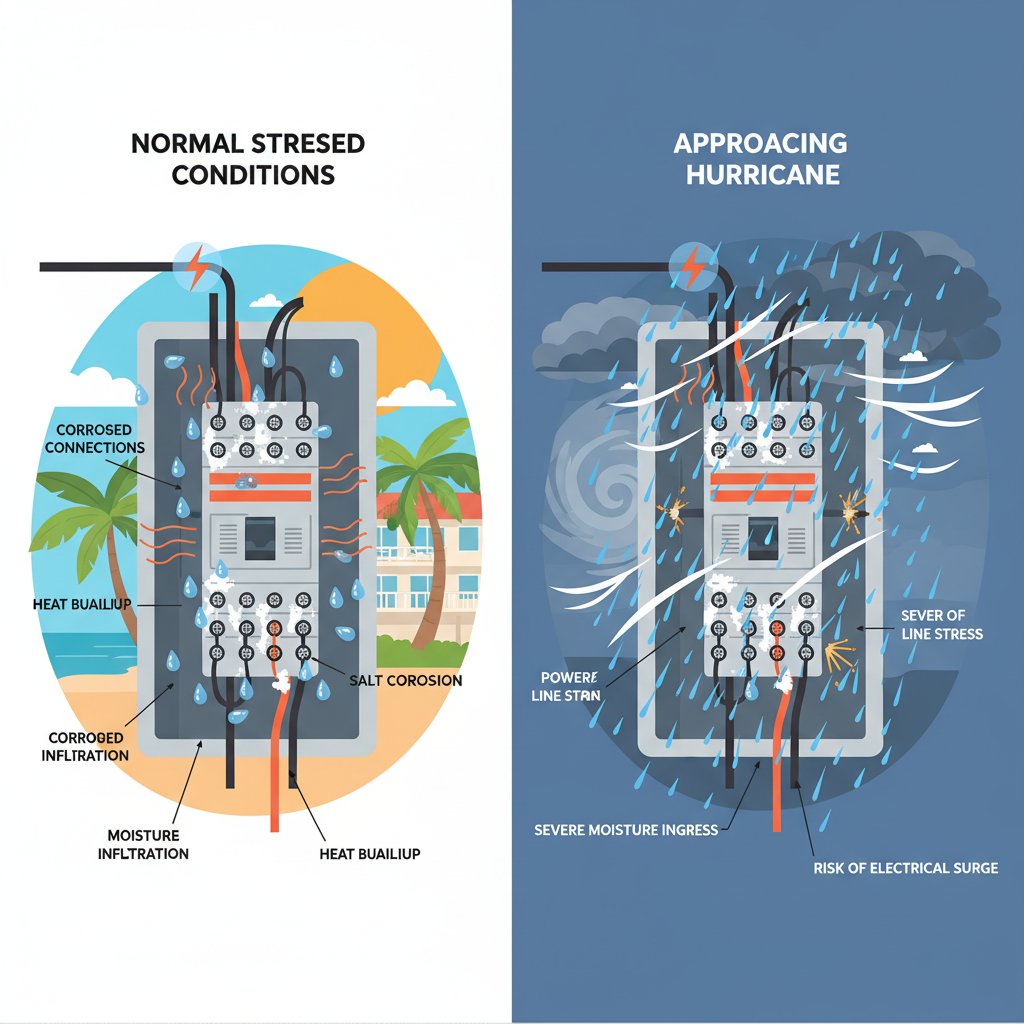
South Florida’s subtropical climate creates a perfect storm of electrical challenges even before hurricane season arrives. The combination of high humidity, salt air, frequent thunderstorms, and intense heat places constant stress on electrical systems. When hurricanes approach, these already-taxed systems face additional threats from flooding, power surges, falling trees, and extended outages that can last days or even weeks.
The aging electrical infrastructure throughout many South Florida neighborhoods compounds these challenges. Homes built decades ago may have electrical panels and wiring that don’t meet current South Florida electrical codes or can’t handle modern power demands, especially when backup systems kick in during emergencies.
Essential Pre-Hurricane Electrical Safety Inspection
Before hurricane season begins, schedule a comprehensive electrical safety inspection with a licensed professional. This proactive step identifies potential vulnerabilities that could become dangerous during severe weather events.
What a Professional Inspection Covers
A thorough electrical safety inspection examines every critical component of your home’s power system:
- Electrical panel condition: Checking for corrosion, loose connections, outdated breakers, and capacity issues that could fail during storms
- Grounding systems: Verifying proper grounding to protect against lightning strikes and power surges
- GFCI outlets: Testing ground fault circuit interrupters in areas prone to moisture exposure
- Outdoor electrical components: Inspecting weatherproofing on exterior outlets, lighting, and junction boxes
- Wiring integrity: Looking for signs of wear, damage from pests, or outdated aluminum wiring
- Surge protection: Evaluating whole-home surge protection systems
This inspection becomes your roadmap for addressing weaknesses before severe weather strikes. Many insurance companies also offer discounts for homes with recent electrical inspections and upgrades.
Electrical Panel Upgrade: Your Home’s First Line of Defense
The electrical panel serves as the heart of your home’s power distribution system. Older panels, particularly those with 100-amp service or outdated technology, may not provide adequate protection during hurricanes or support backup power systems effectively.
An electrical panel upgrade offers multiple benefits for hurricane preparedness. Modern panels feature advanced circuit breakers that respond faster to dangerous conditions, preventing electrical fire prevention issues during storms. They provide sufficient capacity to handle backup generators and essential appliances simultaneously. Updated panels also meet current South Florida electrical codes, which incorporate lessons learned from previous hurricane seasons.
If your home has a Federal Pacific, Zinsco, or other recalled panel brand, upgrading isn’t just about hurricane preparation—it’s a critical safety necessity that should be addressed immediately regardless of season.
Hurricane Power Backup Solutions: Choosing the Right System
Extended power outages remain one of the most challenging aspects of hurricane recovery in South Florida. Without electricity, air conditioning fails in oppressive heat, refrigerated food spoils, medical devices stop working, and communication becomes difficult. Investing in reliable hurricane power backup gives you control during the uncontrollable.
Whole House Generator vs. Portable Options
Homeowners have several backup power choices, each with distinct advantages:
Automatic Standby Generators provide the most comprehensive solution. These permanently installed systems detect power loss and activate automatically within seconds. A whole house generator runs on natural gas or propane, eliminating concerns about gasoline availability during emergencies. These systems can power your entire home or selected critical circuits indefinitely during extended outages.
Portable Generators offer more affordable entry-level backup power but require manual setup during storms, which can be dangerous. They need regular refueling with gasoline that may be unavailable during widespread outages, and they must be positioned outdoors to prevent deadly carbon monoxide buildup.
Battery Backup Systems have gained popularity with solar integration, providing silent operation and no fuel requirements. However, their capacity typically supports only essential circuits for limited duration without solar recharging, which isn’t reliable during multi-day storms.
Standby Generator Installation Considerations
Professional backup generator installation involves more than placing equipment outside your home. Licensed electricians must properly size the system based on your essential power needs, install transfer switches that safely isolate your home from the grid, ensure compliance with local permitting and setback requirements, and establish proper grounding and surge protection.
The investment in standby generator installation pays dividends in peace of mind and property protection. Homes with properly installed backup power systems maintain comfortable temperatures, preserve food supplies, support medical needs, and provide safe shelter when evacuation isn’t necessary or feasible.
Critical Electrical Fire Prevention During Hurricanes
Hurricanes create multiple electrical fire risks that homeowners must understand and address. Water intrusion from flooding or roof damage can energize unexpected surfaces and create short circuits. Power restoration surges can overload weakened systems. Generator misuse leads to carbon monoxide poisoning and fires. Damaged wiring exposed to wind and rain becomes incredibly dangerous.
Protect your home by taking these electrical fire prevention measures before and during storms:
- Elevate electrical panels, outlets, and appliances above potential flood levels where possible
- Install waterproof covers on outdoor outlets and consider weatherproof upgrades for exposed electrical components
- Never use extension cords as permanent solutions, especially during wet conditions
- Unplug non-essential appliances and electronics before the storm to protect against power surges
- Keep generators at least 20 feet from your home with exhaust directed away from windows and doors
- Never connect portable generators directly to home wiring without proper transfer switches
- Turn off main breakers if flooding reaches electrical components and don’t restore power until systems are professionally inspected
Home Backup Power Planning: What to Include
Even with a whole house generator, strategic planning ensures you maximize your backup power capacity. Create a priority list of essential circuits and appliances:
Tier 1 Essentials: Refrigerator, one window AC unit or portable AC, essential lighting, medical equipment, phone charging stations, and one bathroom.
Tier 2 Important: Additional cooling capacity, kitchen appliances, water heater, garage door opener, and security systems.
Tier 3 Comfort: Entertainment systems, pool equipment, additional lighting, and non-essential appliances.
This hierarchy helps you size your backup system appropriately and manage power consumption if fuel becomes limited during extended outages.
Smart Home Integration for Hurricane Monitoring
Modern smart home technology enhances hurricane preparedness through remote monitoring and control. Smart electrical systems allow you to check power status from evacuation locations, receive alerts about generator activation or problems, monitor temperature inside your home during outages, and remotely control smart switches to manage power consumption.
These systems require proper integration with your backup power solutions to remain functional during grid outages. Work with experienced electricians who understand both traditional electrical systems and smart home technology to ensure seamless operation when you need it most.
Post-Hurricane Electrical Safety Protocol
After hurricanes pass, electrical dangers often increase. Never assume your electrical system is safe just because the storm ended. Follow these critical safety steps:
- Wait for official clearance from utility companies before assuming power lines are safe
- Treat all downed power lines as energized and maintain at least 35 feet of distance
- Have licensed electricians inspect your system before restoring main power if any flooding or damage occurred
- Document all electrical damage with photos for insurance claims before making repairs
- Watch for signs of electrical problems like burning smells, buzzing sounds, warm outlets, or flickering lights
- Test all GFCI outlets after power restoration to ensure proper function
Preparing Now for Peace of Mind Later
Hurricane preparation isn’t just about surviving the storm—it’s about maintaining safety, comfort, and normalcy during challenging times. Your electrical system forms the foundation of that preparation, powering everything from air conditioning that makes South Florida summers bearable to communication devices that keep you connected with loved ones.
Don’t wait until forecasters track a storm toward South Florida to address electrical vulnerabilities. The weeks before hurricane season offer ideal timing for inspections, upgrades, and installations without the pressure of approaching deadlines or the premium pricing that emergency work commands.
Take Action Before the Next Storm
Global Power & AC Corp specializes in helping South Florida homeowners throughout Palm Beach, Broward, and Miami-Dade counties prepare their electrical systems for hurricane season. Our licensed electricians provide comprehensive electrical safety inspections, electrical panel upgrades, and professional standby generator installation backed by our industry-leading 8-year warranty. We understand the unique challenges that South Florida’s climate and hurricane threats present, and we’re committed to ensuring your home’s electrical system provides reliable, safe performance when you need it most.
Same-day service is available for urgent pre-storm preparations. Contact Global Power & AC Corp today to schedule your pre-hurricane electrical assessment and discover how backup power solutions can transform your hurricane experience from stressful to manageable. Don’t wait for the next storm warning—protect your family and home with electrical systems designed to weather any storm.
Frequently Asked Questions
How much does a whole house generator cost for a typical South Florida home?
Whole house generator costs vary based on home size and power requirements, but most South Florida homeowners invest between $8,000 and $15,000 for complete standby generator installation including equipment, transfer switch, permitting, and professional installation. This investment provides automatic backup power for your entire home during extended outages. Financing options often make this critical safety upgrade more accessible, and the value added to your property typically exceeds the installation cost.
When should I schedule my electrical safety inspection before hurricane season?
Schedule your electrical safety inspection in April or May, well before the June 1st start of hurricane season. This timing allows adequate time to complete any necessary repairs or upgrades before storms threaten. Early scheduling also avoids the rush that occurs once forecasters predict active hurricane seasons, ensuring you receive thorough attention rather than rushed emergency service.
Can I install a generator myself to save money?
Generator installation requires licensed electricians and proper permitting to ensure safety and code compliance. DIY installation risks dangerous electrical connections, improper grounding, code violations that void warranties and insurance coverage, and carbon monoxide hazards from incorrect placement. Professional installation protects your family, property, and investment while ensuring your system operates correctly when emergencies strike.
How long can a natural gas standby generator run during extended outages?
Natural gas standby generators can run indefinitely as long as the gas supply remains available. Unlike portable generators requiring constant refueling, automatic standby generators connected to natural gas lines provide continuous power throughout extended outages. Most South Florida hurricanes restore power within days to two weeks, well within the unlimited runtime capability of properly maintained natural gas generators.
What electrical upgrades are required by South Florida codes for hurricane protection?
South Florida electrical codes require proper grounding systems, GFCI protection in wet locations, adequate panel capacity for modern loads, proper weatherproofing for outdoor electrical components, and approved transfer switches for backup generators. Specific requirements vary by jurisdiction across Palm Beach, Broward, and Miami-Dade counties. Licensed electricians familiar with local codes ensure all work meets or exceeds these safety standards designed to protect homes during severe weather.