
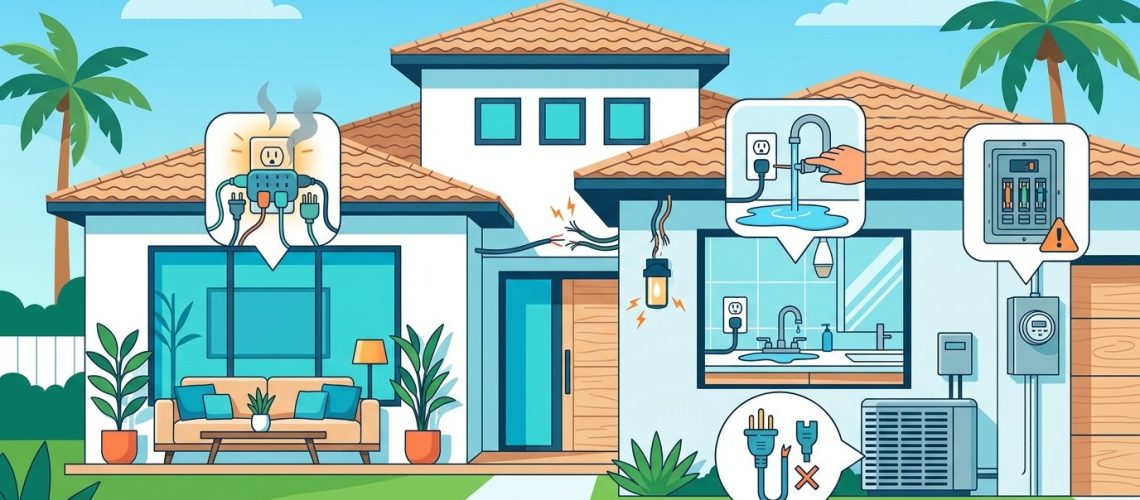
Nearly 51,000 home electrical fires occur across the United States every year, according to the U.S. Fire Administration. In South Florida, where high humidity, intense thunderstorms, and hurricane season create conditions that accelerate electrical wear and corrosion, the risks inside your home can be even greater than national averages suggest. Whether you own a single-family home in Boca Raton, a condo in Fort Lauderdale, or a rental property in Miami-Dade County, knowing where electrical dangers hide is the first step toward protecting your family and your investment.
Here are the top five electrical hazards commonly found in South Florida homes — and what you can do about each one.
1. Outdated or Undersized Electrical Panels
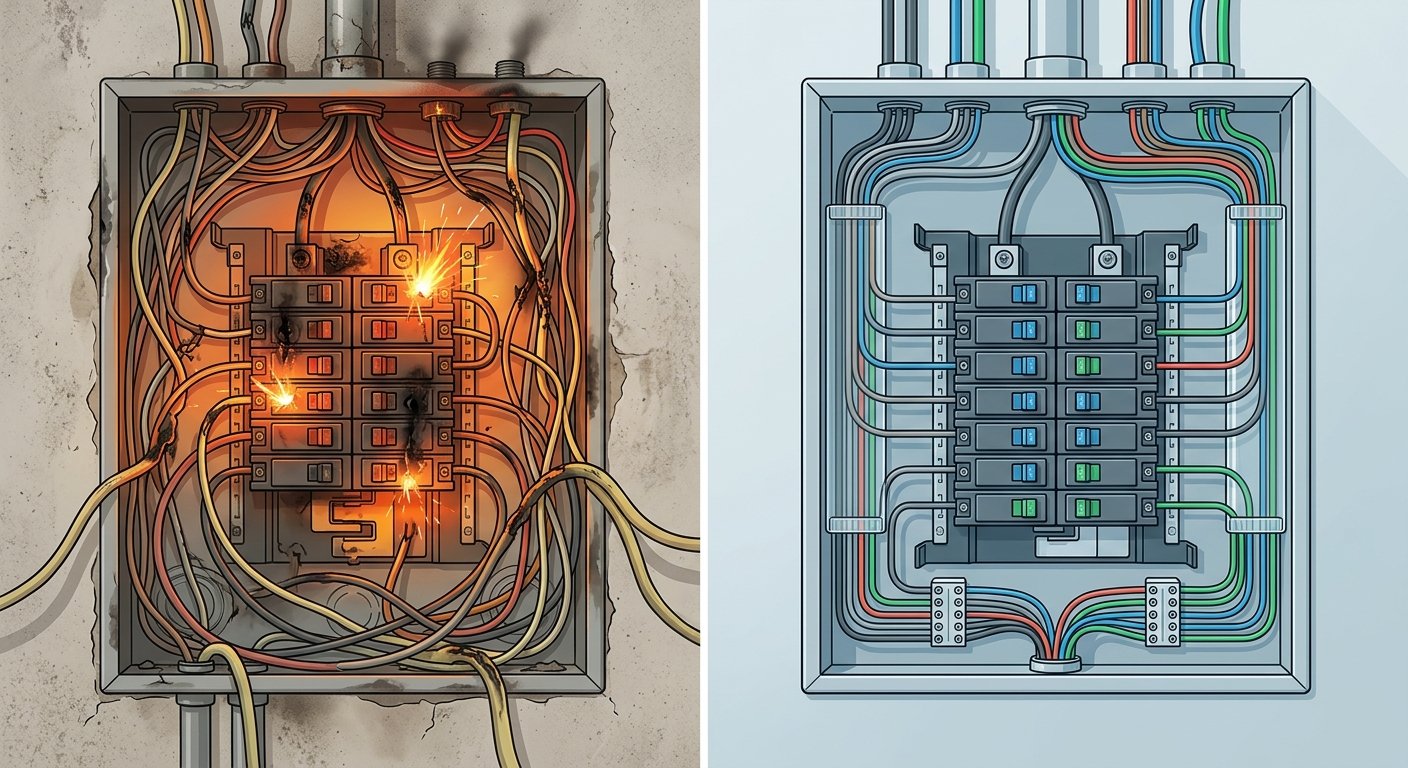
One of the most widespread electrical hazards in South Florida homes is an aging or undersized electrical panel. Many homes built before the 1990s still operate on panels designed for far less electrical demand than today’s households require. Add smart TVs, EV chargers, whole-home air conditioning systems, and home office equipment to the picture, and an older 100-amp panel simply cannot keep up safely.
Specific panel brands — including Federal Pacific Electric (Stab-Lok) and Zinsco panels — have well-documented safety concerns. The U.S. Consumer Product Safety Commission has flagged these breaker types for failing to trip properly during overloads, dramatically increasing the risk of electrical fires.
South Florida’s humidity compounds the problem. Moisture infiltration inside panel enclosures can cause corrosion on bus bars and terminals, creating resistance that generates heat over time. If your panel is more than 25 years old, makes buzzing or crackling sounds, or frequently trips breakers, it may be time for an upgrade.
At Global Power & AC Corp, our licensed electricians perform thorough panel evaluations for homeowners throughout Palm Beach, Broward, and Miami-Dade counties. Learn more about electrical panel upgrades and what the process involves.
2. Aluminum Wiring in Older Homes
During the late 1960s and early 1970s, aluminum wiring was used in residential construction as a cost-saving alternative to copper. Hundreds of thousands of homes in South Florida were built during this era, and many still contain original aluminum branch circuit wiring today.
The problem? Aluminum expands and contracts more than copper as it heats and cools. Over decades of use, this movement causes connections to loosen at outlets, switches, and panel terminals — creating arcing points that can ignite surrounding materials. Signs of aluminum wiring concerns include:
- Outlets or switches that feel warm to the touch
- Flickering lights or intermittent power loss
- A burning or plastic smell near receptacles
- Discoloration or scorch marks around outlet covers
If your home was built between 1965 and 1973, a professional electrical safety inspection can confirm whether aluminum wiring is present and what remediation options are appropriate. Solutions range from installing approved CO/ALR-rated devices to full rewiring, depending on the extent of the issue.
3. Overloaded Circuits and Extension Cord Misuse
South Florida homeowners often rely heavily on air conditioning, dehumidifiers, and fans — especially during the long warm months from spring through late fall. This creates significant demand on home circuits, and when that demand exceeds what a circuit is rated to handle, overheating and fire become real possibilities.
Overloaded circuits are frequently worsened by common household habits most people don’t think twice about:
- Using extension cords as permanent wiring solutions
- Daisy-chaining power strips together
- Plugging space heaters or window AC units into standard outlets not designed for high-draw appliances
- Running too many devices from a single circuit in a kitchen or home office
Extension cords are designed for temporary use only. When used long-term, they degrade, overheat, and become significant fire hazards — especially when run under rugs or through tight spaces where heat cannot dissipate. If your home consistently lacks sufficient outlets for your lifestyle, having a licensed electrician add dedicated circuits is the safe, code-compliant solution.
South Florida electrical codes, which follow the National Electrical Code (NEC) with state-specific amendments, require dedicated circuits for high-demand appliances and specific kitchen and bathroom outlets. Working with a licensed contractor ensures your home meets current standards.
4. Storm and Surge Damage to Electrical Systems
Living in Palm Beach, Broward, or Miami-Dade County means your home’s electrical system faces repeated exposure to powerful thunderstorms, lightning strikes, and the threat of hurricanes. This isn’t just a seasonal inconvenience — storm activity is one of the leading contributors to electrical system damage in South Florida homes.
Lightning strikes and near-miss strikes send powerful voltage surges through utility lines and into your home’s wiring. Even a surge that doesn’t cause an immediate outage can degrade sensitive electronics, damage appliances, and weaken wiring insulation over time. According to the Insurance Institute for Business & Home Safety, power surges are a leading cause of damage to home electronics and appliances.
Homeowners should consider a layered surge protection strategy:
- Whole-home surge protectors installed at the main panel to intercept large surges at the point of entry
- Point-of-use surge protectors at individual outlets for sensitive electronics
- GFCI and AFCI breakers throughout the home for additional fault protection
After any significant storm event, it’s wise to have your electrical system inspected for hidden damage — particularly if you experienced a nearby lightning strike, extended outage, or flooding. What looks fine on the surface may have compromised insulation, melted wire connections, or corroded grounding components underneath.
5. Absence of GFCI and AFCI Protection
Ground Fault Circuit Interrupters (GFCIs) and Arc Fault Circuit Interrupters (AFCIs) are two of the most important safety technologies available in residential electrical systems — and both are frequently absent or only partially installed in older South Florida homes.
GFCIs are designed to detect ground faults (electrical current flowing in an unintended path, such as through water or a person) and cut power within milliseconds. They are required by code in bathrooms, kitchens, garages, outdoor outlets, and areas near water. In South Florida’s humid environment, where condensation, pool proximity, and coastal moisture are everyday realities, GFCI protection is especially critical.
AFCIs detect dangerous arcing faults — the kind that occur inside walls before visible signs of a problem ever appear. These devices are required in bedrooms and, in newer construction, throughout living spaces under current NEC standards. Homes built or last rewired before these requirements were adopted may be missing AFCI protection entirely.
How to Know If Your Home Is Protected
Look for test/reset buttons on outlets in bathrooms, kitchens, and garages. In the panel, AFCI breakers will be clearly labeled. If you’re unsure what protection your home currently has, a comprehensive electrical safety inspection can provide a full picture.
Global Power & AC Corp offers thorough electrical safety inspections that evaluate your home’s GFCI and AFCI coverage, panel condition, wiring integrity, and overall compliance with South Florida electrical codes — giving you clear answers and actionable recommendations.
Electrical Safety Checklist for South Florida Homeowners
Use this quick reference checklist to identify potential concerns in your home:
- Panel is less than 200 amps and more than 25 years old
- Home was built between 1965 and 1973 (potential aluminum wiring)
- Extension cords are used for permanent appliances
- No whole-home surge protector is installed
- GFCI outlets are absent in bathrooms, kitchen, or garage
- Breakers trip frequently without a clear cause
- Outlets or switches feel warm or show discoloration
- No professional electrical inspection in the past 5 years
If you checked two or more of these items, scheduling a professional inspection is a smart next step.
Frequently Asked Questions
How often should South Florida homeowners schedule an electrical safety inspection?
Most electrical experts recommend a professional inspection every 5 years for homes under 25 years old, and every 3 years for older homes. Additionally, an inspection is strongly recommended after purchasing a new home, completing major renovations, or after significant storm events.
What are the warning signs of an electrical fire hazard in my home?
Common warning signs include frequently tripping breakers, flickering or dimming lights, burning or unusual odors near outlets or the panel, warm or discolored outlet covers, and buzzing or crackling sounds from electrical components. Any of these signs warrant a prompt inspection by a licensed electrician.
Does South Florida follow the National Electrical Code (NEC)?
Yes. Florida adopts the NEC with state-specific amendments through the Florida Building Code. Local jurisdictions in Palm Beach, Broward, and Miami-Dade counties may have additional requirements. Licensed electrical contractors stay current with all applicable codes to ensure compliant work.
Are GFCI and AFCI outlets required in existing homes or only new construction?
Current code requires GFCI and AFCI protection in new construction and significant renovations. Existing homes are not automatically required to retrofit unless work is being performed. However, upgrading older homes to include these protections is strongly recommended for safety and is often required when selling a home.
What should I do immediately after a major storm if I’m concerned about my electrical system?
If you notice burning smells, sparking, or visible damage, turn off the main breaker and call a licensed electrician before restoring power. Even if everything appears normal after a storm, scheduling an inspection is a wise precaution — especially after lightning strikes near your home or extended outages followed by power restoration.
Protect Your Home With Expert Electrical Service
Electrical hazards rarely announce themselves until they’ve already caused damage. The good news is that most risks are preventable with the right information and the right team behind you. Global Power & AC Corp is a licensed and insured electrical contractor serving homeowners and property managers throughout Palm Beach, Broward, and Miami-Dade counties. We back every job with an 8-year warranty on workmanship and offer same-day service for urgent needs.
Whether you need a full electrical safety inspection, a panel upgrade, or expert guidance on protecting your home from South Florida’s demanding environment, our team is ready to help. Call us today at (561) 203-0080 to schedule your service — and gain the peace of mind every homeowner deserves.