
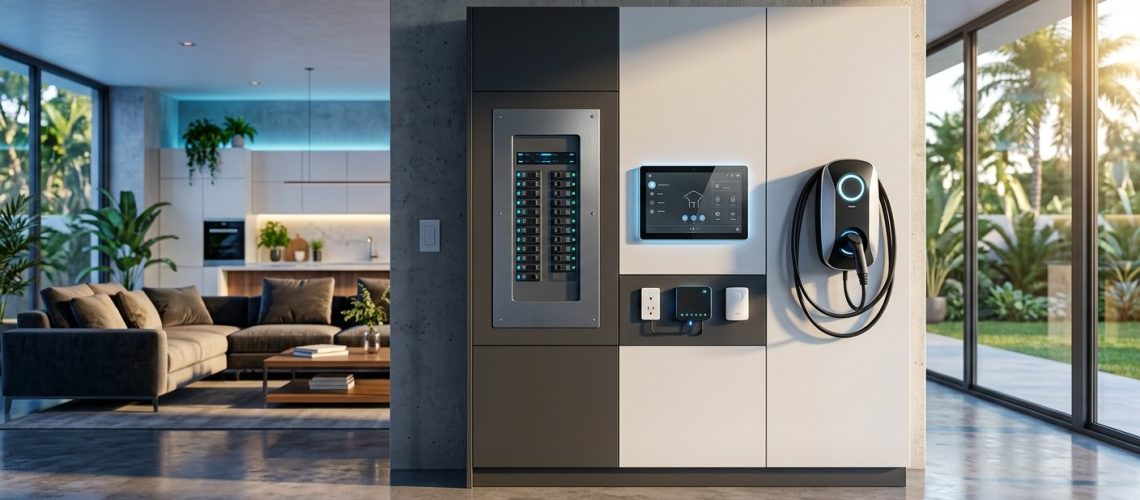
Nearly 70% of South Florida homes were built before smart home technology existed — which means the electrical infrastructure behind those walls was never designed to handle today’s connected devices. Before you invest in whole-home automation, EV chargers, or high-powered smart appliances, there’s an important question to ask: can your electrical system actually support it?
The answer often involves an upgrade first. Here’s what you need to know before your smart home installation in South Florida goes sideways — and which devices demand electrical preparation before you can enjoy them safely.
Why Your Electrical System Matters for Smart Home Technology
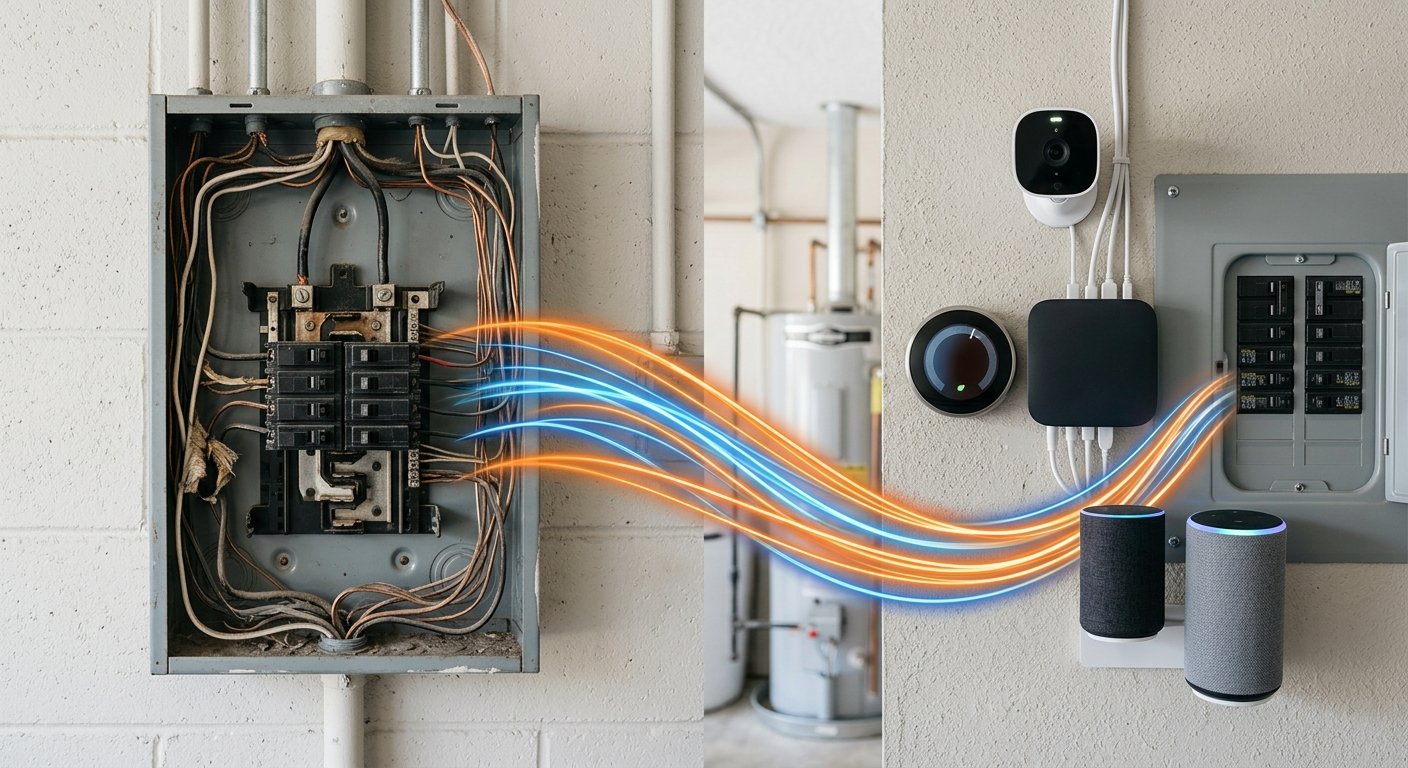
Smart home devices aren’t just gadgets — they’re power-hungry, always-on systems that place consistent demands on your electrical panel, wiring, and circuits. Older homes throughout Palm Beach, Broward, and Miami-Dade counties commonly have 100-amp panels, outdated wiring, and circuits that were sized for far simpler times.
Adding smart thermostats, EV chargers, whole-home lighting systems, and smart kitchen appliances to an undersized panel doesn’t just risk nuisance tripping. It creates genuine fire hazards, especially in South Florida’s humidity-rich environment where wiring insulation degrades faster than in drier climates. According to the National Fire Protection Association, electrical failures are one of the leading causes of residential fires nationally — and the risk compounds when outdated systems are pushed beyond their capacity.
Understanding which smart home devices require electrical upgrades first allows you to plan your home automation project correctly, avoid costly mid-project surprises, and ensure everything is safe, code-compliant, and backed by quality workmanship.
EV Charging Stations
Electric vehicle chargers are the single most power-demanding smart home addition most homeowners will ever install. A standard Level 2 EV charger requires a dedicated 240-volt circuit, typically rated at 40 to 60 amps. If your home is running on an older 100-amp panel — common in homes built before the 1990s across Delray Beach, Boynton Beach, and Boca Raton — you likely don’t have the capacity to add this circuit without a panel upgrade first.
Beyond capacity, EV charger installation also requires proper grounding, GFCI protection in garage environments, and often conduit runs that need to meet current Florida building codes. Attempting to add a Level 2 charger without addressing your panel first is a recipe for nuisance tripping at best and an electrical fire at worst.
A panel upgrade to 200 amps or higher creates the headroom needed not only for your EV charger but for every other smart device you plan to add going forward.
Whole-Home Smart Lighting Systems
Smart lighting goes well beyond swapping out a few bulbs. Whole-home systems — including in-wall smart dimmers, automated outdoor lighting, and scene-based controls — often require dedicated circuits, neutral wires at every switch location, and sometimes low-voltage wiring infrastructure throughout the home.
Many older homes, particularly those built in the 1970s and 1980s throughout Fort Lauderdale and West Palm Beach, were wired with two-wire switch loops that lack the neutral wire smart dimmers require to function correctly. Without a neutral wire, many smart switches simply won’t work — or will buzz, flicker, and fail prematurely.
Before investing in a comprehensive smart lighting system, a licensed electrician should assess your existing wiring and determine whether rewiring switch legs or running new circuits is necessary. This is part of thorough electrical safety inspection work that identifies compatibility issues before installation begins.
Smart Kitchen Appliances and High-Draw Devices
Modern smart kitchens are impressive — but they’re also power-hungry. Smart ranges, double ovens, induction cooktops, and refrigerators with built-in touchscreens all draw significantly more power than their traditional counterparts. Many require dedicated 240-volt circuits that older kitchens simply don’t have pre-wired.
Consider these smart appliances that typically require dedicated circuits:
- Smart electric ranges and ovens — require a dedicated 40–50 amp, 240-volt circuit
- Induction cooktops — require a dedicated 40–50 amp circuit separate from the oven
- Smart dishwashers — often require a dedicated 20-amp, 120-volt circuit
- Smart refrigerators with advanced features — require a grounded, dedicated outlet to prevent tripping shared circuits
- Under-counter wine coolers and beverage centers — benefit from dedicated circuits to avoid overloading kitchen branch circuits
Running these appliances on shared circuits causes persistent tripping, appliance malfunctions, and long-term damage to both the devices and your wiring.
Whole-Home Standby Generators with Smart Monitoring
South Florida homeowners know that hurricane season runs from June through November, and power outages are part of life in Palm Beach and Broward counties. Whole-home standby generators with smart monitoring capabilities — ones that alert you to outages, self-test automatically, and integrate with home automation apps — are an increasingly popular upgrade.
But these systems require a properly sized automatic transfer switch (ATS), a dedicated fuel connection, and integration into your main electrical panel. Depending on generator size, some homes also need a subpanel to accommodate the load distribution. This isn’t a plug-and-play installation. It demands licensed electrical work, proper permitting, and coordination with your utility provider. The U.S. Department of Energy recommends working with qualified electricians for standby generator installation to ensure transfer switch safety and compliance.
Smart Home Hubs and Whole-Home Automation Systems
True whole-home automation — where lighting, security, climate, entertainment, and energy management all communicate through a central hub — goes far beyond wireless device pairing. High-end home automation systems often require:
- Dedicated low-voltage wiring infrastructure throughout the home
- Properly grounded and protected outlets in equipment closets or server locations
- Surge protection at the panel level to safeguard sensitive electronics
- Adequate panel capacity to support all integrated systems simultaneously
In South Florida, whole-home surge protection deserves special emphasis. Lightning strikes are frequent during afternoon thunderstorm season, and a single surge can destroy thousands of dollars of smart home equipment in milliseconds. A whole-home surge protector installed at your panel is a foundational upgrade before any serious home automation investment.
Learn more about how smart home electrical planning can protect your investment from the start.
The Right Order: Electrical Infrastructure First
Experienced electricians approach smart home projects with a clear sequence in mind. Getting this order right saves money, avoids rework, and ensures everything functions as designed from day one.
- Electrical safety inspection — Assess existing panel capacity, wiring condition, grounding, and code compliance
- Panel upgrade if needed — Expand capacity to 200 amps or higher to support added loads
- Whole-home surge protection — Protect all future smart devices from voltage spikes
- Dedicated circuits — Run new circuits for EV chargers, major appliances, and automation hubs
- Wiring infrastructure — Address neutral wire availability at switch locations and low-voltage runs
- Device installation — Install smart devices once infrastructure is confirmed ready
Skipping steps one through five and jumping straight to device installation is the most common — and costly — mistake South Florida homeowners make when transitioning to smart home systems.
Frequently Asked Questions
Do I need a panel upgrade before installing smart home devices?
Not always, but often yes — especially if your home has a 100-amp panel or older wiring. Devices like EV chargers, smart ranges, and whole-home automation systems require dedicated circuits and significant electrical capacity. A licensed electrician can assess your panel and determine whether an upgrade is necessary before installation begins.
What is the most important electrical upgrade for a smart home?
For most South Florida homes, upgrading to a 200-amp electrical panel is the most impactful first step. It provides the capacity headroom needed to support EV chargers, smart appliances, dedicated circuits, and future expansions without overloading your system.
Can smart home devices cause electrical fires if my wiring is outdated?
Yes. Adding high-draw smart devices to circuits that weren’t designed for them creates overloading risks that can lead to overheating and fire. This is especially relevant in older homes across Palm Beach, Broward, and Miami-Dade counties where original wiring may already be near its service life. Always have a licensed electrician inspect your system before adding significant smart home loads.
How much does a panel upgrade cost in South Florida?
Panel upgrade costs vary depending on your home’s current setup, the service size needed, and permit requirements under Florida building codes. The best way to get an accurate estimate is to schedule an assessment with a licensed electrical contractor who can evaluate your specific situation and provide a detailed quote.
Do I need permits for smart home electrical work in Florida?
Yes. Most electrical work in Florida — including panel upgrades, new circuit installation, and EV charger installation — requires permits and inspections under the Florida Building Code. Working with a licensed and insured electrical contractor ensures all work is properly permitted, inspected, and code-compliant.
Plan Your Smart Home the Right Way
Smart home technology delivers real comfort, efficiency, and security benefits — but only when the electrical foundation is built to support it. For South Florida homeowners in Palm Beach, Broward, and Miami-Dade counties, that means taking stock of your existing electrical system before investing in devices that depend on it.
At Global Power & AC Corp, we help homeowners throughout West Palm Beach, Boca Raton, Fort Lauderdale, and surrounding communities assess their electrical infrastructure, plan upgrades correctly, and install smart home systems with confidence. As a licensed and insured electrical contractor, we back our workmanship with an 8-year warranty and offer same-day service for urgent needs.
Ready to get your home smart-ready the right way? Call us at (561) 203-0080 to schedule your electrical assessment today.