
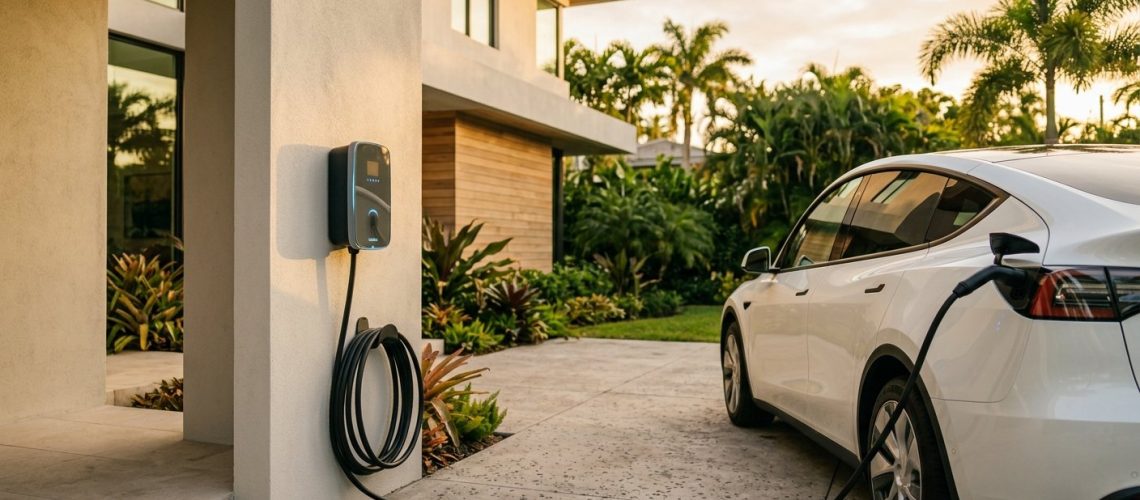
A Level 2 EV charger charges your electric vehicle 4–8 times faster than a standard Level 1 outlet, delivering 25–30 miles of range per hour compared to just 3–5 miles per hour. For most South Florida homeowners who drive 30+ miles daily, a dedicated Level 2 home charging station is the practical choice — and it requires professional installation by a licensed electrician.
- Level 1 chargers use a standard 120V outlet; Level 2 chargers require a dedicated 240V circuit.
- Level 2 charging is 4–8x faster, making it the preferred home solution for daily EV drivers.
- Level 2 installation requires a licensed electrical contractor and may require a panel upgrade.
- South Florida’s humidity and storm activity make proper, weatherproof charger installation especially critical.
- Federal tax credits may offset the cost of home EV charging station installation.
What Is a Level 1 EV Charger?
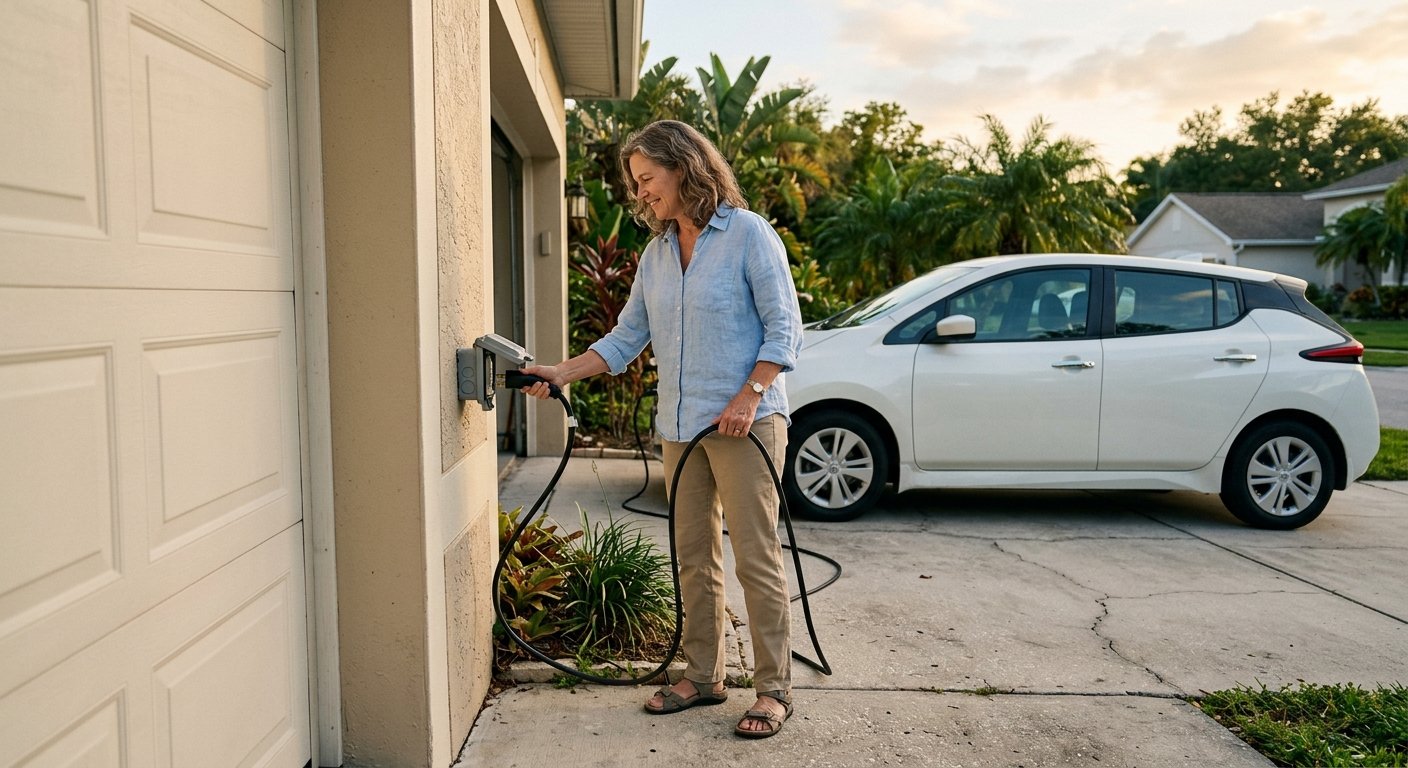
A Level 1 charger is the most basic form of electric vehicle charging. It uses your home’s standard 120-volt outlet — the same type that powers a lamp or phone charger — and plugs directly into any grounded three-prong receptacle. There is no special equipment or electrical upgrade required, which is why many EV manufacturers include a Level 1 cordset in the box with a new vehicle.
The tradeoff is speed. At Level 1, you’re typically adding 3–5 miles of driving range per hour of charging. For someone who drives 15 miles a day and plugs in overnight, that might be sufficient. But for the average South Florida commuter — navigating I-95, US-1, or the Palmetto Expressway — Level 1 often falls short, especially during the busy hurricane season when you may want a full battery at a moment’s notice.
Level 1 charging works fine for plug-in hybrid vehicles (PHEVs) with smaller battery packs, but for full battery electric vehicles (BEVs) with ranges of 200–350+ miles, Level 1 alone is rarely practical as a primary charging method.
What Is a Level 2 EV Charger?
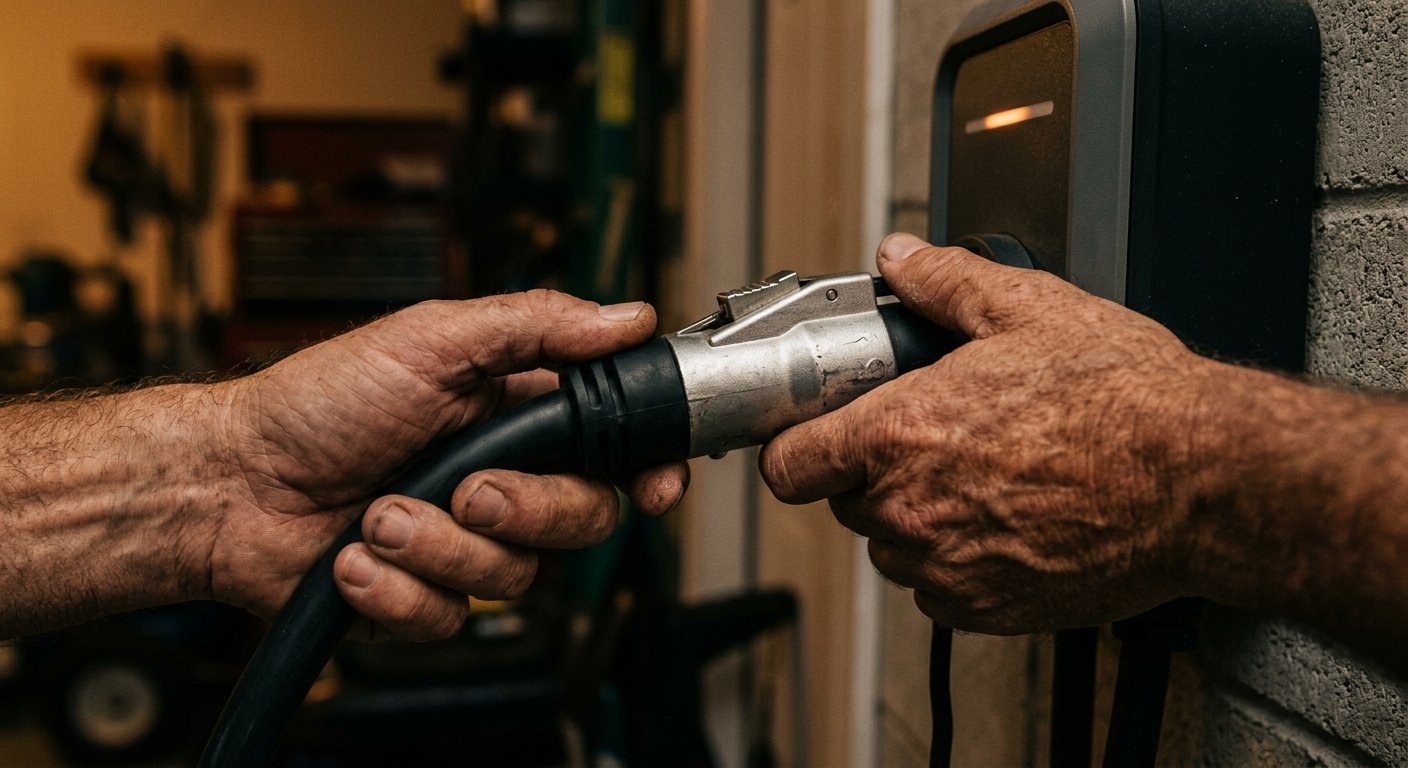
A Level 2 charger operates on 240 volts — the same voltage used by your electric dryer or water heater — and delivers significantly more power to your vehicle. Most residential Level 2 chargers range from 16 to 48 amps, providing 20–40 miles of range per hour depending on your vehicle’s onboard charger acceptance rate.
This means a depleted EV battery can typically be fully recharged overnight in 6–10 hours with a Level 2 home charging station, compared to 24–40+ hours on a Level 1 connection. For Palm Beach County and Broward County homeowners who rely on their EVs as a primary vehicle, that difference is enormous.
Level 2 chargers require installation of a dedicated 240V circuit, a weatherproof outlet or hardwired unit, and — depending on your current panel capacity — possibly an electrical panel upgrade. According to the U.S. Department of Energy, Level 2 charging is the most common home charging configuration and is recommended for most EV owners.
Level 1 vs Level 2: Side-by-Side Comparison
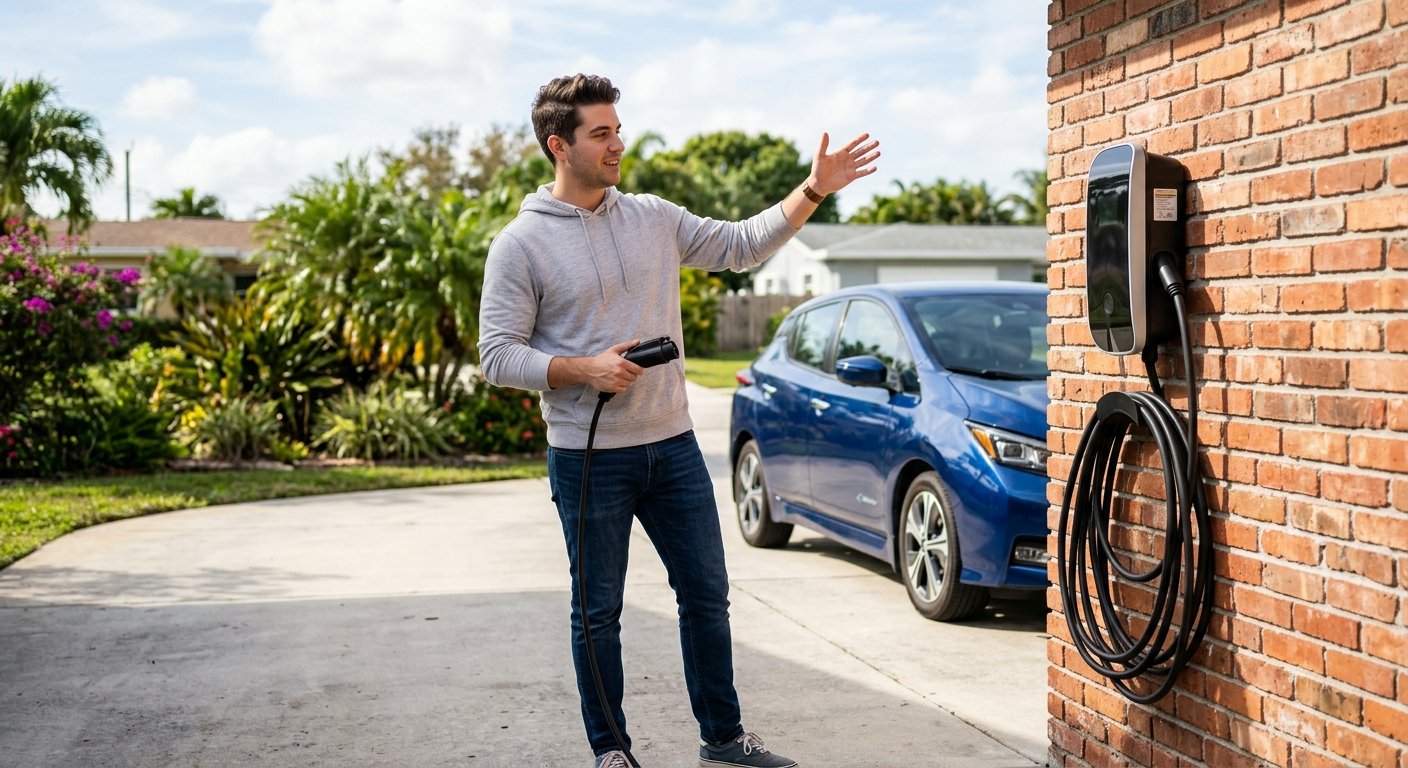
Understanding the technical differences helps you make the right decision for your household. Here’s how the two charging levels stack up across the factors that matter most to homeowners:
| Comparison Factor | Level 1 Charger | Level 2 Charger |
|---|---|---|
| Voltage | 120V | 240V |
| Amperage (typical) | 12–16 amps | 16–48 amps |
| Miles of range per hour | 3–5 miles | 25–30 miles |
| Full charge time (typical BEV) | 24–40+ hours | 6–10 hours |
| Equipment required | Standard outlet | Dedicated 240V circuit + EVSE unit |
| Professional installation needed? | No | Yes |
| Ideal for | Low-mileage drivers, PHEVs | Daily drivers, full BEVs |
| Outdoor weatherproofing required? | Rarely | Yes (especially in South FL) |
Why Level 2 Installation Matters in South Florida
South Florida’s environment creates specific considerations that don’t apply in drier climates. Year-round humidity, salt air in coastal areas like Boca Raton and Fort Lauderdale, and the ever-present threat of summer thunderstorms and hurricane-force winds mean that EV charger installation must meet a higher standard than simply hanging a unit on a garage wall.
A properly installed Level 2 charger in South Florida should include a NEMA 4 or higher weatherproof enclosure, a dedicated circuit with appropriate breaker sizing, GFCI protection, and surge suppression — particularly important given our region’s exposure to lightning strikes. The National Electrical Code (NFPA 70) sets the baseline, but local amendments in Palm Beach, Broward, and Miami-Dade counties may impose additional requirements.
In South Florida, proper EV charger installation isn’t just about speed — it’s about protecting a significant investment from humidity, storms, and power surges.
This is why working with a licensed and insured electrical contractor who knows the local code landscape is so important. At Global Power & AC Corp, our team handles the permitting, inspection coordination, and weatherproof installation — so your EV charger installation is done right the first time, backed by our 8-year warranty on workmanship.
Never attempt to install a 240V circuit or Level 2 EVSE unit yourself. Improper wiring can create fire hazards, void your homeowner’s insurance, and fail county inspections. Always use a licensed electrical contractor for electric car charger installation.
Do You Need an Electrical Panel Upgrade First?
Many homes in Palm Beach, Broward, and Miami-Dade counties — especially those built before 2000 — may not have the panel capacity to support a Level 2 charger alongside existing electrical loads. A 240V, 40–50 amp circuit for a Level 2 charger draws significant power, and older 100-amp panels simply may not have the headroom.
Before installation, a qualified electrician will evaluate your current panel capacity, available breaker slots, and overall electrical load. If your panel is underpowered or aging, an electrical panel upgrade may be recommended first. This isn’t just about code compliance — it’s about safely powering your home and your EV simultaneously without tripping breakers or creating hazards.
Electrical Assessment
A licensed electrician inspects your current panel, available capacity, and ideal charger location — garage, driveway, or carport.
Panel Upgrade (If Needed)
If your panel lacks capacity, an upgrade is completed before the charger circuit is added. This also future-proofs your home for additional loads.
Dedicated Circuit Installation
A 240V dedicated circuit is run from your panel to the charger location, properly sized and protected with a breaker and surge protection.
EVSE Unit Installation
The Level 2 charging unit is mounted, wired, and installed with weatherproof enclosures appropriate for South Florida’s outdoor conditions.
Permit & Inspection
All required permits are pulled, and the installation is inspected by the local authority having jurisdiction before the system is energized.
Cost and Incentives to Know
The cost of a Level 2 home charging station installation varies based on panel condition, charger location, and whether any upgrades are needed. However, the financial picture has become increasingly favorable for homeowners. The federal Alternative Fuel Vehicle Refueling Property Credit (Section 30C) currently allows eligible homeowners to claim a tax credit of up to 30% of the cost of EV charger installation equipment and labor, up to $1,000 for residential properties. Consult a tax professional to confirm current eligibility based on your specific situation.
Beyond federal credits, Florida utilities including FPL have historically offered rebates and off-peak charging rate programs that reduce the long-term operating cost of home EV charging. Visit the Alternative Fuels Data Center for a current look at available federal and state incentives in Florida.
Smart Level 2 chargers with Wi-Fi connectivity allow you to schedule charging during off-peak hours, reducing electricity costs significantly — especially if your utility offers time-of-use rate plans. Ask your installer about smart charger options during your consultation.
Frequently Asked Questions
Can I install a Level 2 charger in a condo or apartment?
Yes, but it requires coordination with your HOA or building management to access electrical infrastructure and obtain approval. Florida law has provisions that protect EV owners’ rights to install charging equipment in certain circumstances. A licensed electrician can assess feasibility and help navigate the approval process for your specific building in Miami-Dade, Broward, or Palm Beach County.
How much does Level 2 EV charger installation cost?
Installation costs vary depending on your panel’s current capacity, the distance from panel to charger location, and whether a panel upgrade is needed. The best approach is to schedule an on-site assessment with a licensed electrical contractor who can provide an accurate quote for your specific home and situation.
Will a Level 2 charger work with any electric vehicle?
Most modern EVs sold in the U.S. are compatible with Level 2 charging via the SAE J1772 connector standard. Tesla vehicles use a proprietary connector but come with an adapter. Your vehicle’s onboard charger determines the maximum rate at which it can accept power, so actual charging speeds vary by vehicle model.
Is a permit required for EV charger installation in South Florida?
Yes. In Palm Beach, Broward, and Miami-Dade counties, electrical permits are required for the installation of a new 240V circuit and EV charging equipment. A licensed electrical contractor will pull the necessary permits and coordinate the required inspections on your behalf.
How does a standby generator interact with an EV charger?
This is an important consideration for South Florida homeowners preparing for hurricane season. Most whole-home standby generators can power a Level 2 charger, but load management is critical. An electrician should evaluate your generator capacity and configure the electrical system so your EV charger, essential appliances, and generator work together safely. Learn more about generator options on our standby generators page.
Ready to Install Your Level 2 EV Charger?
Global Power & AC Corp provides expert EV charger installation throughout Palm Beach, Broward, and Miami-Dade counties — with same-day service available and every installation backed by our 8-year workmanship warranty.

About Global Power & AC Corp
Global Power & AC Corp is a trusted electrical contractor serving homeowners and businesses throughout South Florida's Palm Beach, Broward, and Miami-Dade counties. The company specializes in residential electrical services including panel upgrades, EV charger installation, standby generators, smart home integration, and comprehensive electrical safety solutions. With a commitment to quality craftsmanship backed by an 8-year warranty and same-day service availability, Global Power & AC Corp combines family-owned values with corporate-level professionalism to deliver reliable electrical solutions tailored to South Florida's unique climate challenges. Visit globalpowerpb.com →