
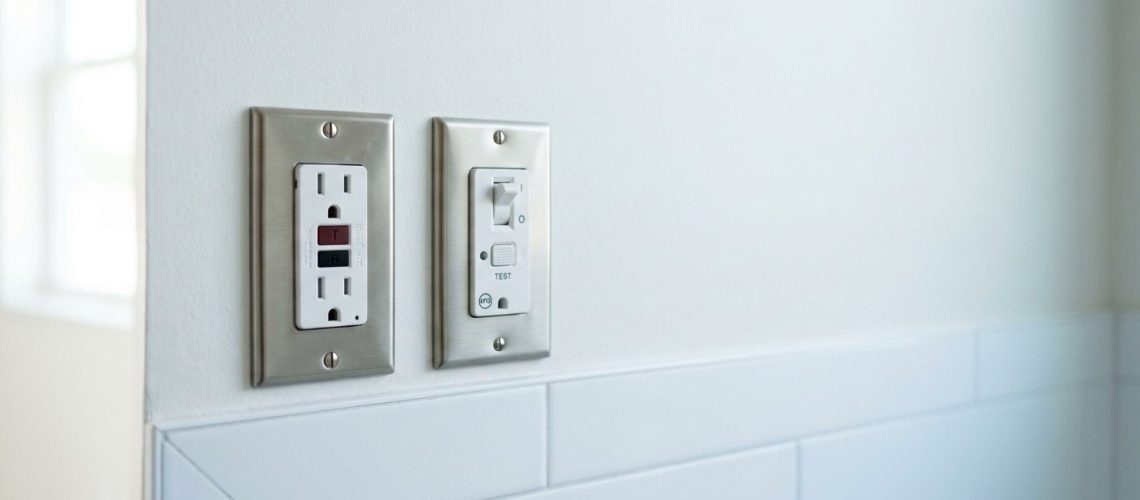
GFCI outlets protect against electric shock by detecting ground faults near water sources, while AFCI outlets protect against electrical fires by detecting dangerous arcing in your wiring. Most South Florida homes built or renovated after 2014 need both types — but in different rooms. Understanding where each is required by the National Electrical Code (NEC) helps homeowners stay safe and code-compliant.
- GFCI (Ground Fault Circuit Interrupter) outlets prevent shock injuries and are required in wet areas like bathrooms, kitchens, garages, and outdoors.
- AFCI (Arc Fault Circuit Interrupter) outlets prevent electrical fires by shutting down dangerous arc faults, and are required in bedrooms, living rooms, and most habitable spaces.
- The 2023 NEC — adopted as the standard in Florida — expanded AFCI requirements to nearly all rooms in a home.
- Older homes in Palm Beach, Broward, and Miami-Dade counties often lack one or both types of protection, creating real safety and code compliance risks.
- A licensed electrical contractor can inspect your panel and outlets to confirm you have the right protection where it’s needed.
What Is a GFCI Outlet — and What Does It Actually Do?
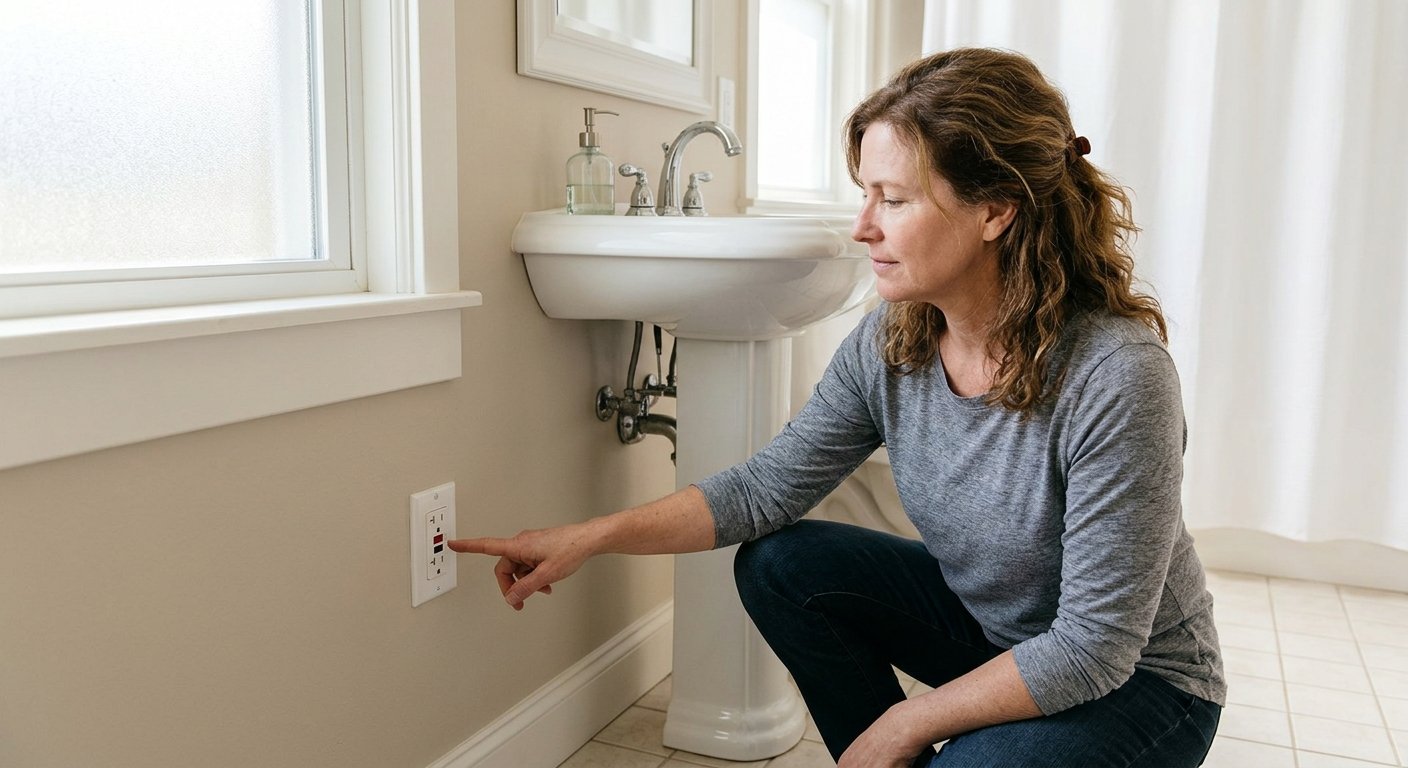
A Ground Fault Circuit Interrupter (GFCI) outlet continuously monitors the flow of electrical current. The moment it detects even a small imbalance — as little as 4 to 6 milliamps — it cuts power in about one-thirtieth of a second. That response speed is what makes GFCI protection genuinely life-saving near water sources, where electricity and moisture create serious shock hazards.
You recognize a GFCI outlet by the two small buttons in the center — “Test” and “Reset.” These outlets can also protect multiple downstream receptacles on the same circuit, which is why electricians sometimes install one GFCI outlet to protect several non-GFCI receptacles in a bathroom or kitchen circuit.
In South Florida, the combination of humidity, outdoor living spaces, pool areas, and frequent summer thunderstorms makes GFCI protection especially important. Moisture infiltration is a constant concern in Palm Beach, Broward, and Miami-Dade counties, which is why home electrical safety professionals take GFCI placement seriously even in areas where a home might technically predate current code requirements.
GFCI outlets can wear out over time and should be tested monthly using the Test/Reset buttons. If an outlet fails the test or does not reset properly, it needs immediate replacement. A GFCI that looks functional but no longer trips is no protection at all.
What Is an AFCI Outlet — and Why Does It Matter?
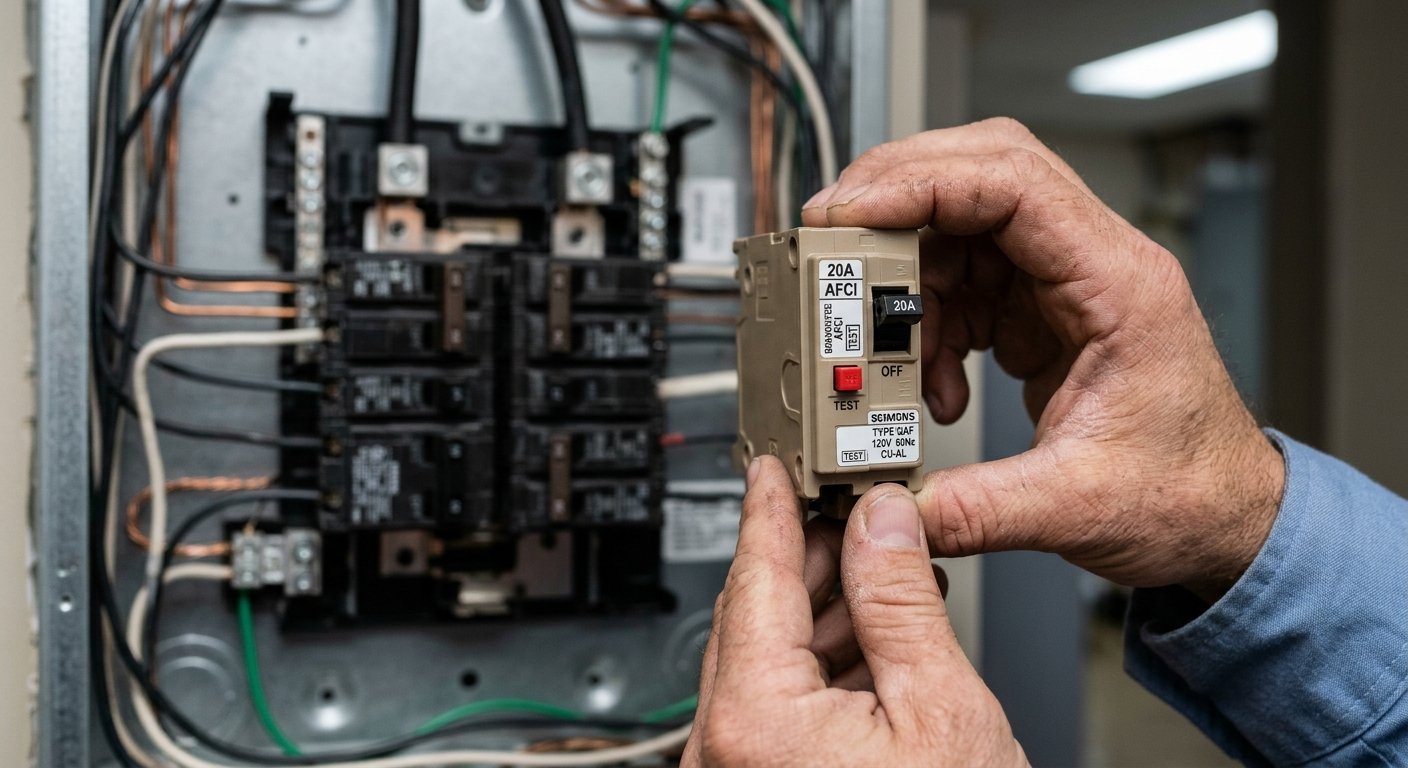
An Arc Fault Circuit Interrupter (AFCI) addresses a completely different hazard: electrical arcing. Arcing happens when electricity jumps across a gap in damaged, frayed, or loosely connected wiring. That arc generates intense heat — enough to ignite nearby insulation, wood framing, or other combustible materials — often inside walls where you cannot see or smell it until a fire has already started.
According to the National Fire Protection Association (NFPA), home electrical fires cause thousands of injuries and hundreds of deaths annually in the United States, with arc faults as a leading contributing cause. AFCI technology was developed specifically to catch these dangerous conditions before they escalate.
AFCI protection is typically installed at the circuit breaker level (an AFCI breaker) or at the first outlet in a circuit (an outlet-type AFCI). For homeowners considering an electrical panel upgrade, switching to AFCI breakers is an efficient way to bring an entire circuit up to current code standards at once.
An arc fault can ignite inside a wall cavity long before smoke reaches a detector — AFCI protection is your first line of defense where eyes cannot reach.
Where Each Type Is Required by Code
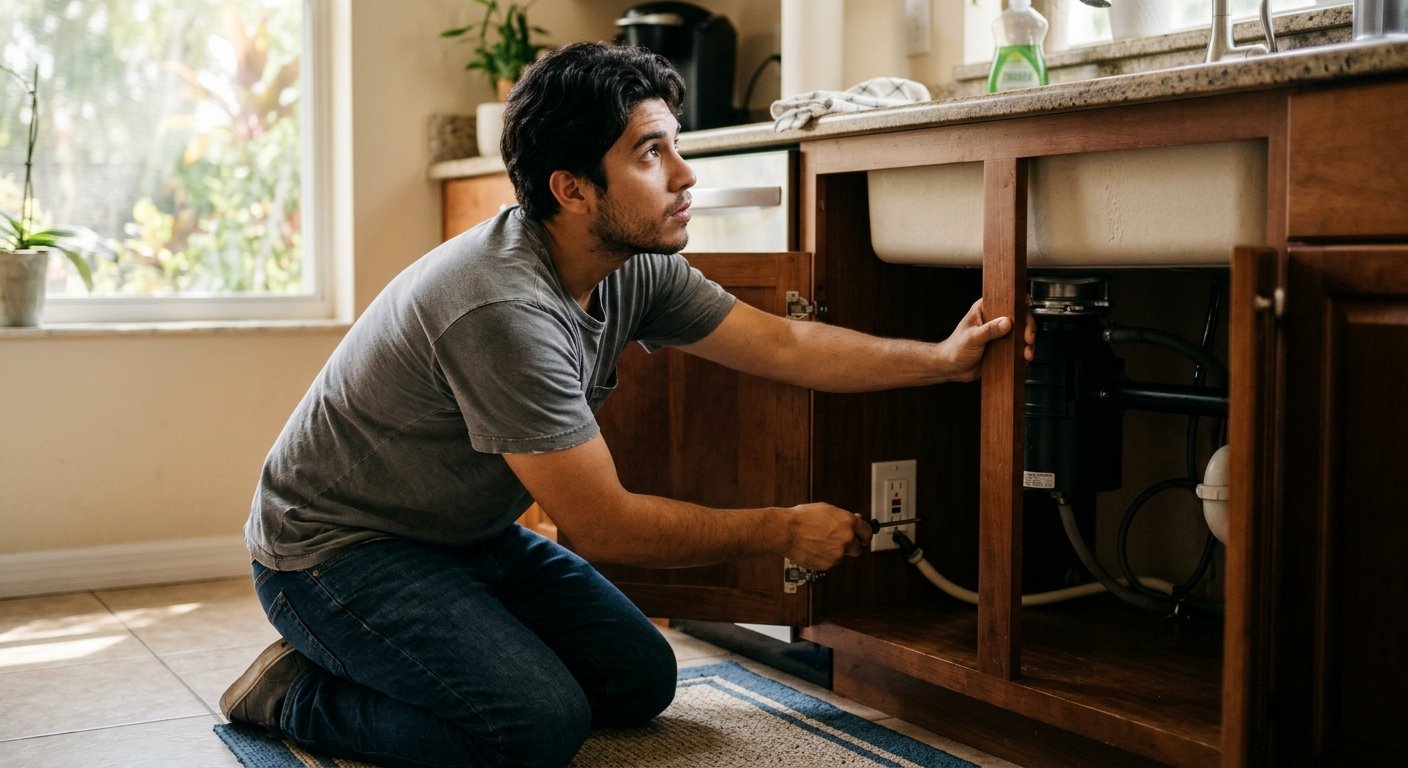
Florida has adopted the 2023 National Electrical Code as its baseline standard. The NEC specifies exactly where GFCI and AFCI protection is required in residential construction and renovation. Understanding these requirements is the foundation of electrical code compliance for any South Florida homeowner.
| Location in the Home | GFCI Required? | AFCI Required? |
|---|---|---|
| Bathrooms | Yes | Yes (2023 NEC) |
| Kitchens (countertop receptacles) | Yes | Yes |
| Bedrooms | No | Yes |
| Living rooms / family rooms | No | Yes |
| Garages | Yes | Yes |
| Outdoor receptacles | Yes | No (generally) |
| Crawl spaces / unfinished basements | Yes | No |
| Pool / spa areas | Yes | No |
| Laundry areas | Yes | Yes |
The 2023 NEC (NFPA 70) significantly expanded AFCI requirements compared to earlier editions. Rooms that previously needed only standard outlets — hallways, dining rooms, laundry areas — now fall under AFCI protection requirements in new construction and major renovation projects. If your home was built before these updates, it may not meet current standards even if it passed inspection at the time it was built.
Do Older South Florida Homes Need Upgrades?
Many homes throughout Palm Beach, Broward, and Miami-Dade counties were built in the 1970s, 1980s, and 1990s — long before AFCI requirements existed and sometimes before GFCI requirements covered as many areas as they do today. These homes are not automatically required to be brought up to current code unless a permit-triggered renovation occurs, but the electrical hazards are real regardless of the code year that applies.
For example, consider a hypothetical older home in Boca Raton with original aluminum wiring and no AFCI protection in the bedrooms — a scenario common enough in South Florida’s older housing stock. In this type of situation, the risk of arc faults is elevated because aluminum wiring connections can loosen over time, creating exactly the kind of intermittent arcing that AFCI protection is designed to detect. This is a hypothetical example to illustrate the risk, not a reference to any specific property.
If you are planning a kitchen remodel, room addition, or panel upgrade, that permit will typically trigger a requirement to bring affected circuits up to current code — including GFCI and AFCI compliance. Addressing these upgrades proactively during a planned project is far more cost-effective than handling them separately later.
An electrical safety inspection by a licensed contractor is the most reliable way to determine exactly which circuits and outlets in your home already have proper protection and which do not. At Global Power & AC Corp, our licensed technicians have served South Florida homeowners since 2017 and carry the training to assess your home’s protection gaps accurately.
Can GFCI and AFCI Be Combined?
Yes — and in many locations, they should be. Combination AFCI/GFCI outlets (sometimes called dual-function outlets or breakers) provide both types of protection in a single device. These are increasingly common in kitchens and bathrooms where both requirements overlap. Installing combination devices simplifies compliance and is often the most practical solution during a panel upgrade or circuit renovation.
For homeowners integrating smart home electrical systems, it is worth noting that smart outlets and smart switches should be installed on circuits with appropriate AFCI and GFCI protection already in place. Layering smart devices on top of unprotected wiring does not substitute for proper fault protection.
Frequently Asked Questions
What is the difference between a GFCI and an AFCI outlet?
A GFCI outlet protects people from electric shock by detecting ground faults — unwanted current paths through a person or water. An AFCI outlet protects against electrical fires by detecting arc faults — dangerous sparking in damaged or deteriorating wiring. Both serve different purposes and are required in different areas of a home under the National Electrical Code.
Does my South Florida home need AFCI protection if it was built before the requirement existed?
Existing homes are generally not required to retrofit AFCI protection unless a permitted renovation affects those circuits. However, the absence of a legal requirement does not eliminate the fire risk. Many electricians recommend upgrading to AFCI breakers proactively, especially in older homes with aging wiring or aluminum wiring, which is common in South Florida properties built before the mid-1980s.
How do I know if my outlets already have GFCI protection?
GFCI outlets have two small buttons labeled “Test” and “Reset” on the face of the outlet. However, some outlets are protected by a GFCI device located elsewhere on the same circuit — such as in a bathroom, garage, or at the main panel. A licensed electrician can trace your circuits and confirm which receptacles have active GFCI protection and which do not.
Can I install GFCI or AFCI outlets myself?
Replacing a standard outlet with a GFCI outlet is a task some experienced DIYers attempt, but AFCI installation — especially at the breaker panel — involves working inside your electrical panel, which carries serious shock and fire risks. Florida law also requires permits for certain electrical work. For home electrical safety and code compliance, having a licensed electrical contractor perform the installation ensures the work is done correctly and inspected properly.
How much does it cost to upgrade to GFCI and AFCI protection?
Costs vary depending on the number of circuits, outlet locations, and whether breaker-level or outlet-level devices are used. Because pricing depends on a home’s specific wiring configuration, a professional assessment is the best way to get an accurate estimate. Global Power & AC Corp offers free estimates for homeowners in Palm Beach, Broward, and Miami-Dade counties — contact us to schedule yours.
Getting the Right Protection in Place
GFCI and AFCI protection work together as complementary layers of home electrical safety — one guarding against shock, the other against fire. For South Florida homeowners dealing with older wiring, salt-air humidity, and the electrical demands of storm season, having both types of protection properly installed is not just a code issue. It is a practical safety priority.
Global Power & AC Corp has been serving homeowners across Palm Beach, Broward, and Miami-Dade counties since 2017. As a licensed and insured electrical contractor, we back every installation with an 8-year warranty on workmanship and offer same-day service when your situation is urgent. Whether you need a single outlet replaced or a full electrical safety inspection, our team brings the craftsmanship and care your home deserves.
Find Out What Protection Your Home Is Missing
Schedule a free estimate with our licensed South Florida electricians — we’ll assess your GFCI and AFCI coverage and explain exactly what your home needs to be safe and code-compliant.

About Global Power & AC Corp
Global Power & AC Corp is a trusted electrical contractor serving homeowners and businesses throughout South Florida's Palm Beach, Broward, and Miami-Dade counties. The company specializes in residential electrical services including panel upgrades, EV charger installation, standby generators, smart home integration, and comprehensive electrical safety solutions. With a commitment to quality craftsmanship backed by an 8-year warranty and same-day service availability, Global Power & AC Corp combines family-owned values with corporate-level professionalism to deliver reliable electrical solutions tailored to South Florida's unique climate challenges. Visit globalpowerpb.com →