
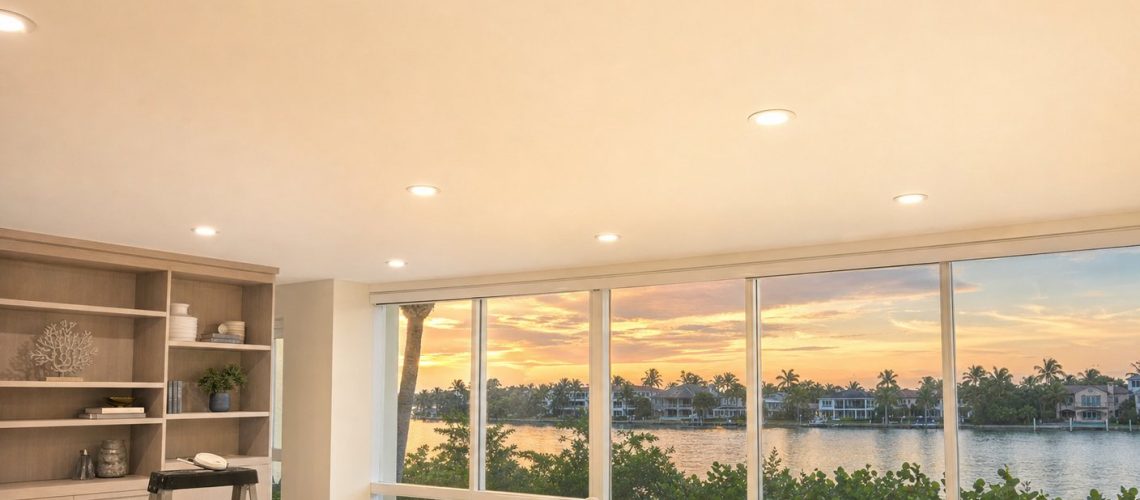
For most South Florida homeowners, an LED retrofit kit is the faster and less invasive choice — it clips directly into your existing recessed housing without drywall work. A full new installation makes sense when there is no existing housing, when you want to reposition fixtures, or when your electrical panel needs upgrading first. The right path depends on what is already in your ceiling.
- LED retrofit kits work inside existing recessed cans — no drywall cutting required in most cases.
- Full new installations give you full control over layout, housing type, and trim style.
- South Florida’s humidity and storm-related power fluctuations make fixture quality and proper installation critical.
- Both approaches require a licensed electrician when new circuits or panel connections are involved.
- Global Power & AC Corp backs all workmanship with an 8-year warranty, serving Palm Beach, Broward, and Miami-Dade counties.
Understanding the Two Approaches
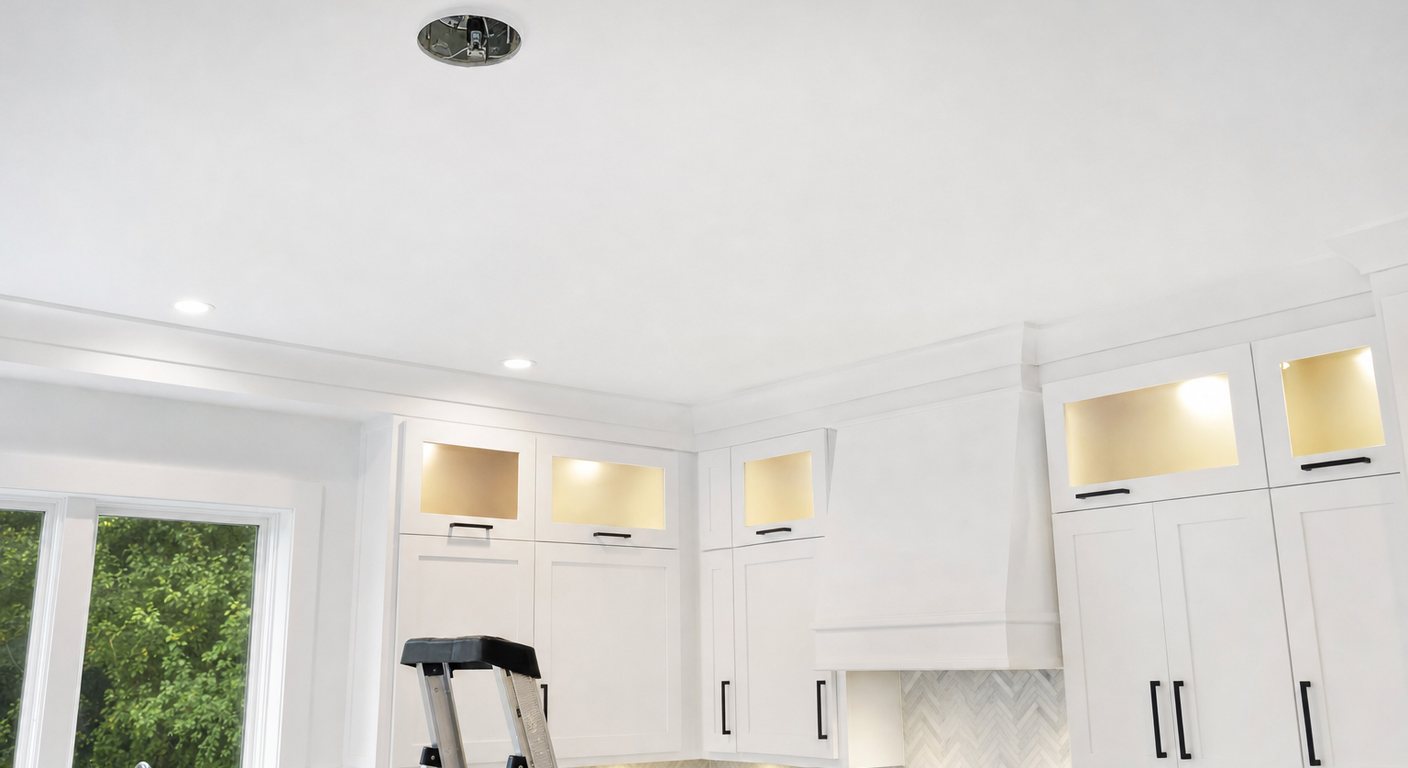
Recessed lighting — sometimes called can lights or pot lights — sits flush with your ceiling for a clean, modern look. When homeowners decide to upgrade to LED recessed lights, they face a fundamental choice: retrofit what exists or start fresh. Each path has distinct implications for cost, disruption, and long-term performance.
What Is a Retrofit?
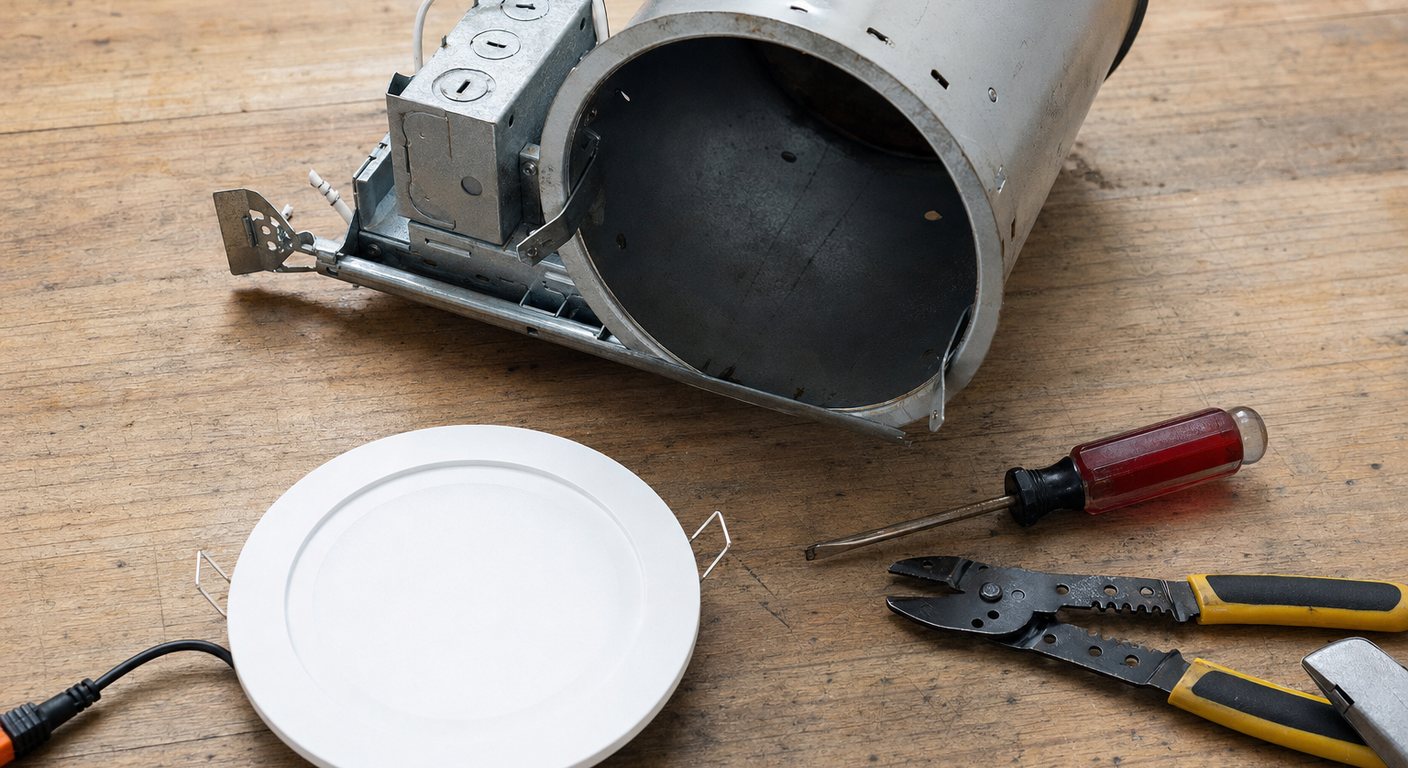
A retrofit involves installing an LED module into an existing recessed housing. The original metal can stays in the ceiling; a new LED trim and driver assembly snaps or clips into it. Retrofit kits are designed to work with standard housing diameters — typically 4-inch, 5-inch, or 6-inch cans — and they connect to the existing wiring already in the junction box.
The appeal is straightforward: no attic access needed, no drywall patching, and significantly less labor time per fixture. For homeowners in older Boca Raton or Delray Beach homes still running incandescent or halogen cans, this is often the most practical upgrade path.
What Is a Full New Installation?
A full new LED lighting installation means cutting new holes in the ceiling, running new wiring from the electrical panel or an existing circuit, and installing both the housing and the LED fixture from scratch. This approach is necessary when no existing recessed housing is present — common in rooms that previously relied on surface-mounted fixtures or ceiling fans — or when you want to change the layout entirely.
New installations also allow you to choose IC-rated (insulation contact) or non-IC-rated housings appropriate for your ceiling type, and to design a lighting plan that matches your living space precisely.
In Florida, adding new lighting circuits or relocating fixtures typically requires an electrical permit. Working with a licensed electrical contractor ensures your project meets current National Electrical Code (NEC) standards and passes local inspection without issue.
Comparing the Two: What Really Matters
| Factor | LED Retrofit | Full New Install |
|---|---|---|
| Ceiling disruption | Minimal — no new holes | Requires new cutouts |
| Installation time per fixture | Faster | Longer due to wiring runs |
| Layout flexibility | Fixed to existing locations | Full control over placement |
| Compatible with existing wiring | Yes, if wiring is in good condition | New wiring run as needed |
| Best for older homes | Yes, when cans are present | Yes, when no cans exist |
| Permit typically required | Sometimes | Usually yes |
| Long-term flexibility | Limited to can size/position | Fully customizable |
When Retrofit Makes the Most Sense
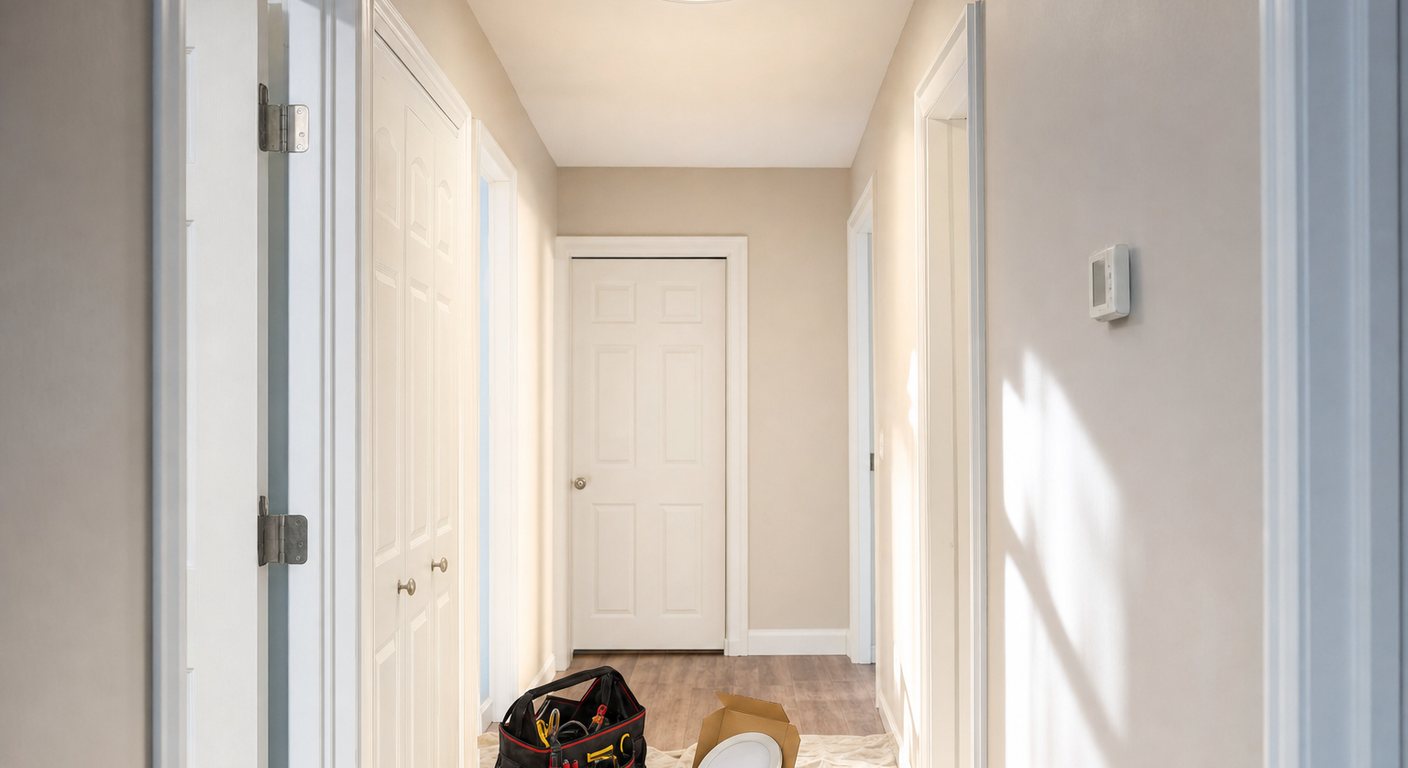
If your home already has recessed cans in good structural condition, retrofitting is almost always the smarter starting point. Here is when it is clearly the right call:
- Your existing housings are standard 4-, 5-, or 6-inch diameter cans
- You are happy with the current fixture locations
- The wiring in the junction boxes is intact and meets code
- You want minimal disruption to finished ceilings
- You are upgrading a condo or second-floor room where attic access is impractical
Retrofitting is particularly popular in South Florida condos throughout Fort Lauderdale and Miami-Dade, where ceiling access from above is impossible and owners want to avoid damaging drywall in common areas.
Before purchasing retrofit kits, have an electrician verify that your existing housings are properly rated for insulation contact if your attic has blown-in insulation — a common upgrade in Palm Beach County homes. Installing a non-IC-rated fixture against insulation is a fire hazard.
When a Full New Installation Is Worth It
There are scenarios where retrofitting simply is not an option or is not the right long-term investment. Consider a full led lighting installation when:
- No recessed cans exist in the room at all
- Existing housings are damaged, corroded (common in coastal South Florida humidity), or non-standard sizes
- You want to redesign your lighting layout — adding more fixtures, spreading them differently, or installing dimmer zones
- You are finishing a new addition or remodeling a room down to the studs
- Your electrician identifies that the existing wiring does not meet current code
Full new installations also pair well with smart home integration projects. If you are adding smart dimmers, occupancy sensors, or voice-controlled lighting scenes, running fresh wiring allows your electrician to route everything cleanly without compromising the retrofit kit’s driver.
The right lighting plan is not just about the fixtures — it is about what the wiring, the ceiling structure, and your long-term home goals can support.
What the Installation Process Looks Like
Knowing what to expect helps homeowners plan the project confidently. While every home is different, the typical process follows a clear sequence.
Assessment and planning
A licensed electrician inspects existing housings, wiring condition, circuit capacity, and ceiling structure. For new installations, this is when the lighting layout is mapped out.
Permit application (if required)
New circuits and fixture additions typically require a permit from your local municipality. Your contractor handles this on your behalf.
Installation day
Retrofit projects are often completed in a single visit. Full new installs may take one to two days depending on the number of fixtures and circuit complexity.
Inspection and testing
All fixtures are tested for proper function, dimmer compatibility, and correct color temperature. Permitted work is scheduled for municipal inspection.
Cleanup and walkthrough
The team cleans the work area — including using shoe covers throughout the project — and walks you through the finished installation and any warranty documentation.
South Florida Considerations That Affect Your Choice
Living in Palm Beach, Broward, or Miami-Dade counties introduces specific factors that mainland homeowners rarely encounter. High humidity can accelerate corrosion inside older recessed cans, making a thorough inspection essential before committing to a retrofit. If the housing shows rust or moisture damage, replacement is safer than reuse.
Storm season also matters. Frequent power surges from South Florida’s thunderstorm activity can shorten the lifespan of low-quality LED drivers. Specifying surge-protected fixtures or pairing your LED installation with whole-home surge protection is worth discussing with your electrician. If you are thinking about broader electrical resilience for your home, understanding your panel’s capacity is a smart starting point — learn more about electrical panel upgrades and when they make sense alongside a lighting project.
According to the U.S. Department of Energy’s LED lighting guidance, LED fixtures use at least 75% less energy than incandescent lighting and last significantly longer — a meaningful advantage in a climate where air conditioning is running year-round and energy bills are a consistent concern for South Florida homeowners.
The National Electrical Code (NEC), published by the NFPA, establishes the installation standards your contractor must follow — including box fill calculations, conductor ratings, and housing classifications. Code compliance is not optional, and it protects your home and your homeowner’s insurance coverage.
Pairing Lighting Upgrades with Other Electrical Projects
Homeowners often find that a lighting upgrade reveals adjacent electrical needs. An older panel may lack the capacity for additional lighting circuits. Aluminum wiring in some 1970s-era South Florida homes may require remediation before new fixtures are added. And if you are already planning an EV charger installation or a standby generator, bundling projects with one contractor can reduce overall costs and disruption.
Speaking of bundling — if your household is adding an electric vehicle, it is worth reading up on level-2-vs-level-3-ev-charger-which-is-right/”>the differences between Level 2 and Level 3 EV chargers before your electrician visits, so you can plan panel capacity for both projects at once.
Frequently Asked Questions
Can I retrofit any existing recessed can with an LED kit?
Most standard 4-, 5-, and 6-inch recessed cans accept LED retrofit kits designed for that diameter. However, some older or non-standard housings may not be compatible, and cans showing corrosion or moisture damage should be replaced rather than retrofitted. Have an electrician inspect them before purchasing kits.
Do LED retrofit kits work with dimmer switches?
Many LED retrofit kits are dimmable, but they require a compatible LED dimmer switch — not an older incandescent dimmer. Pairing the wrong dimmer with an LED driver can cause flickering, buzzing, or premature failure. Your electrician can recommend and install a compatible dimmer when doing the work.
Is a permit required for LED recessed lighting in Florida?
Permit requirements vary by municipality and by the scope of work. Simply swapping a bulb or retrofit kit on an existing circuit often does not require a permit, but adding new circuits, moving fixtures, or installing new housings typically does. A licensed electrical contractor will determine what is required for your specific project and handle the permitting process.
How long does a residential LED lighting installation take?
A retrofit of several existing fixtures in one room can typically be completed in a single visit. A full new installation involving new wiring runs and multiple rooms may take one to two days. Your electrician can give you a more accurate timeline after assessing your home.
What color temperature should I choose for recessed lights?
Color temperature is measured in Kelvins (K). Warm white (2700K–3000K) suits living rooms and bedrooms for a cozy feel. Cool white (3500K–4000K) works well in kitchens and bathrooms. Daylight (5000K–6500K) is preferred in workspaces. Your electrician or lighting designer can help you choose fixtures that match your room’s purpose and existing décor.
Ready to Upgrade Your Home’s Lighting?
Whether you need a simple retrofit or a full LED lighting installation designed from scratch, Global Power & AC Corp — serving Palm Beach, Broward, and Miami-Dade counties since 2017 — brings licensed expertise and an 8-year workmanship warranty to every project, with same-day service available.

About Global Power & AC Corp
Global Power & AC Corp is a trusted electrical contractor serving homeowners and businesses throughout South Florida's Palm Beach, Broward, and Miami-Dade counties. The company specializes in residential electrical services including panel upgrades, EV charger installation, standby generators, smart home integration, and comprehensive electrical safety solutions. With a commitment to quality craftsmanship backed by an 8-year warranty and same-day service availability, Global Power & AC Corp combines family-owned values with corporate-level professionalism to deliver reliable electrical solutions tailored to South Florida's unique climate challenges. Visit globalpowerpb.com →