
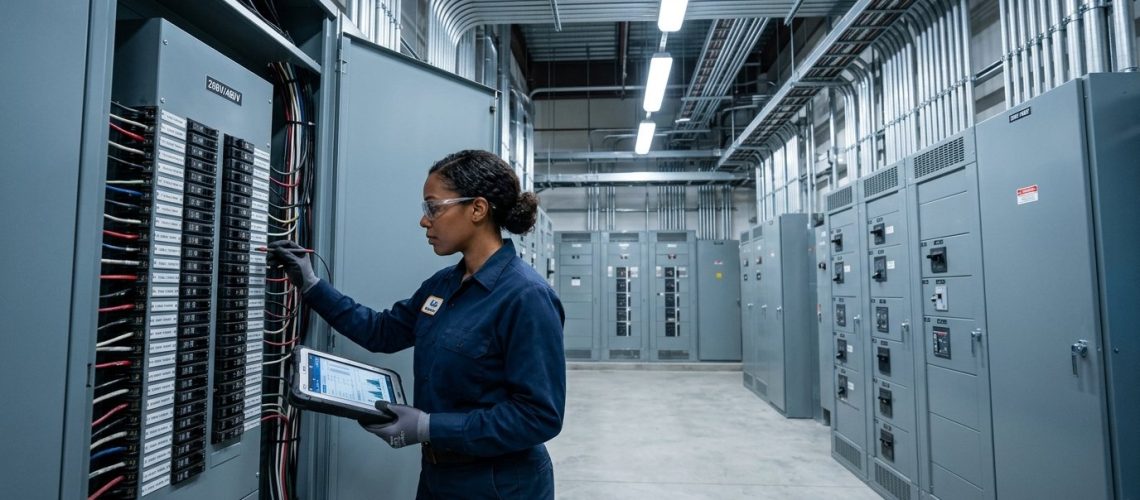
Routine commercial electrical maintenance reduces the risk of unexpected equipment failure, code violations, and emergency repair costs by identifying problems before they escalate. For South Florida business owners and property managers in Palm Beach, Broward, and Miami-Dade counties, proactive maintenance is especially critical given the region’s humidity, storm activity, and demanding year-round electrical loads.
- Scheduled electrical inspections catch deteriorating wiring, overloaded panels, and corrosion before they cause failures.
- South Florida’s humid, storm-prone environment accelerates electrical wear faster than in drier climates.
- Proactive maintenance keeps your business compliant with the National Electrical Code (NEC) and local regulations.
- Emergency electrical repairs cost significantly more than planned maintenance visits — and unplanned downtime costs even more.
- A licensed commercial electrical contractor brings the expertise to assess, document, and remediate issues safely.
Why South Florida Businesses Face Elevated Electrical Risk
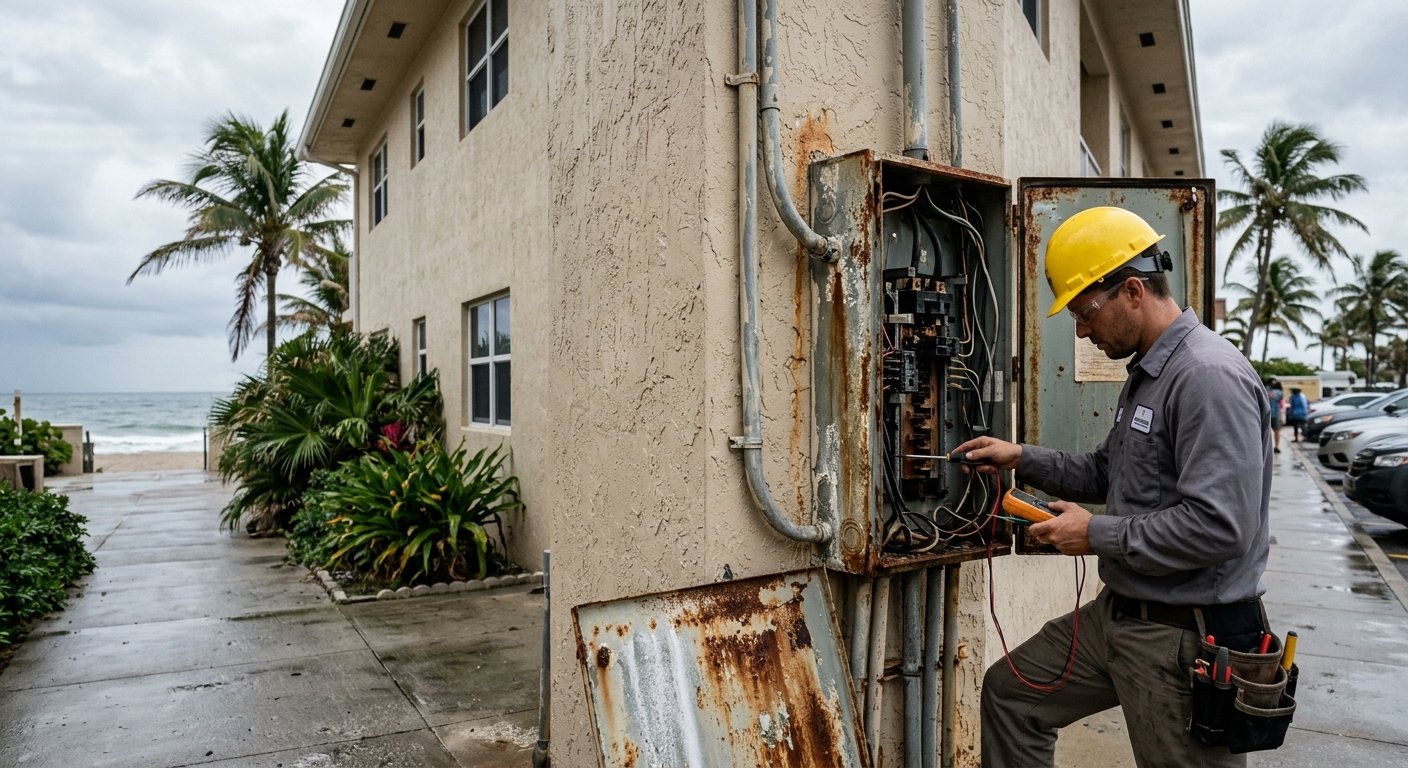
Electrical systems in South Florida face conditions that accelerate wear far beyond what you’d see in a typical commercial environment. High ambient humidity promotes corrosion inside panels, junction boxes, and conduit runs. Salt air — particularly in coastal areas of Palm Beach and Miami-Dade — degrades metal components and wiring insulation over time. Then there’s the storm season: according to the National Oceanic and Atmospheric Administration (NOAA), Florida leads the nation in lightning strikes, and those voltage surges take a measurable toll on commercial electrical infrastructure.
Add to that the reality that many commercial properties in Broward and Palm Beach counties operate high-demand equipment — commercial HVAC units, industrial refrigeration, manufacturing machinery, or server rooms — that puts continuous stress on panels, wiring, and breakers. When a system is already operating near capacity and a storm hits, the combination can trigger failures that shut down operations for hours or days.
A tripped breaker that keeps resetting without investigation is not a minor nuisance — it is a symptom of an overloaded circuit or failing breaker that can lead to overheating and fire risk. Never ignore recurring breaker trips in a commercial setting.
What Commercial Electrical Maintenance Actually Includes
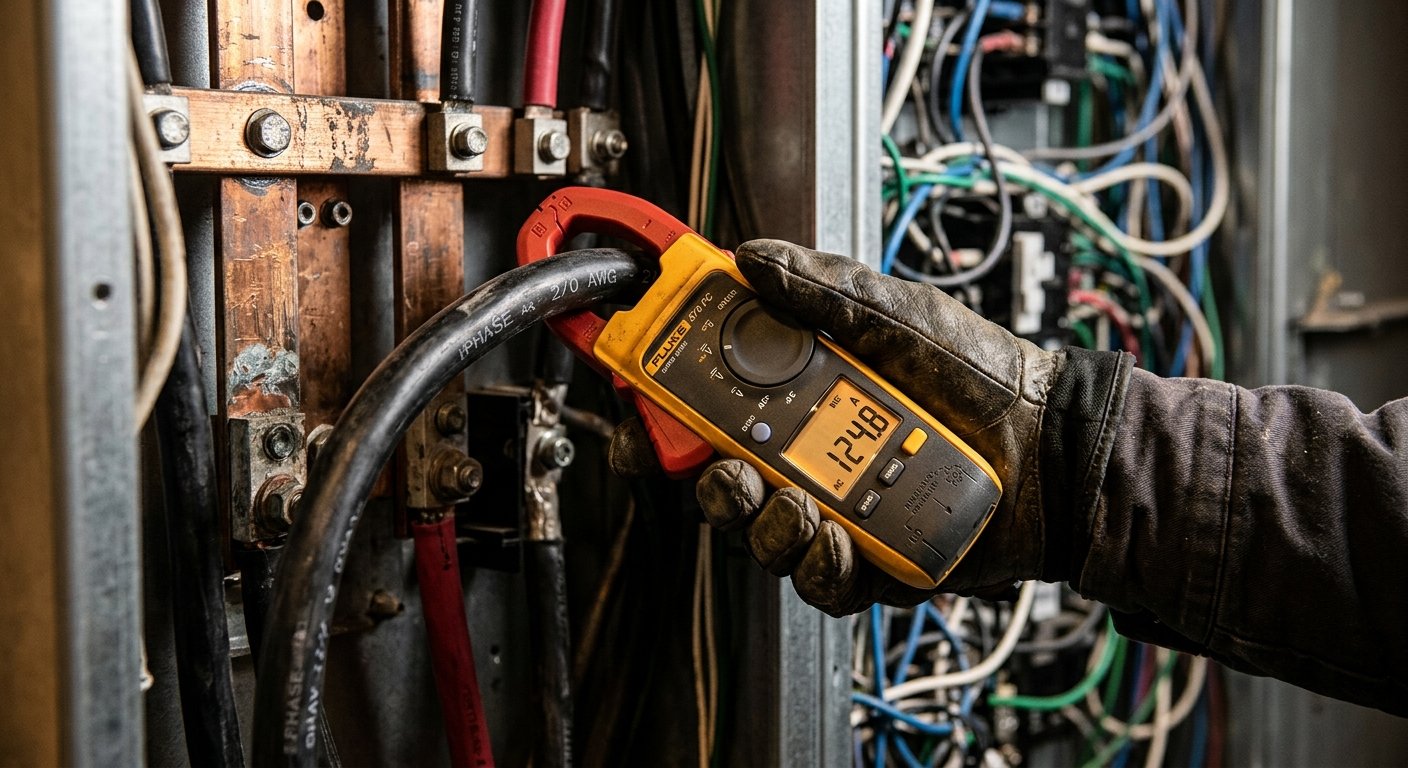
Many business owners picture maintenance as a quick visual check. In practice, a thorough commercial electrical maintenance visit covers far more ground. A qualified commercial electrician performs a systematic inspection and testing process that protects your people, your equipment, and your bottom line.
Panel Inspection and Load Analysis
The electrician examines your electrical panel for signs of corrosion, heat damage, loose connections, and overloaded circuits. They verify that breaker ratings match the loads they protect and that the panel complies with current NEC standards. If your facility has grown since the panel was installed, a load analysis may reveal that an electrical panel upgrade is necessary before a failure forces the issue.
Wiring and Connection Testing
Loose or deteriorated connections are a leading cause of arcing faults — a serious fire hazard in commercial buildings. The technician tests connections at panels, outlets, switches, and equipment terminations, tightening or replacing components as needed.
GFCI and AFCI Verification
Ground Fault Circuit Interrupter (GFCI) and Arc Fault Circuit Interrupter (AFCI) devices protect people and property. Each device is tested to confirm it responds correctly. Failed GFCI outlets are common in South Florida’s humid environments and must be replaced promptly.
Surge Protection Assessment
Given Florida’s lightning exposure, whole-building surge protection is a critical layer of defense. The maintenance visit verifies that surge protective devices (SPDs) are functioning and have not been depleted by previous strikes.
Emergency and Exit Lighting Check
Florida building codes require functional emergency lighting and exit signage. The electrician tests battery backup systems and replaces any failed units to keep your property code-compliant.
Documentation and Recommendations
A professional maintenance visit ends with a written report identifying what was inspected, what was corrected, and what requires follow-up action. This documentation is valuable for insurance purposes and demonstrates due diligence to regulators.
The Real Cost of Skipping Maintenance
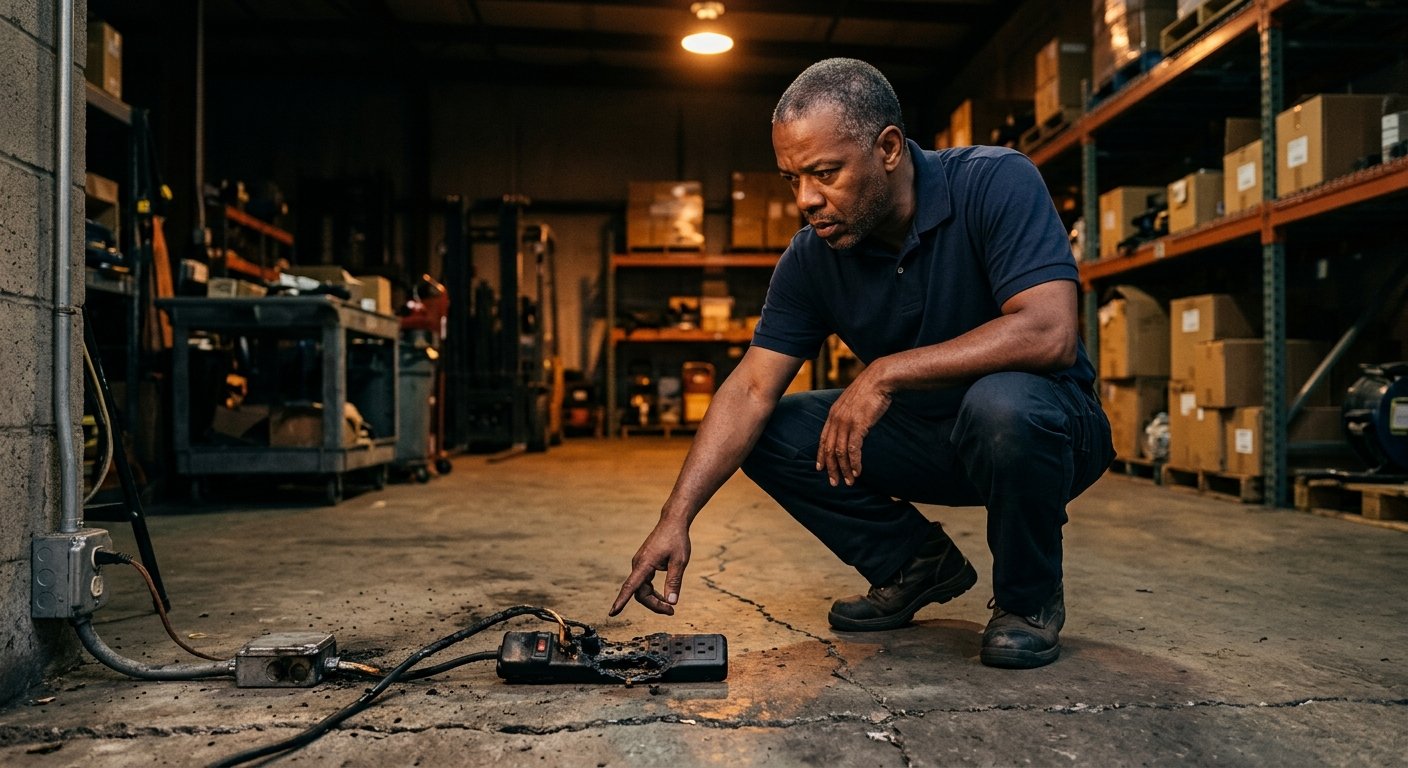
Deferred electrical maintenance is rarely a money-saving decision. The National Fire Protection Association (NFPA) reports that electrical failures are among the leading causes of structure fires in non-residential buildings in the United States. Beyond fire risk, consider these business realities:
- Equipment damage: Voltage fluctuations from failing wiring or overtaxed panels can destroy sensitive electronics, refrigeration compressors, or production machinery — losses that dwarf a routine maintenance bill.
- Unplanned downtime: A commercial electrical failure that shuts down a restaurant, retail store, or medical office for even a single day represents immediate lost revenue and potential damage to customer relationships.
- Code violation penalties: Florida’s commercial building codes are enforced, and non-compliant electrical systems can result in fines, forced closures, or complications with business insurance coverage.
- Emergency repair premiums: After-hours emergency electrical repair calls cost substantially more than scheduled maintenance. Avoiding emergencies through proactive care is simply better economics.
Deferred electrical maintenance is rarely a money-saving decision — it is a cost-deferral strategy that compounds interest in the form of emergency repair bills and lost revenue.
How Often Should Commercial Properties Schedule Maintenance?
The right maintenance interval depends on your building’s age, occupancy type, electrical load, and equipment. As a general guideline, most commercial properties benefit from a comprehensive electrical safety inspection at least once per year. High-demand facilities — restaurants, healthcare offices, manufacturing spaces, multi-tenant retail centers — should consider semi-annual visits. Properties with aging infrastructure (20+ years without a panel evaluation) may need an immediate baseline assessment before establishing a maintenance schedule.
Schedule your annual maintenance visit before hurricane season begins in June. Storm-related electrical stress is far easier to manage when your system has been recently inspected, surge protection confirmed, and any vulnerabilities addressed ahead of time.
For businesses with smart building systems or advanced energy management infrastructure, maintenance intervals may also be informed by your building management system’s data. If you’re considering integrating those technologies, Global Power & AC Corp’s smart home and building electrical services can help you build a system that supports both performance and monitoring.
Choosing the Right Commercial Electrical Contractor
Not every electrician is equipped to handle commercial electrical work. Commercial properties involve three-phase power systems, higher-voltage equipment, more complex code requirements, and greater liability than residential work. When evaluating a commercial electrical contractor, look for:
- Active state electrical contractor license and liability insurance
- Demonstrated experience with commercial and light industrial systems
- Clear, written scope of work and post-inspection documentation
- Familiarity with Florida Building Code electrical requirements and current NEC standards
- Availability for both scheduled maintenance and emergency response
Global Power & AC Corp has served business owners and property managers across Palm Beach, Broward, and Miami-Dade counties. As a licensed and insured electrical contractor, every commercial maintenance visit is backed by an 8-year warranty on workmanship — a level of commitment that reflects genuine confidence in the quality of our craft. Same-day service is available for urgent situations, so you’re never left managing a critical electrical issue without support.
Always ask for a written inspection report after any commercial maintenance visit. A contractor who won’t provide documentation isn’t giving you a complete service — and you need that paper trail for insurance, code compliance, and future reference.
Frequently Asked Questions
What is included in a commercial electrical maintenance visit?
A comprehensive visit typically includes panel inspection and load analysis, wiring and connection testing, GFCI and AFCI device verification, surge protection assessment, emergency lighting checks, and a written report with findings and recommendations. The specific scope may vary based on your facility’s size, age, and systems.
How often does a commercial building need an electrical inspection?
Most commercial properties should have a full electrical inspection at least annually. High-demand or high-occupancy facilities benefit from semi-annual visits. Buildings with older electrical systems or recent storm damage may need an immediate assessment regardless of the last inspection date.
Can electrical maintenance actually prevent fires?
Yes. The National Fire Protection Association identifies electrical failures and malfunctions as a leading cause of non-residential structure fires. Routine maintenance catches arcing faults, deteriorated wiring, and overloaded circuits — all common fire precursors — before they become dangerous. It’s one of the most direct investments a business can make in fire prevention.
What makes South Florida commercial electrical maintenance different from other regions?
South Florida’s combination of high humidity, salt air, and frequent lightning strikes creates accelerated electrical wear. Corrosion inside panels and junction boxes, degraded wiring insulation, and surge damage from Florida’s exceptional lightning activity all make more frequent inspections and surge protection maintenance especially important here compared to drier, lower-risk climates.
Is a permit required for commercial electrical maintenance work?
Routine maintenance and testing typically does not require a permit. However, any repair or upgrade work — replacing a panel, installing new circuits, or adding equipment — will generally require permits under Florida Building Code. A licensed electrical contractor will advise you on permit requirements before any work begins and handle the permitting process on your behalf.
Protect Your Business Before the Next Outage
Schedule a commercial electrical maintenance visit with Global Power & AC Corp — serving Palm Beach, Broward, and Miami-Dade counties with licensed expertise, an 8-year workmanship warranty, and same-day availability.

About Global Power & AC Corp
Global Power & AC Corp is a trusted electrical contractor serving homeowners and businesses throughout South Florida's Palm Beach, Broward, and Miami-Dade counties. The company specializes in residential electrical services including panel upgrades, EV charger installation, standby generators, smart home integration, and comprehensive electrical safety solutions. With a commitment to quality craftsmanship backed by an 8-year warranty and same-day service availability, Global Power & AC Corp combines family-owned values with corporate-level professionalism to deliver reliable electrical solutions tailored to South Florida's unique climate challenges. Visit globalpowerpb.com →