
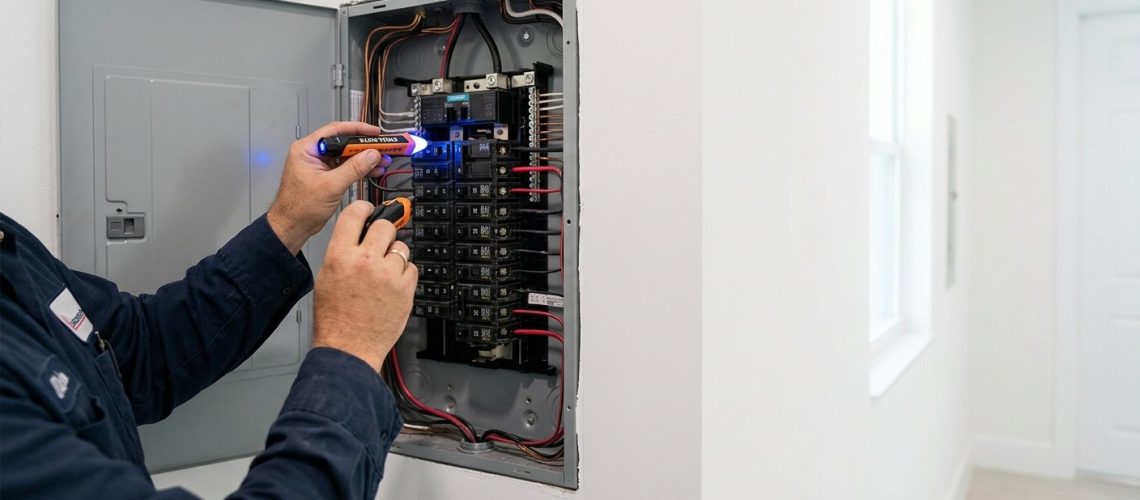
An electrical panel upgrade replaces your home’s outdated breaker box with a modern unit capable of safely handling today’s electrical demands. Most South Florida homes built before the 1990s were wired for far less power than current appliances, EV chargers, and smart home systems require. If your panel is 25 or more years old, frequently trips breakers, or still uses fuses, an upgrade is likely overdue — and possibly a safety necessity.
- Older panels — particularly those with Federal Pacific or Zinsco brands — carry documented safety risks and should be evaluated immediately.
- A 200 amp panel upgrade is the standard for most modern single-family homes in Palm Beach, Broward, and Miami-Dade counties.
- South Florida’s hurricane season, humidity, and storm surges accelerate electrical wear, making panel inspections especially important here.
- All panel work requires permits and must meet current Florida Building Code and National Electrical Code standards.
- Upgrading your panel often unlocks the ability to add EV charging, whole-home generators, and smart home systems.
Why Your Electrical Panel Matters More Than You Think
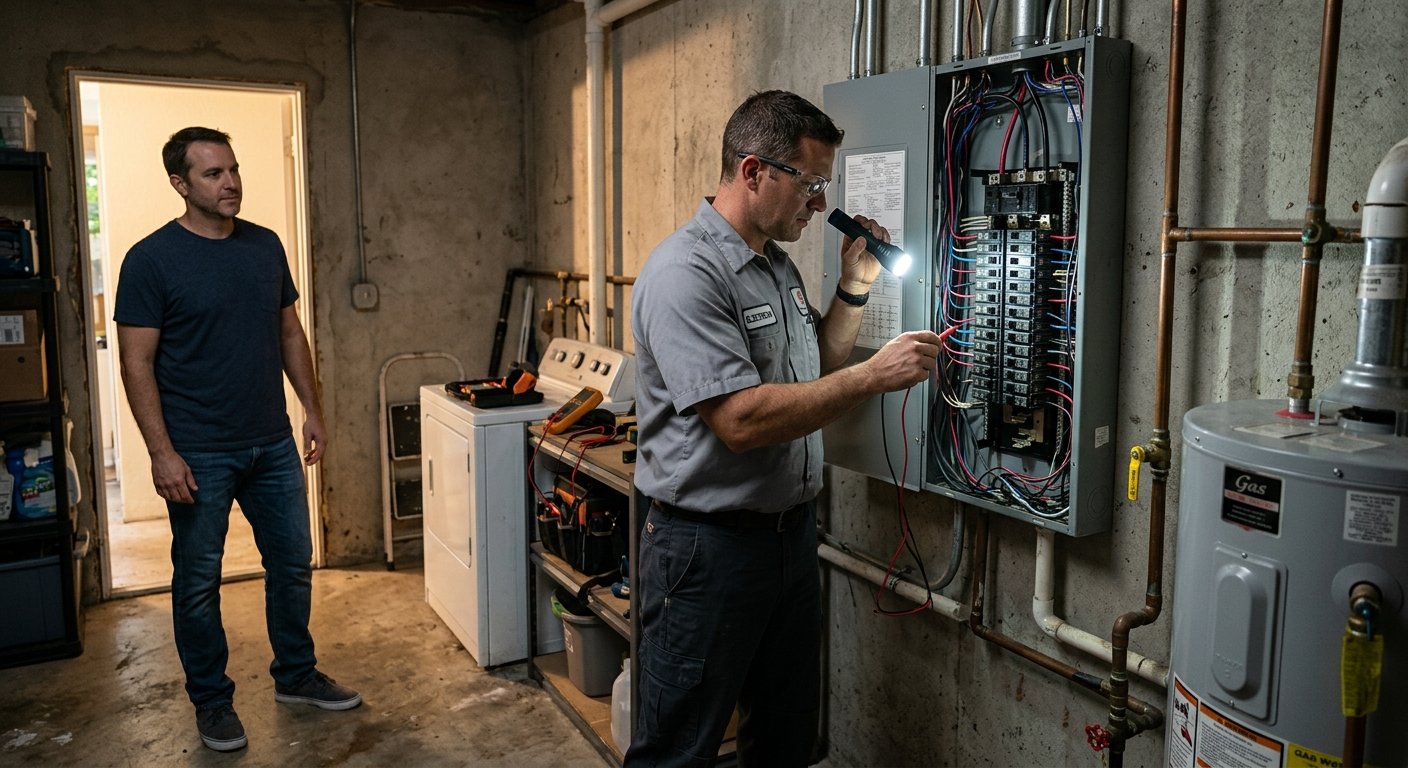
Your electrical panel is the command center of your entire home. It receives power from the utility grid and distributes it across every circuit in your house — lights, outlets, appliances, HVAC systems, and more. When that panel can’t keep up, the results range from minor inconveniences (tripped breakers) to serious hazards (electrical fires).
The National Fire Protection Association consistently identifies electrical failures and malfunctions as one of the leading causes of home fires in the United States. An aging or undersized circuit breaker panel upgrade is one of the most effective preventive steps a homeowner can take.
Federal Pacific “Stab-Lok” panels and Zinsco panels, common in Florida homes from the 1950s through 1980s, have been linked to breaker failure and fire risk. If your home still has one of these, schedule an inspection immediately — do not wait for a symptom to appear.
Signs You Need a Panel Upgrade Now
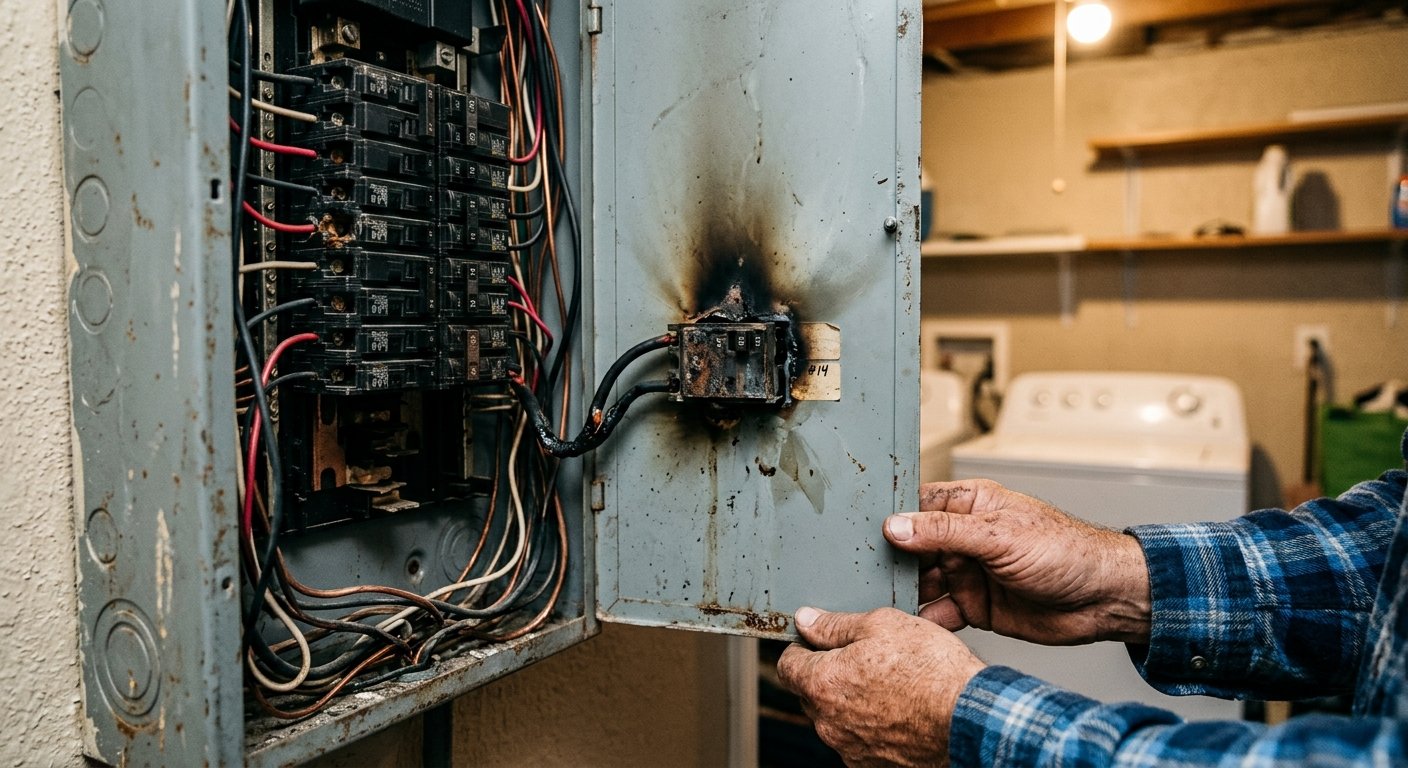
Not every homeowner knows what to look for. Here are the most common indicators that your panel is no longer adequate — or safe:
- Frequent tripped breakers — especially when running everyday appliances simultaneously
- Flickering or dimming lights when large appliances cycle on
- Burning smell or scorch marks near the panel or outlets
- A panel that still uses fuses instead of circuit breakers
- No room to add new circuits for EV chargers, home offices, or renovations
- The panel feels warm to the touch
- Your home is over 30 years old and the panel has never been evaluated
South Florida homes face added pressure from high-wattage air conditioning systems running nearly year-round, combined with the humidity and salt air that accelerate corrosion inside electrical enclosures. These regional factors make routine evaluation by a licensed professional more important here than in most other parts of the country.
What a 200 Amp Panel Upgrade Includes
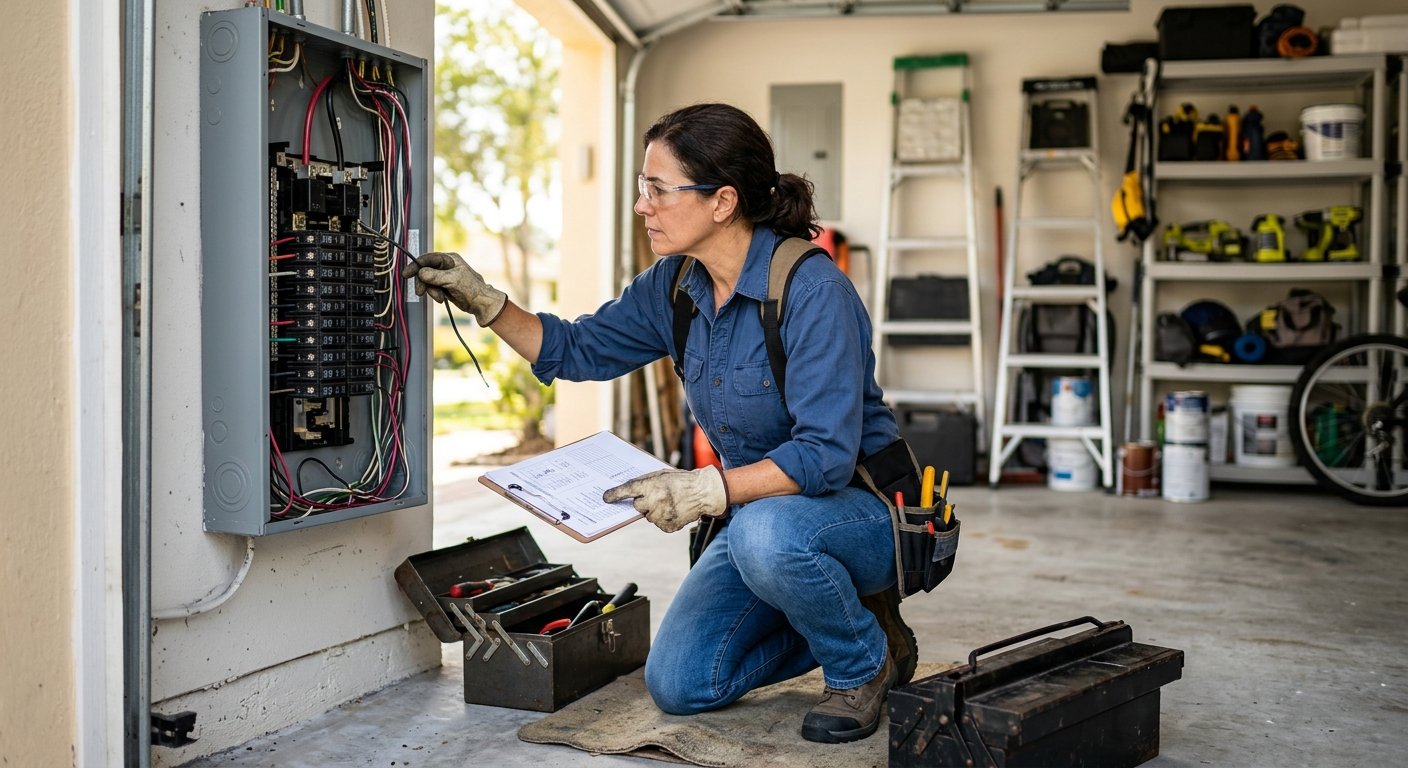
The term “200 amp service” refers to the maximum electrical current your panel can handle at once. Older homes commonly have 60-amp or 100-amp panels — enough for the appliances of decades past, but inadequate for today’s households.
A standard 200 amp panel upgrade typically involves:
Assessment and Permit Application
A licensed electrician evaluates your current system, calculates your load requirements, and pulls the required permits from your local building department. In Palm Beach, Broward, and Miami-Dade counties, permits are mandatory for this work — no exceptions.
Utility Coordination
Your utility provider must disconnect service temporarily during the swap. Your electrician coordinates this directly so the process is smooth and timed properly.
Panel Removal and Installation
The old panel is safely removed and the new breaker box is mounted, wired, and connected to your existing home circuits. All work follows the current National Electrical Code (NEC) and Florida Building Code requirements.
Inspection and Sign-Off
A county inspector visits to verify the installation meets electrical code compliance standards before power is restored. Your electrician should be present for this step.
Power Restoration and Testing
Once approved, power is restored and every circuit is tested to confirm safe, proper operation throughout your home.
Electrical Code Compliance: Not Optional in Florida
Florida adopts updated versions of the National Electrical Code on a rolling basis, and local jurisdictions in Palm Beach, Broward, and Miami-Dade counties enforce these standards through the permitting and inspection process. Unpermitted electrical work is not only illegal — it creates liability during home sales, insurance claims, and especially after storm damage.
According to the Florida Building Commission, all electrical work above a certain threshold requires a licensed contractor and a building permit. Homeowners who attempt panel work without proper licensing and permits face fines, forced removal of work, and potential insurance denial after fire or storm events.
An unpermitted panel upgrade can void your homeowner’s insurance and create serious complications when you sell your home.
Panel Upgrades and What They Unlock
Beyond safety, upgrading your panel opens the door to upgrades that modern South Florida homeowners increasingly want:
| Home Upgrade | Requires Adequate Panel Capacity? | Typical Circuit Requirement |
|---|---|---|
| Level 2 EV Charger | Yes | 40–60 amp dedicated circuit |
| Standby Generator Transfer Switch | Yes | Dedicated interlock or subpanel |
| Whole-Home Smart System | Often yes | Multiple low-load dedicated circuits |
| Electric Dryer or Range | Yes | 30–50 amp dedicated circuit |
| Home Addition or Renovation | Yes | Varies by scope |
If you’re planning to install an EV charger, integrate a smart home electrical system, or add a whole-home standby generator, your existing panel may need to be evaluated — or upgraded — before that work can safely proceed. Our team handles all of these upgrades as a connected sequence, so you’re not paying for repeated service visits.
When upgrading, ask your electrician about adding a subpanel or extra breaker slots. South Florida homes increasingly need room for EV chargers, battery backup systems, and smart home circuits. Building in headroom now saves money on future work.
How South Florida’s Climate Affects Your Panel
Humidity, salt air, and the annual threat of severe storms create conditions that accelerate electrical wear in ways that homeowners in drier climates rarely encounter. Corrosion inside panel enclosures, moisture intrusion after storm events, and surge damage from nearby lightning strikes are all real concerns across Palm Beach, Broward, and Miami-Dade counties.
A professional electrical safety inspection after any significant storm is a smart precaution — even if your power was never interrupted. Surge damage and water intrusion are not always visible but can cause progressive failures over time. Pair that inspection with a panel evaluation if your system is more than two decades old.
Frequently Asked Questions
How long does a panel upgrade take?
Most residential panel upgrades are completed in a single day. The timeline depends on your panel’s location, the condition of existing wiring, utility coordination, and inspection scheduling. Your electrician should give you a clear timeline before work begins.
Will I need to be home during the upgrade?
Yes, someone should be present, as your power will be off for a portion of the day and the inspector will need access to the property. Plan to be available or arrange for a trusted adult to be there for the full duration.
Does a panel upgrade increase my home’s value?
An upgraded electrical panel is a meaningful selling point in South Florida’s real estate market, particularly for buyers interested in EV charging or smart home capabilities. Real estate professionals often flag outdated panels as negotiating points — removing that concern puts you in a stronger position.
What’s the difference between a panel upgrade and a panel replacement?
The terms are often used interchangeably. A replacement swaps out the physical box, while an upgrade typically implies increasing the amperage capacity — for example, moving from a 100-amp to a 200-amp service. Most projects involve both at the same time.
How do I know if my panel needs an upgrade or just a repair?
A licensed electrician can assess this during an inspection. Minor issues like a single failing breaker may only need a repair. But if your panel is old, undersized, or a known problem brand, replacement is the safer and more cost-effective long-term solution. Learn more about what a thorough evaluation covers on our electrical safety inspection page.
Choosing the Right Electrical Contractor
Panel work is not a DIY project — and in Florida, it’s illegal to perform this work without a licensed contractor. When selecting a company, look for a licensed and insured electrician with demonstrated experience in residential panel upgrades, clear permit-pulling practices, and a written warranty on workmanship.
At Global Power & AC Corp, we back every panel upgrade with an 8-year warranty on workmanship and offer same-day service for homeowners throughout Palm Beach, Broward, and Miami-Dade counties. Our team handles permits, utility coordination, and inspection scheduling from start to finish — so you’re never left managing the paperwork on your own. For a complete look at what our panel services cover, visit our electrical panel upgrade page.
Ready to Upgrade Your Electrical Panel?
Contact Global Power & AC Corp today — we serve homeowners across West Palm Beach, Boca Raton, Fort Lauderdale, and surrounding South Florida communities with licensed, warranted electrical work and same-day availability.
About Global Power & AC Corp
Global Power & AC Corp is a trusted electrical contractor serving homeowners and businesses throughout South Florida's Palm Beach, Broward, and Miami-Dade counties. The company specializes in residential electrical services including panel upgrades, EV charger installation, standby generators, smart home integration, and comprehensive electrical safety solutions. With a commitment to quality craftsmanship backed by an 8-year warranty and same-day service availability, Global Power & AC Corp combines family-owned values with corporate-level professionalism to deliver reliable electrical solutions tailored to South Florida's unique climate challenges. Visit globalpowerpb.com →