
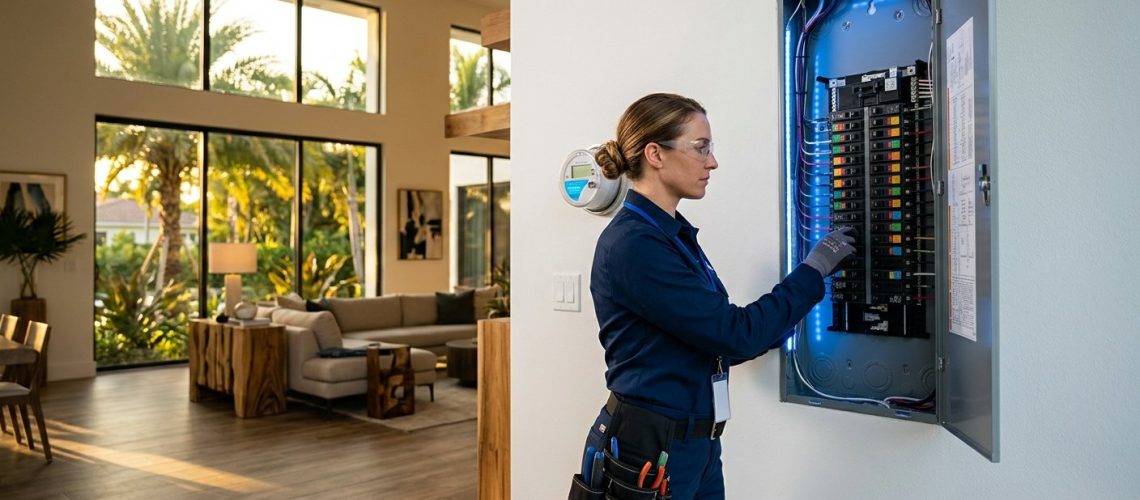
One in five home fires in the United States is caused by electrical failures or malfunctions, according to the U.S. Fire Administration. In South Florida — where humidity, hurricane season, and aging housing stock create a uniquely demanding environment — understanding electrical code compliance isn’t just a regulatory checkbox. It’s the difference between a safe home and a serious hazard.
Whether you’re renovating a Boca Raton bungalow, upgrading an older Fort Lauderdale property, or installing an EV charger at your West Palm Beach home, staying current with 2026 electrical code requirements protects your family, your investment, and your ability to sell or insure your property.
This guide breaks down what South Florida homeowners need to know about electrical code compliance in 2026 — without the technical overwhelm.
What Governs Electrical Codes in South Florida?
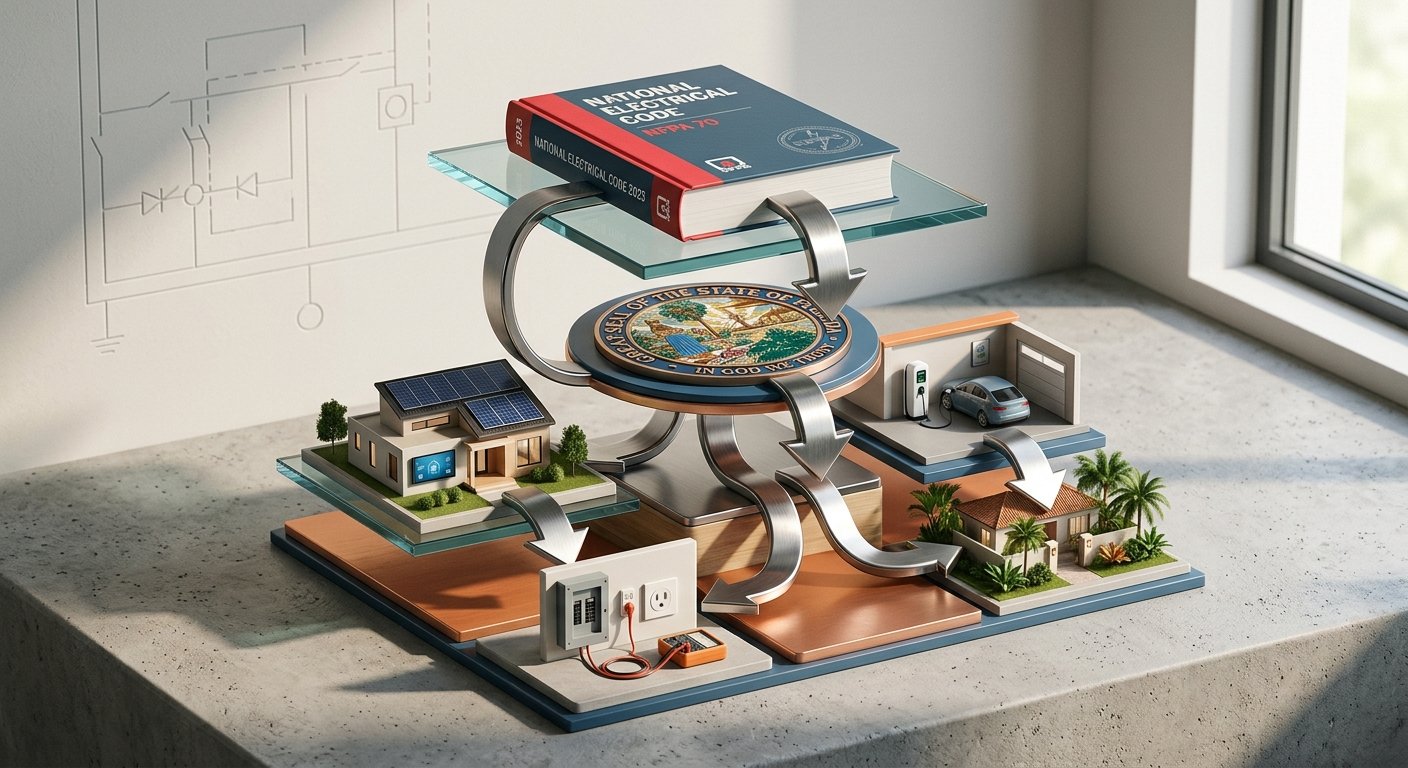
Florida adopts the National Electrical Code (NEC), published by the National Fire Protection Association (NFPA), as the foundation of its electrical regulations. The NEC 2023 edition is currently adopted statewide, with Florida-specific amendments built on top.
In addition to state requirements, Palm Beach, Broward, and Miami-Dade counties each enforce their own amendments through local building departments. This layered system means that what’s acceptable in one county may require additional steps in another — which is why working with a licensed electrical contractor who knows South Florida’s specific requirements is essential.
Key regulatory authorities include:
- Florida Building Commission — Sets statewide electrical standards
- Palm Beach County Building Division — Enforces local amendments and permitting
- Broward County Permitting, Licensing and Consumer Protection — Manages inspections and permits
- Miami-Dade County Regulatory and Economic Resources — Oversees compliance in the tri-county region’s southernmost area
2026 Code Updates Every Homeowner Should Know
Arc Fault Circuit Interrupter (AFCI) Requirements
AFCI protection has expanded significantly under current code. In 2026, AFCI breakers are required in virtually all living spaces — including bedrooms, living rooms, kitchens, hallways, and laundry areas. These devices detect dangerous arcing conditions that standard breakers miss, preventing fires before they start. Older South Florida homes built before 2014 often lack this protection entirely.
Ground Fault Circuit Interrupter (GFCI) Expansion
GFCI outlets protect against electrocution in wet or damp areas. Current requirements mandate GFCI protection in bathrooms, kitchens, garages, outdoor areas, unfinished basements, and anywhere within six feet of a sink. Given South Florida’s humidity levels and frequent tropical moisture intrusion, GFCI compliance is especially critical here. Non-compliant outlets are among the most common findings during a residential electrical inspection.
Tamper-Resistant Receptacles
All 15- and 20-amp receptacles in residential areas now require tamper-resistant (TR) design as standard. These outlets include internal shutters that prevent children from inserting foreign objects. Homes that haven’t been updated in the last decade likely still have standard outlets throughout.
Whole-Home Surge Protection
With the 2023 NEC now adopted, whole-home surge protection devices (SPDs) are required on new residential installations. In South Florida, where lightning strikes are among the highest in the nation and summer thunderstorms routinely damage unprotected electronics, this is one of the most practically valuable code updates for local homeowners.
EV Charging Circuit Readiness
Florida’s 2026 electrical requirements increasingly reflect the reality of electric vehicle adoption. New construction and significant renovations may require EV-ready conduit and dedicated circuit provisions. For existing homes looking to add charging capability, this typically means a panel upgrade to support the additional load.
Electrical Panel Compliance: Is Your Panel Up to Code?
One of the most common electrical code compliance issues in South Florida involves outdated or undersized electrical panels. Homes built in the 1970s and 1980s — a common vintage across Palm Beach and Broward counties — frequently feature 100-amp panels that simply weren’t designed for modern electrical loads.
Additionally, certain panel brands have been flagged for safety issues over the years. If your home still has a Federal Pacific Electric (FPE) Stab-Lok panel or Zinsco panel, replacement isn’t just a code matter — it’s a safety urgency. These panels have documented histories of breaker failure.
Signs your panel may not be code-compliant include:
- Breakers that trip frequently or won’t reset
- Warm or discolored panel cover
- Burning smell near the electrical panel
- Panel rated below 200 amps in a home with modern appliances
- Double-tapped breakers (two wires connected to a single breaker)
- No room for additional circuits despite growing electrical needs
A professional electrical safety inspection can identify these issues before they become emergencies — or before they surface during a home sale transaction.
Permitting: Why It’s Non-Negotiable in South Florida
Florida law requires permits for most electrical work beyond simple fixture replacements. This isn’t bureaucratic friction — it’s a consumer protection mechanism. Permitted work is inspected by licensed county inspectors, ensuring code compliance and creating a documented record that protects your home’s resale value and insurability.
Unpermitted electrical work is a serious liability. Insurance companies can deny claims if work is discovered to be unpermitted, and lenders may require remediation before closing on a property sale. In Miami-Dade, Broward, and Palm Beach counties, unpermitted work can result in stop-work orders and required demolition of completed work.
Work that typically requires permits in South Florida includes:
- Electrical panel upgrades or replacements
- New circuit installations
- EV charger installation
- Standby generator connections
- Major rewiring projects
- Smart home electrical infrastructure installation
When you hire Global Power & AC Corp as your licensed and insured electrical contractor, permit management is handled as part of the service — giving you confidence that every project meets Palm Beach, Broward, and Miami-Dade county requirements.
Hurricane Season and Electrical Code Compliance
South Florida’s hurricane preparedness requirements add another layer to electrical compliance. The Florida Building Code includes wind-load provisions that affect exterior electrical components, generator connections, and service entrance equipment. Post-storm electrical damage is a primary driver of fire hazard in the weeks following a hurricane.
Code-compliant generator installations require proper transfer switches or interlock devices to prevent dangerous back-feeding onto utility lines. This protects both your household and the utility workers restoring power to your neighborhood. DIY generator connections are not only code violations — they’re potentially fatal.
Homes in flood-prone areas of South Florida may also face requirements for elevated electrical equipment, which is increasingly relevant as flood mapping is updated across the tri-county region.
Smart Home Technology and Code Compliance
Smart home integration is booming across South Florida’s residential market. From automated lighting to whole-home energy management systems, these technologies bring significant benefits — but they also introduce new electrical demands that must be code-compliant.
Current code requirements affect how smart home electrical infrastructure is installed, including requirements around low-voltage wiring separation, dedicated circuit provisioning for smart panels, and load calculations. Learn more about code-compliant smart home electrical solutions and how they integrate safely with your existing system.
Frequently Asked Questions
How often should I have a residential electrical inspection in South Florida?
Most licensed electricians recommend a comprehensive electrical inspection every 10 years for homes with no recent updates, and every 5 years for older properties. In South Florida, annual visual checks following hurricane season are also a smart practice. If you’re buying or selling a home, an inspection before closing is strongly advised.
Does an electrical panel upgrade always require a permit in Florida?
Yes. Electrical panel upgrades require permits in all South Florida counties. The permit process ensures that the installation is inspected by a county official, protecting both safety and your home’s legal record. Global Power & AC Corp handles permitting as part of every panel upgrade project.
What electrical code violations are most common in South Florida homes?
The most frequently cited violations include missing GFCI protection in wet areas, absence of AFCI breakers in living spaces, ungrounded outlets in older homes, double-tapped breakers, and lack of whole-home surge protection. Many of these issues exist in homes that haven’t had an electrical inspection in a decade or more.
Does my home need a panel upgrade to be code-compliant?
Not necessarily — but it depends on your panel’s age, brand, amperage rating, and condition. Panels 25 years or older, those rated under 200 amps, or those manufactured by brands with known safety issues often require replacement to meet current standards. A professional inspection will clarify your specific situation.
Will electrical code violations affect my homeowner’s insurance?
Yes, significantly. Insurance companies in Florida increasingly require electrical inspections for older homes. Known violations or unpermitted work can result in coverage denial, policy cancellation, or claim rejection. Staying code-compliant protects both your safety and your insurance coverage.
Take the Next Step Toward a Code-Compliant Home
South Florida electrical codes exist to protect you, your family, and your property — not to create complications. Understanding what’s required in 2026 gives you the power to make informed decisions about your home’s electrical system before a problem forces your hand.
Global Power & AC Corp is a licensed and insured electrical contractor serving homeowners and businesses throughout Palm Beach, Broward, and Miami-Dade counties. With same-day service available and an 8-year warranty on workmanship, we bring family-owned care and corporate-level quality to every project — from electrical safety inspections and panel upgrades to EV charger installation and smart home integration.
Ready to confirm your home is safe and code-compliant? Contact Global Power & AC Corp today at (561) 203-0080 to schedule your inspection or consultation. Don’t wait for storm season — or a home sale — to discover electrical issues that could have been addressed proactively.