
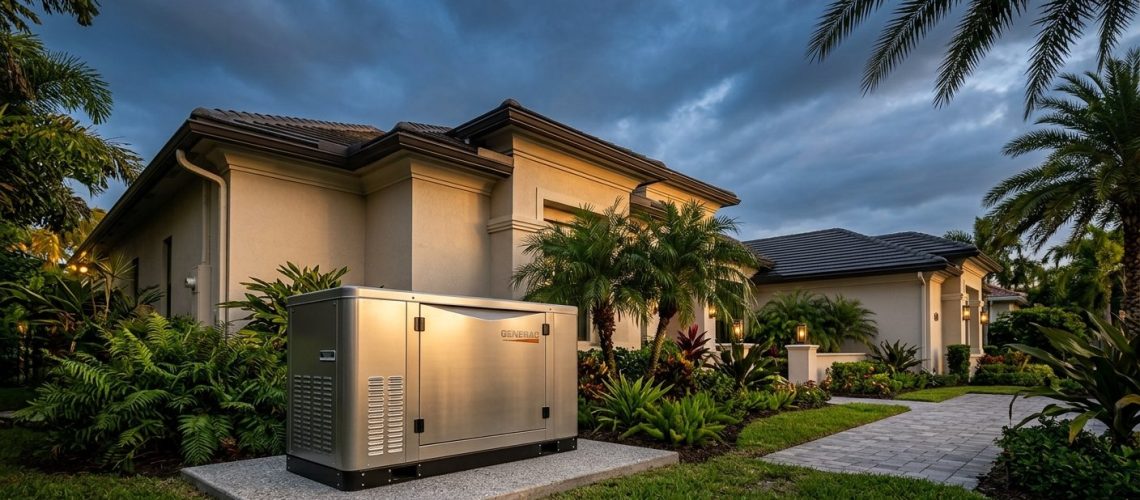
Nearly 2.5 million Florida residents lost power during Hurricane Milton in 2024, some for weeks at a time. If you live in Palm Beach, Broward, or Miami-Dade County, that statistic probably doesn’t surprise you — and it may have you seriously reconsidering your home’s backup power strategy. Choosing a standby generator installation is a smart move, but before you commit, one of the most important decisions you’ll make is fuel type. The wrong choice can mean running out of power mid-storm, paying far more than necessary, or dealing with a generator that simply doesn’t suit your home’s needs.
This guide breaks down the most common generator fuel types, their real-world pros and cons for South Florida homeowners, and how to choose the right fit for whole house generator protection.
The Four Main Generator Fuel Types
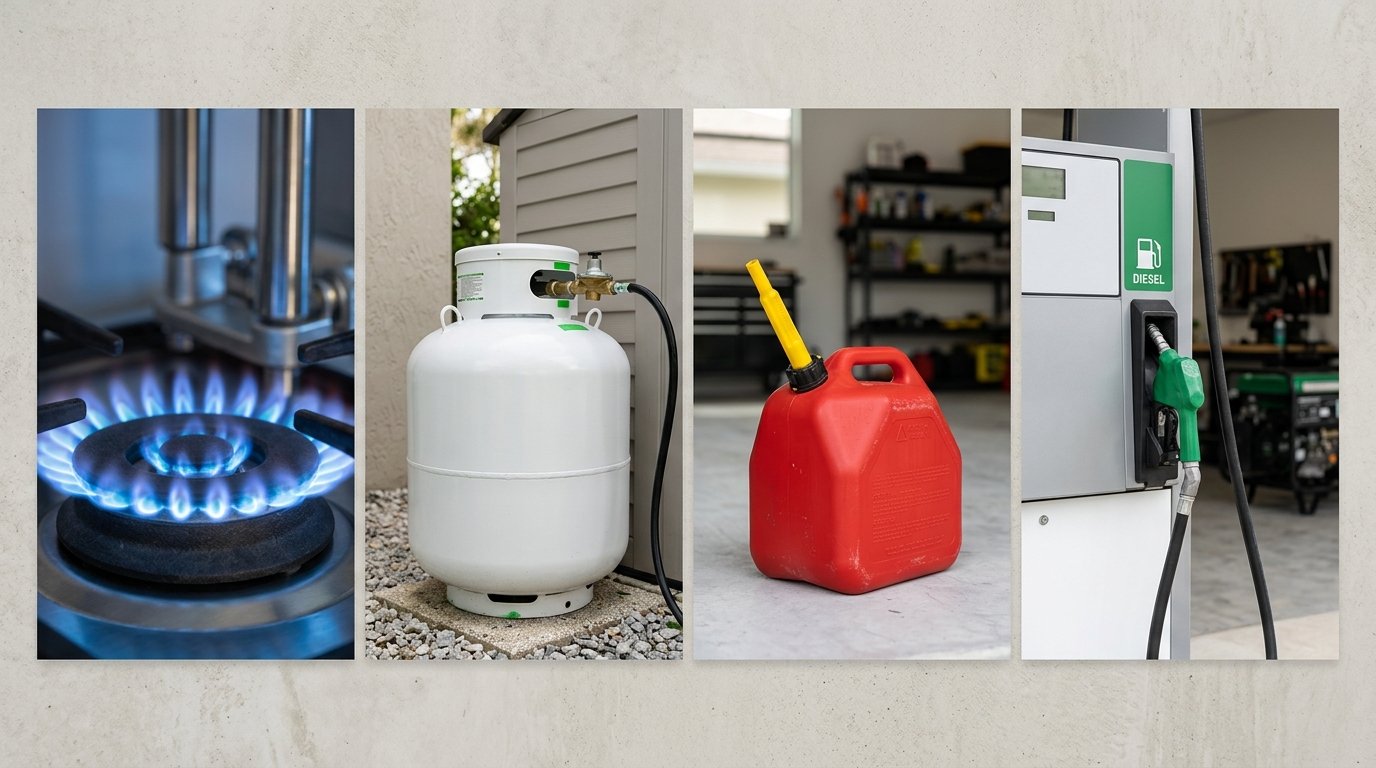
Residential backup generators typically run on one of four fuel sources: natural gas, liquid propane (LP), gasoline, or diesel. Each has a distinct performance profile that matters significantly in South Florida’s storm-heavy environment.
Natural Gas
For most homeowners in the Palm Beach and Broward areas who already have a natural gas connection, a natural gas automatic standby generator is the most convenient long-term option. These units connect directly to your home’s gas supply line, meaning you never have to store fuel or worry about running out during an extended outage.
Advantages:
- Unlimited fuel supply through the utility line — no manual refueling
- Automatic startup within seconds of a power outage
- Lower fuel cost compared to propane or diesel
- Cleaner burning than gasoline or diesel
- Ideal for whole house generator applications with high power demands
Considerations:
- Requires existing natural gas service at the property
- Gas lines can occasionally be shut down after major hurricanes
- Installation cost is higher than portable units
Natural gas Generac generator installation is one of the most popular choices among South Florida homeowners upgrading their hurricane power backup systems. According to the U.S. Department of Energy, automatic standby generators connected to utility gas lines provide the most seamless transition during grid failures.
Liquid Propane (LP)
If your home isn’t connected to a natural gas main — common in many areas of western Palm Beach County and rural Broward — propane is an excellent alternative for backup generator installation. A large propane tank (typically 250–500 gallons) is installed on your property and connected to the generator.
Advantages:
- Available everywhere, no utility gas line required
- Long shelf life — propane doesn’t degrade like gasoline
- Automatic standby capability just like natural gas units
- Burns cleaner than gasoline or diesel
Considerations:
- Tank refills must be scheduled in advance — critical before hurricane season
- Larger upfront investment for tank installation and storage
- Delivery delays are common right before major storms
- Fuel efficiency is slightly lower than natural gas
The key with propane is planning ahead. Smart South Florida homeowners schedule tank top-offs in May or June, well before peak hurricane season. Running out mid-storm is avoidable with the right preparation.
Gasoline
Gasoline-powered portable generators are widely available and affordable upfront. You’ve likely seen neighbors running them after storms. However, for serious home backup power, gasoline has significant drawbacks that make it less suitable for extended outages.
Advantages:
- Low purchase cost
- Portable and easy to transport
- Readily available in most conditions
Considerations:
- Gasoline degrades quickly — unused fuel becomes gummy within 30–60 days
- Local gas stations frequently run out during hurricane evacuations
- Must be manually started and refueled regularly
- Cannot power an entire home — typically limited to essential appliances
- Carbon monoxide risk if operated improperly (always outdoors, away from openings)
- No automatic transfer capability
The U.S. Consumer Product Safety Commission consistently warns that portable gasoline generators are among the leading causes of carbon monoxide poisoning during and after storm events. This is a genuine safety concern for Florida families.
Diesel
Diesel generators are more common in commercial applications and larger properties. They’re durable and fuel-efficient, but they come with trade-offs that make them less practical for most South Florida homeowners.
Advantages:
- Excellent fuel efficiency under heavy load
- Long engine lifespan with proper maintenance
- Better performance in high-demand scenarios
Considerations:
- Diesel fuel can degrade and gel over time in storage
- Higher noise levels than gas or propane units
- Fuel storage requires safe on-site tanks
- More expensive to maintain
- Supply issues common post-storm
For property managers and small businesses in Miami-Dade or Broward County managing larger facilities, diesel may still make sense — but for most residential applications, natural gas or propane will be the stronger choice.
Comparing Fuel Types at a Glance
- Natural Gas: Best for homes with existing gas service, fully automatic, unlimited supply, ideal whole house generator solution
- Propane: Best where gas lines aren’t available, automatic capability, requires on-site storage and advance planning
- Gasoline: Best for short-term, small-load situations only — not recommended for whole-home backup
- Diesel: Better suited for commercial or large-property needs, less practical for residential use
Why Fuel Choice Matters More in South Florida
South Florida’s combination of high humidity, intense thunderstorm seasons, and annual hurricane threats makes home backup power not just a convenience — it’s a safety necessity. Extended outages here aren’t rare events. They’re predictable consequences of living in one of the most storm-exposed regions in the United States.
That context changes the fuel conversation significantly. A gasoline generator might get you through one night, but a Category 3 or 4 storm can leave you without grid power for 7–14 days or longer. Natural gas and propane standby generators are designed for exactly this reality, automatically switching on within seconds of an outage and running continuously until grid power is restored.
South Florida’s high humidity also accelerates corrosion in generator components and degrades stored fuels faster than in drier climates. Properly installed, weatherproofed automatic standby generator units from manufacturers like Generac are engineered to handle these conditions — provided they’re professionally installed and maintained.
According to the Federal Emergency Management Agency (FEMA), households with pre-installed automatic backup power systems recover from storm events significantly more safely and comfortably than those relying on portable options.
What Powers a Whole House Generator?
A true whole house generator — typically 22kW to 24kW for a standard South Florida single-family home — needs a fuel source that can sustain continuous, high-output performance. Natural gas and propane are the clear frontrunners here. They can power:
- Central air conditioning (critical in South Florida summers)
- Refrigerators and freezers
- Water heaters
- Medical equipment
- Lighting, security systems, and smart home devices
- EV charging equipment (with proper load management)
If your home already has a Level 2 EV charger or a smart home electrical system, your licensed electrician can help configure load management so your generator handles priority circuits efficiently without overloading.
Frequently Asked Questions
What is the best generator fuel type for South Florida homes?
For most South Florida homeowners with access to natural gas, a natural gas automatic standby generator is the best choice. It provides unlimited fuel through utility lines, requires no manual refueling, and starts automatically during outages. Homeowners without gas service should consider liquid propane as a reliable alternative with similar automatic capabilities.
How long can a natural gas standby generator run during an outage?
A natural gas standby generator can run continuously as long as the utility gas supply remains active — potentially days or weeks. Because it connects directly to the gas line, there’s no fuel storage limit. This makes it ideal for extended post-hurricane outages common in Palm Beach and Broward counties.
Is a Generac generator installation worth the investment?
Yes, for South Florida homeowners, a Generac generator installation is widely considered one of the highest-value home investments available. Beyond storm preparedness, whole house generator systems can increase property value, protect food and medications during outages, and provide peace of mind year-round. With an 8-year workmanship warranty from Global Power & AC Corp, the long-term value is strong.
Do I need a permit for backup generator installation in Florida?
Yes. Florida requires permits for standby generator installation, including electrical connections and fuel line work. A licensed electrical contractor will handle the permit process, inspections, and code compliance on your behalf. This ensures your system is safe, legal, and fully covered by manufacturer warranties.
Can a whole house generator power my air conditioning?
Yes, a properly sized whole house generator — typically 22kW or larger for a standard South Florida home — can power central air conditioning along with other major appliances. Proper sizing by a licensed professional is essential, as undersized units can be damaged by the electrical load of modern HVAC systems.
Ready to Install Backup Power for Your Home?
The right generator fuel type depends on your home’s setup, your location within Palm Beach, Broward, or Miami-Dade County, and how much power you need to maintain comfort and safety during outages. Natural gas and liquid propane automatic standby generators remain the gold standard for whole house hurricane power backup in South Florida — and professional installation is always required for safe, code-compliant results.
At Global Power & AC Corp, we’re a licensed and insured electrical contractor serving homeowners throughout West Palm Beach, Boca Raton, Delray Beach, Fort Lauderdale, and surrounding communities. We specialize in Generac generator installation and complete backup generator installation services backed by our 8-year warranty on workmanship. Same-day service is available for urgent needs.
Call us today at (561) 203-0080 to schedule a consultation and find out which generator fuel type and system size is right for your home. Don’t wait until the next storm is on the radar — make backup power part of your plan now.