
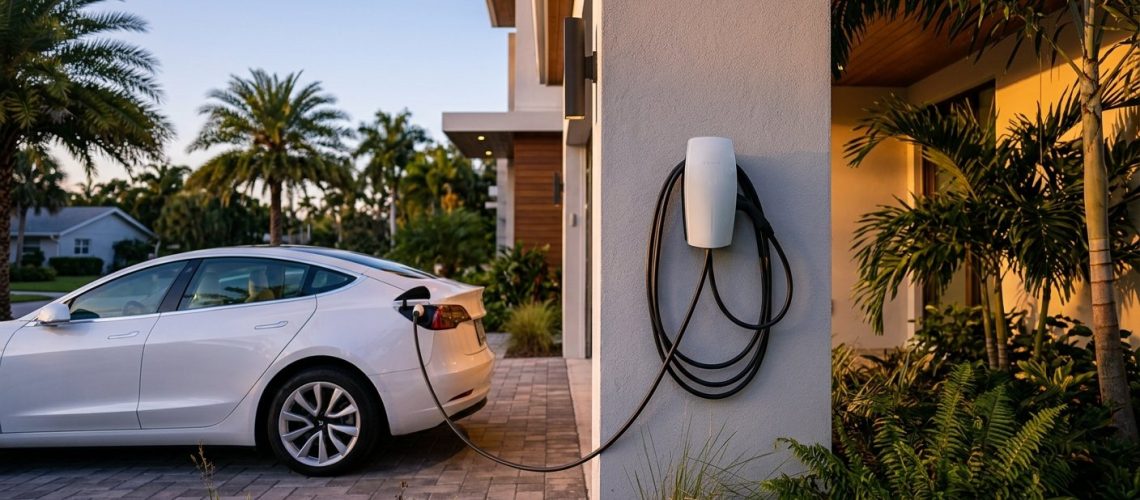
More than 40% of new car purchases in Florida in 2026 are electric or hybrid vehicles — and for good reason. But here’s the question most new EV owners ask right after driving home: How much does it actually cost to install a home EV charging station? The answer depends on several factors, and understanding each one will help you budget smarter and avoid surprise expenses down the road.
Whether you’re in Boca Raton, Fort Lauderdale, or Miami-Dade, this complete cost breakdown will walk you through everything you need to know about EV charger installation in 2026.
Level 1 vs. Level 2 EV Charger: What’s the Difference?
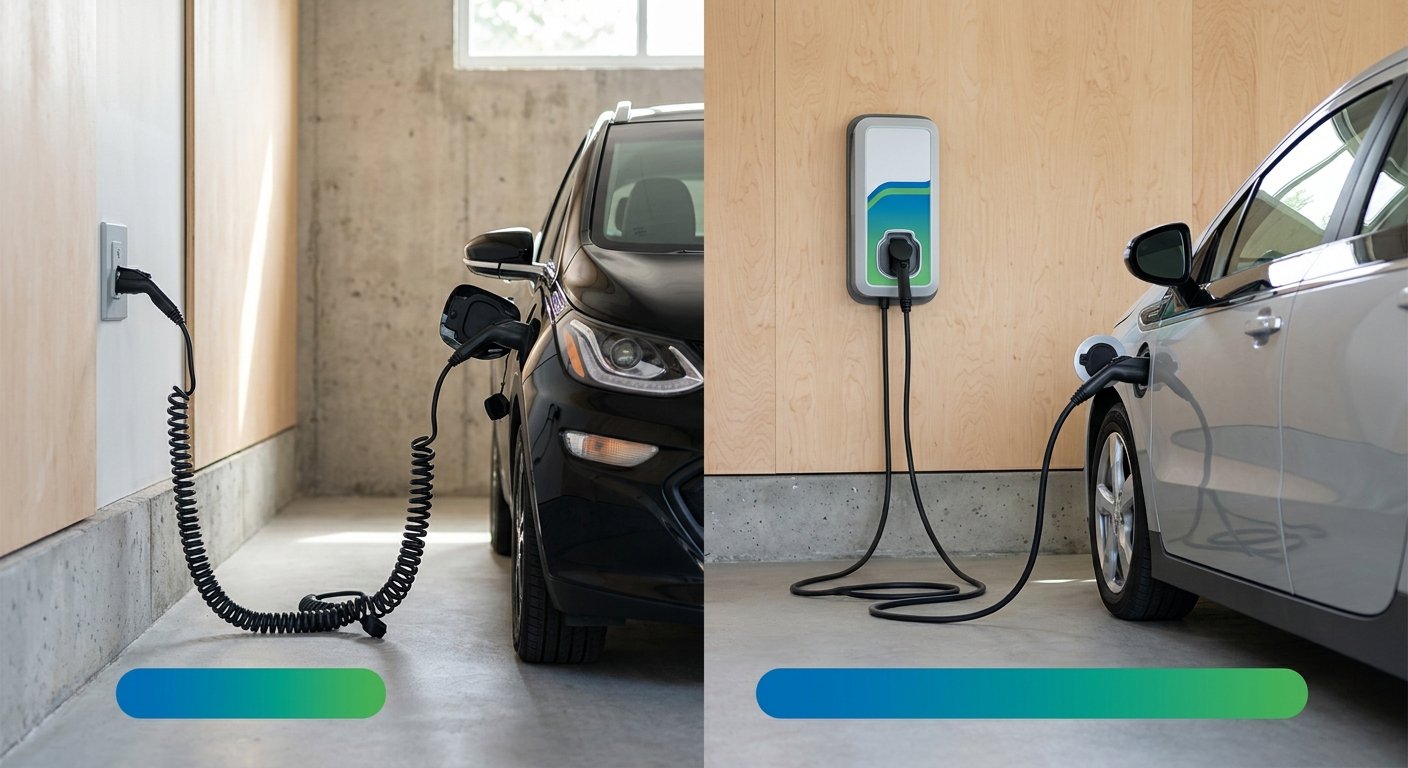
Before diving into costs, it’s important to understand what you’re actually buying. Home EV chargers fall into two main categories:
Level 1 Charging
Level 1 chargers use a standard 120-volt household outlet. They require no special installation, but they’re extremely slow — adding roughly 3 to 5 miles of range per hour. For most drivers, this means an overnight charge barely replaces the miles driven in a single day. Level 1 is essentially a stopgap, not a long-term solution.
Level 2 Charging
A Level 2 EV charger operates on a dedicated 240-volt circuit — similar to what your dryer uses. It adds 20 to 30 miles of range per hour, meaning a full charge overnight is realistic for most EVs. This is the gold standard for home charging, and it’s what most South Florida homeowners choose when they want reliable, daily-use charging at home.
For a deeper dive into the installation process, visit our EV charger installation page.
Average EV Charger Installation Cost in 2026
Here’s a straightforward breakdown of what homeowners across Palm Beach, Broward, and Miami-Dade counties can expect to pay in 2026:
- Level 2 charger unit (hardware): $400 – $900
- Basic electrical installation (panel ready, short run): $300 – $600
- Electrical panel upgrade (if needed): $1,500 – $4,000+
- Conduit and wiring run (long distances): $200 – $800
- Permitting and inspection fees: $50 – $300
- Total average installed cost: $750 – $2,500+ depending on your home’s setup
The wide range reflects real variables: the age of your electrical panel, the distance from your panel to your garage, and whether your home needs any upgrades to support the new load. Older homes in West Palm Beach or Delray Beach, for example, often require more electrical work before a Level 2 charger can be safely installed.
What Drives the Cost Up (or Down)?
Your Existing Electrical Panel
This is the single biggest cost variable. A Level 2 EV charger typically requires a dedicated 40- to 60-amp breaker on a 240-volt circuit. If your panel is already at capacity, outdated, or undersized — which is common in homes built before the 1990s — you may need a panel upgrade before installation can proceed safely. This is not optional. Overloading an aging panel creates a genuine fire risk.
Distance from Panel to Charging Location
The further your garage or driveway is from your electrical panel, the more wiring and conduit your electrician will need to run. In some South Florida homes — particularly in Boynton Beach or Coral Springs, where garages are detached or on the opposite side of the house from the main panel — this can add several hundred dollars to the project.
Conduit Requirements
In Florida, outdoor electrical runs often require weatherproof conduit to meet local code and protect against the humidity and storm conditions common across Palm Beach, Broward, and Miami-Dade counties. This material and labor cost adds up but is essential for a safe, code-compliant installation.
Charger Brand and Features
Not all Level 2 chargers are created equal. Basic units from reliable brands start around $400. Smart chargers with Wi-Fi connectivity, energy monitoring, and scheduling features can run $600 to $900 or more. For homeowners interested in smart home integration, these premium units offer real value — allowing you to charge during off-peak hours when electricity rates are lower.
Permitting
Any licensed electrician operating in Florida is required to pull permits for EV charger installations. This is not something to skip or work around. Permitted work means inspected work — which protects your home’s resale value and ensures your installation meets current National Electrical Code standards. According to the National Fire Protection Association (NFPA 70), improper wiring is one of the leading causes of residential electrical fires.
Federal Tax Credits and Florida Incentives in 2026
Good news: the installation cost doesn’t have to come entirely out of pocket. The federal Alternative Fuel Vehicle Refueling Property Credit still applies to home EV charger installations in 2026, allowing eligible homeowners to claim up to 30% of installation costs (up to $1,000 for residential installations). Check with your tax advisor and review the latest guidance at the U.S. Department of Energy’s EV charging resources to confirm your eligibility.
Additionally, some Florida utility companies offer rebates for EV charger installation. Florida Power & Light (FPL), which serves much of South Florida, has offered time-of-use rate plans and incentive programs that can meaningfully offset both installation and ongoing electricity costs. Contact your utility provider directly to ask about current offers.
Why Hiring a Licensed EV Charger Electrician Matters
DIY EV charger installation is not a safe option. A 240-volt circuit carries enough power to cause serious injury or death if handled incorrectly. Beyond safety, unpermitted or improperly installed chargers can:
- Void your homeowner’s insurance policy
- Cause problems during home resale inspections
- Result in costly code violations and rework
- Create fire hazards from improper breaker sizing or wiring
At Global Power & AC Corp, our licensed and insured electricians handle EV charger installations throughout Palm Beach, Broward, and Miami-Dade counties. We assess your existing electrical system, recommend the right charger for your needs, pull all required permits, and back every installation with our 8-year warranty on workmanship. Same-day service is available for those ready to get started quickly.
Special Considerations for South Florida Homes
Humidity, tropical storms, and Florida’s intense summer heat create unique challenges for electrical installations that many homeowners overlook.
- Corrosion resistance: Outdoor charger installations near coastal areas in Palm Beach or Miami-Dade require weatherproof enclosures and corrosion-resistant hardware.
- Surge protection: South Florida averages more lightning strikes per year than almost anywhere in the country. A dedicated surge protector for your EV charging circuit is a smart investment.
- Hurricane preparedness: If you also have a standby generator, proper transfer switch integration ensures you can continue charging during and after storms without grid power.
These aren’t generic concerns — they’re realities for homeowners from Homestead to Jupiter. A local electrician who understands South Florida’s conditions will always deliver a safer, longer-lasting installation than one unfamiliar with the region.
Frequently Asked Questions
How long does EV charger installation take?
Most Level 2 EV charger installations are completed in 2 to 4 hours when the electrical panel is already sufficient. If a panel upgrade is also needed, the project typically takes one full day. Our team offers same-day service for qualifying installations throughout Palm Beach, Broward, and Miami-Dade counties.
Do I need a permit to install an EV charger in Florida?
Yes. Florida law requires permits for new 240-volt circuit installations, including EV chargers. Any reputable, licensed electrician will pull the necessary permits as part of the project. Never hire someone who suggests skipping this step — it puts your home and safety at risk.
Can my current electrical panel handle a Level 2 EV charger?
It depends on your panel’s age, amperage, and existing load. Many homes built before 2000 have 100-amp panels that are already near capacity. A licensed electrician should assess your panel before installation. In some cases, a panel upgrade is necessary to safely support the added demand.
What’s the best Level 2 EV charger for home use?
Popular and reliable brands include ChargePoint, Emporia, and Enel X JuiceBox. The best choice depends on your vehicle, desired features (smart connectivity, energy monitoring), and budget. A qualified EV charger electrician can help you select the right unit for your home’s setup.
Does EV charger installation increase home value?
Yes. In markets like South Florida where EV ownership is rising rapidly, a professionally installed home EV charging station is increasingly attractive to buyers. It signals a modern, upgraded electrical system and eliminates a common concern for prospective EV-driving homeowners.
Ready to Install Your Home EV Charging Station?
Installing a Level 2 EV charger at home is one of the smartest upgrades a South Florida driver can make in 2026 — and with the right electrician, it’s a smooth, straightforward process. From your initial electrical assessment through final inspection and our industry-leading 8-year warranty, Global Power & AC Corp is here to make it easy.
We serve homeowners and businesses throughout West Palm Beach, Boca Raton, Fort Lauderdale, Miami-Dade, and everywhere in between. Call us today at (561) 203-0080 or visit our EV charger installation page to request your free estimate. Same-day service is available — let’s get your home ready for the road ahead.