
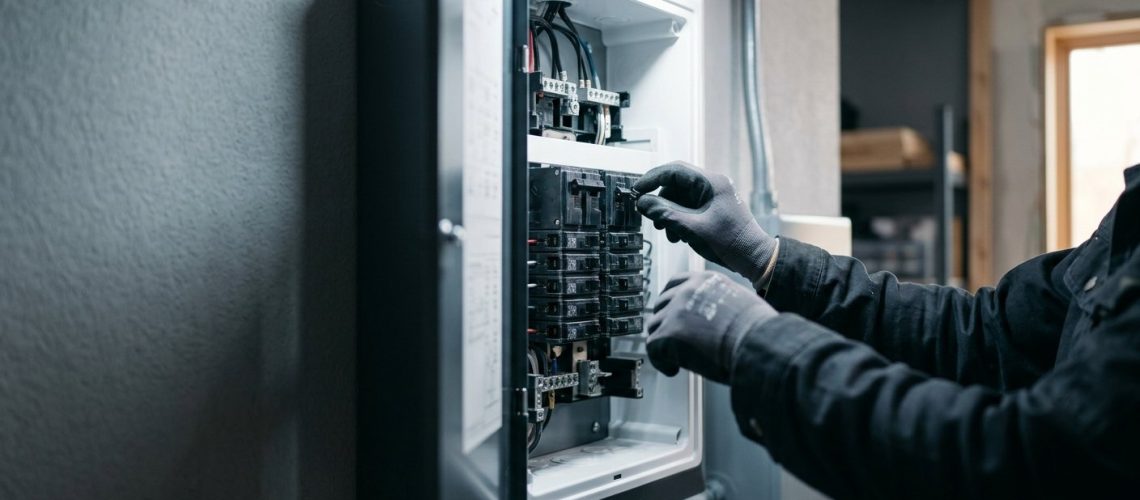
Nearly 51,000 home electrical fires occur in the United States each year, according to the U.S. Fire Administration. A surprising number of those incidents trace back to something deceptively simple: homeowners who didn’t understand their electrical panel. If you’ve ever opened that gray metal box in your utility room, squinted at faded handwriting, and quietly closed it again — you’re not alone. But learning to read your panel label safely is one of the smartest things a South Florida homeowner can do.
This guide walks you through exactly what that label means, how to interpret each circuit, and when it’s time to call a licensed electrical contractor to evaluate what’s inside.
What Is an Electrical Panel Label?
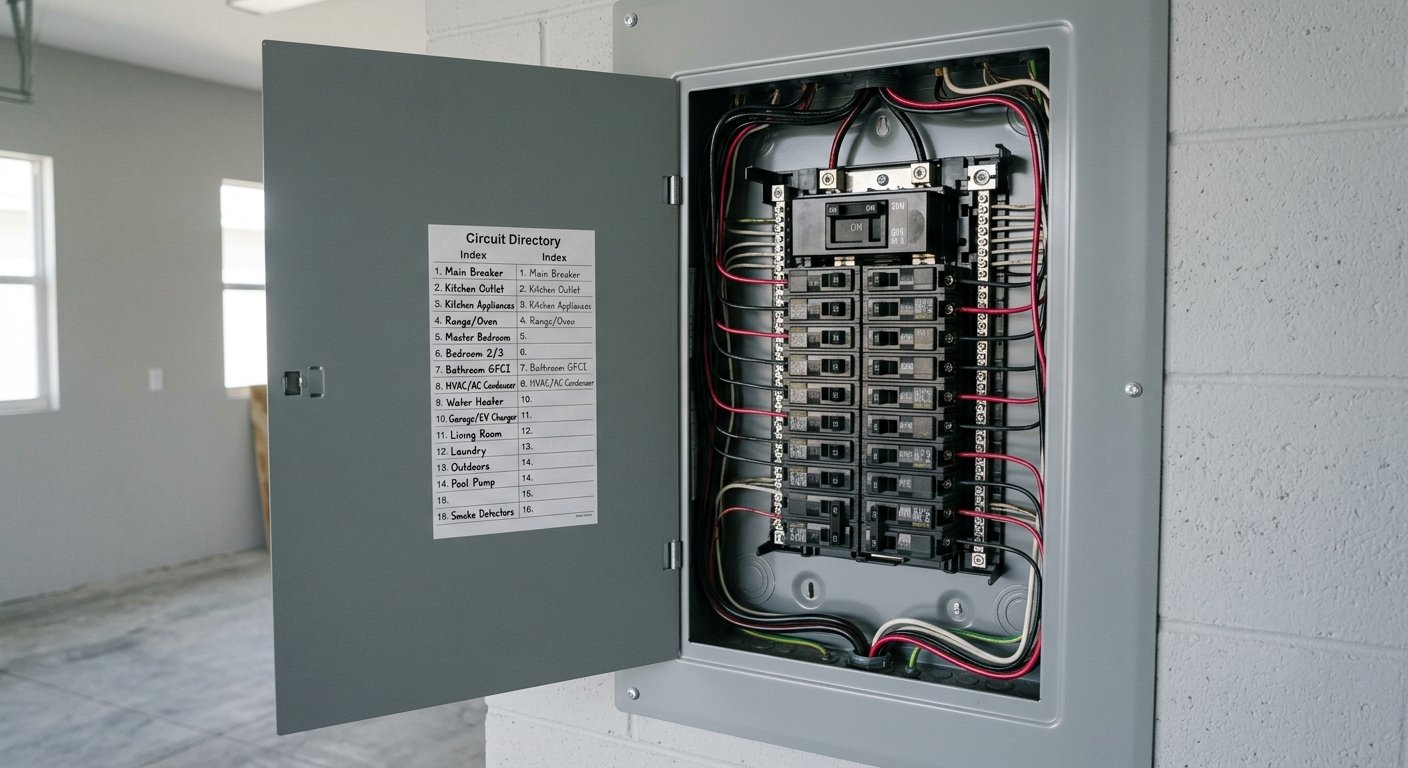
Your electrical panel — sometimes called a breaker box, load center, or distribution board — is the central hub where utility power enters your home and gets divided into individual circuits. Every panel should have a directory label, typically mounted on the inside of the door, that lists which breaker controls which area or appliance.
The label is essentially your home’s electrical map. It tells you:
- Which breaker corresponds to which room, outlet, or appliance
- The amperage rating of each individual circuit breaker
- The total amperage capacity of the panel itself
- Whether circuits are labeled as single-pole (120V) or double-pole (240V)
In South Florida homes — particularly older properties throughout Palm Beach, Broward, and Miami-Dade counties — panel labels are often outdated, incomplete, or written in barely legible handwriting from decades ago. That’s a safety concern worth addressing.
How to Read the Panel Label Step by Step
Step 1: Locate and Open the Panel Door
Your electrical panel is usually found in a utility room, garage, hallway closet, or on an exterior wall. Before opening it, make sure the area around the panel is dry and you’re standing on a dry surface. South Florida’s humidity is no joke — moisture near electrical equipment is dangerous. Never open a panel that shows signs of rust, corrosion, or water damage. If you notice any of those conditions, call a licensed electrician immediately.
Step 2: Identify the Main Breaker
At the top of most panels, you’ll see a larger double-pole breaker labeled “Main.” This is the master shutoff that controls power to every circuit in your home. Its amperage rating — commonly 100A, 150A, or 200A — tells you the total electrical capacity of your home’s service. Many older homes in the Palm Beach County area still have 100-amp panels, which were adequate decades ago but often struggle to support modern electrical demands like EV chargers, smart home systems, and high-efficiency appliances.
Step 3: Read the Individual Circuit Breakers
Below the main breaker, you’ll find rows of individual breakers numbered from top to bottom — typically odd numbers on the left, even numbers on the right. Each breaker should correspond to an entry on your panel directory label. Here’s what to look for:
- Breaker size: Single-pole breakers handle 120V circuits (lights, outlets, small appliances). Double-pole breakers handle 240V circuits (dryers, water heaters, HVAC systems, EV chargers).
- Amperage: Most household circuits are 15A or 20A. Larger appliances may use 30A, 40A, or 50A circuits.
- Position: Each breaker should be clearly in the ON or OFF position. A tripped breaker typically rests in the middle position.
Step 4: Compare Labels to Actual Circuits
If the directory label is blank, incomplete, or inaccurate — a very common situation in South Florida homes built before the 1990s — you’ll want to verify each circuit. A licensed electrician can perform a complete panel audit, testing each breaker and updating the directory with accurate descriptions. This simple step can prevent dangerous situations like accidentally cutting power to a medical device or working on what you think is a de-energized circuit.
Red Flags to Watch for on Your Panel
Reading your panel label isn’t just about knowing which switch controls the kitchen. It’s also an opportunity to spot warning signs that your system may need professional attention. Watch out for:
- Double-tapped breakers: Two wires connected to a single breaker terminal (visible when the panel cover is removed by a professional) — this is a fire hazard
- Breakers with no labels: Unknown circuits are a safety risk
- Older panel brands: Panels manufactured by certain brands have been recalled or flagged for safety issues — a concern in many older South Florida homes
- Signs of overheating: Discoloration, burn marks, or a burning smell near the panel
- Breakers that trip frequently: A sign the circuit may be overloaded or the breaker itself is failing
- Fuse boxes instead of breakers: Older fuse-based systems are a clear signal that an old electrical panel replacement is overdue
If you notice any of these warning signs, don’t attempt to investigate further on your own. Instead, schedule a professional electrical safety inspection with a licensed contractor who can assess the full scope of the issue.
When Your Panel Label Points to a Bigger Problem
Sometimes reading your panel label reveals not just labeling gaps, but fundamental capacity limitations. South Florida homeowners increasingly face this challenge as energy demands grow. If your panel label shows a 100-amp main breaker and you’re planning to add an EV charger, whole-home generator, or additional HVAC equipment, your existing panel likely won’t support the load.
A circuit breaker panel upgrade — often to a 200-amp or even 400-amp service — solves this problem and future-proofs your home’s electrical infrastructure. Electrical panel installation performed by a licensed contractor also ensures the work meets current Florida Building Code requirements, which is critical for insurance compliance and resale value.
According to the National Fire Protection Association’s NFPA 70 (National Electrical Code), electrical panel upgrades must meet specific safety standards for conductor sizing, breaker ratings, and grounding — all reasons why this work should never be a DIY project.
Electrical Inspection Requirements in Florida
Florida requires permits for most electrical panel work, including upgrades and replacements. This means your electrical panel installation must be inspected by a local building official after the work is completed. The inspection verifies that the installation meets both the National Electrical Code and any local amendments adopted by Palm Beach County, Broward County, or Miami-Dade County municipalities.
Working with a licensed and insured electrical contractor like Global Power & AC Corp ensures all permits are pulled, all work is code-compliant, and all inspections are properly coordinated. This protects you legally, keeps your homeowner’s insurance valid, and ensures the work is safe for your family.
Smart Panels and Modern Label Systems
Newer smart electrical panels take the guesswork out of circuit identification entirely. Systems like those compatible with smart home integration automatically track energy usage per circuit in real time, send alerts when a breaker trips, and can even be managed remotely from your smartphone. If you’re considering a panel upgrade anyway, this is worth exploring. Learn more about how modern electrical systems support whole-home automation through our smart home electrical services.
Frequently Asked Questions
How often should I review my electrical panel label?
You should review your panel label any time you add a new appliance, complete a renovation, or notice circuit breakers tripping more frequently. A complete panel audit by a licensed electrician is recommended every 5 to 10 years, or immediately if your home is more than 25 years old and has never had a professional inspection.
Is it safe to touch circuit breakers in my panel?
It is generally safe to flip individual circuit breakers on or off using the toggle switches — that’s what they’re designed for. However, you should never remove the panel cover, touch wiring, or attempt to add or replace breakers yourself. The interior of an energized panel carries potentially lethal voltages. Always call a licensed electrician for anything beyond flipping a breaker.
What does it mean if a breaker doesn’t match its label?
Mismatched or inaccurate labels are common in older homes and can create real safety hazards — especially during emergencies when you need to cut power quickly. A licensed electrician can perform a full circuit identification audit, test every breaker, and update your directory with accurate, current information.
When do I need an electrical panel upgrade?
Consider an electrical panel upgrade if your home has a 60- or 100-amp service and you want to add an EV charger, whole-home generator, or additional HVAC equipment; if breakers trip frequently; if you’re renovating a kitchen or bathroom; or if your panel is more than 25–30 years old. A licensed electrician can assess your current load and recommend the right upgrade path.
Do electrical panel upgrades require a permit in South Florida?
Yes. In Palm Beach, Broward, and Miami-Dade counties, electrical panel upgrades require a permit and must pass a building inspection before the project is considered complete. Working with a licensed contractor ensures the permitting process is handled correctly on your behalf.
Let Global Power & AC Corp Help You Stay Safe
Understanding your electrical panel label is a smart first step — but knowing when to call a professional is even smarter. Whether you need a panel audit, an old electrical panel replacement, a full circuit breaker panel upgrade, or just a clearer picture of your home’s electrical capacity, the team at Global Power & AC Corp is here to help.
We serve homeowners and property managers throughout West Palm Beach, Boca Raton, Delray Beach, Boynton Beach, Fort Lauderdale, and surrounding communities in Palm Beach, Broward, and Miami-Dade counties. Every job is backed by our 8-year warranty on workmanship, and same-day service is available when you need it most.
Call us today at (561) 203-0080 to schedule your electrical safety inspection or panel evaluation. Your family’s safety is worth the call.