
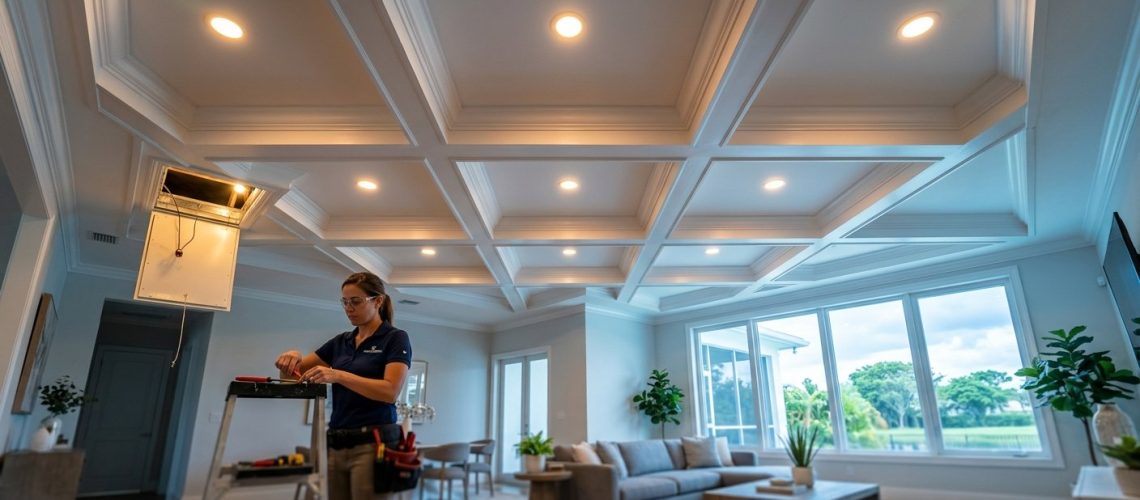
Nearly 70% of homeowners say poor lighting is one of the top things they’d change about their home. If you’re staring at dated overhead fixtures or dimly lit rooms, recessed lighting might be exactly what your home needs. Clean, modern, and energy-efficient, LED recessed lights can transform the feel of any space — but installation involves more than drilling a few holes in the ceiling.
This guide walks you through the recessed lighting installation process, what to expect, what decisions you’ll need to make, and when calling a licensed electrician is the smartest move you can make.
What Is Recessed Lighting?
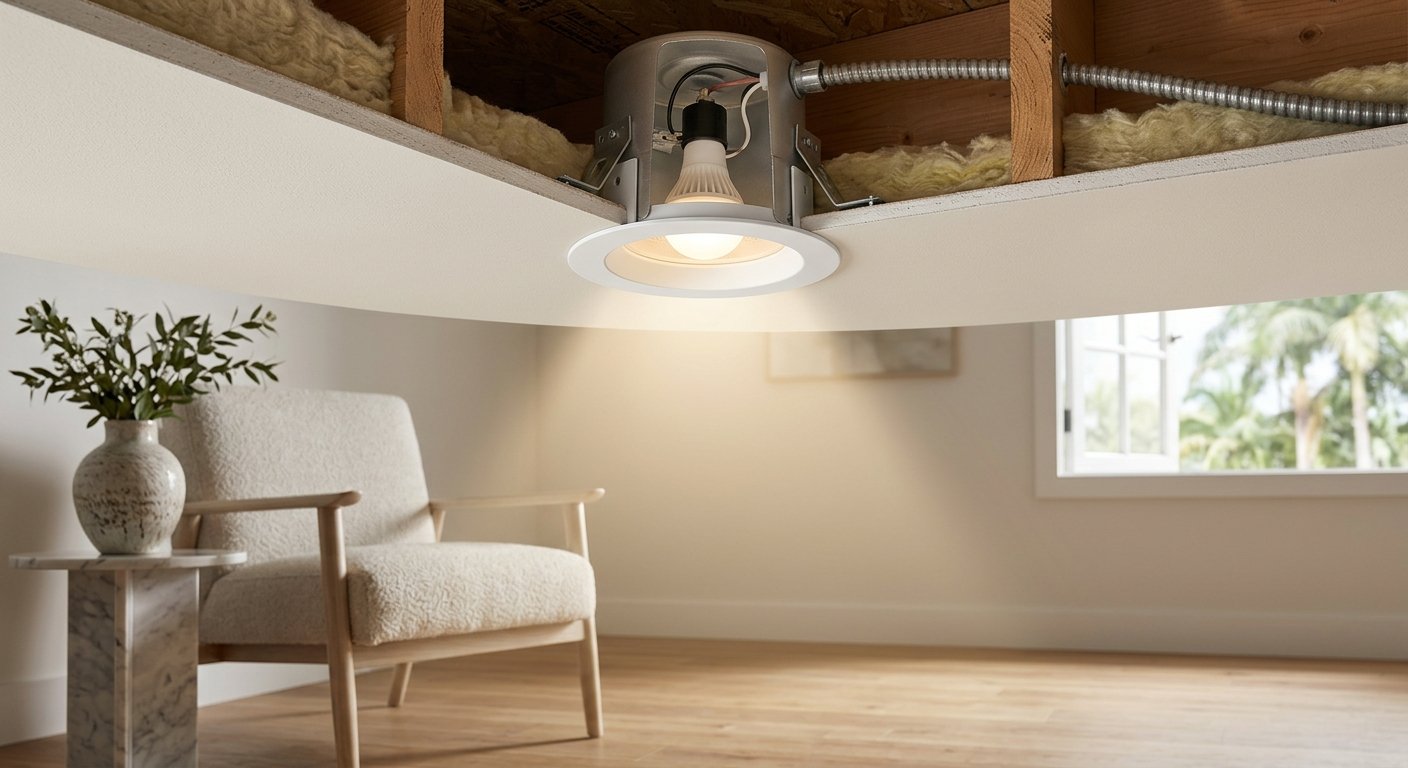
Recessed lighting (also called can lights or pot lights) is installed directly into the ceiling, creating a flush, streamlined look. Unlike pendant lights or ceiling fans with lights, recessed fixtures sit within the ceiling itself — hiding the housing while projecting light downward.
Modern LED recessed lights have largely replaced older incandescent and halogen versions. They run cooler, last longer, and consume significantly less electricity. For South Florida homeowners looking to reduce their energy bills during long, hot summers, this upgrade is especially worthwhile.
Planning Your Recessed Lighting Layout
Before you touch a single wire or cut into your ceiling, planning is everything. A poorly spaced layout leads to hot spots, dark corners, and wasted money.
Choosing the Right Fixture Size
Recessed lights are commonly available in 4-inch, 5-inch, and 6-inch sizes. As a general rule:
- 4-inch fixtures work well in smaller rooms, hallways, and under cabinets
- 5-inch fixtures are a versatile choice for bedrooms and living rooms
- 6-inch fixtures are ideal for larger open-concept spaces and kitchens
Spacing Your Lights Correctly
A common formula: divide your ceiling height in half to determine spacing between fixtures. For an 8-foot ceiling, space lights approximately 4 feet apart. For general ambient lighting, keep fixtures 2 feet away from walls to avoid harsh shadows.
Task lighting — over kitchen islands, reading nooks, or bathroom vanities — requires tighter spacing and more strategic placement.
New Construction vs. Retrofit
If your ceiling is already drywalled, you’ll need remodel (retrofit) housing, which is designed to be inserted through a hole cut in existing drywall without accessing the ceiling above. New construction housings require open ceiling access before drywall is installed.
Most residential projects in Palm Beach, Broward, and Miami-Dade involve retrofit installations — and getting the right housing type matters for both safety and code compliance.
Step-by-Step: How Recessed Lighting Is Installed
Here’s a general overview of the installation process used by professional electricians:
- Turn off the power. Always shut off the circuit at your electrical panel before any work begins. Verify the power is off using a non-contact voltage tester.
- Mark fixture locations. Using your planned layout, mark where each fixture will go. Check for joists, pipes, and existing wiring above the ceiling with a stud finder.
- Cut the ceiling openings. Use a hole saw or drywall saw to cut circles sized to your fixture housing. Work carefully to avoid existing wiring or HVAC ducts above.
- Run the wiring. This is where professional expertise is critical. Wiring must run from a power source (typically an existing circuit or junction box) to each fixture location. In South Florida homes, humidity and heat can affect wiring materials, making correct wire gauge and insulation type essential.
- Install the housing. Insert the remodel housing into the ceiling cutout and secure the clips that lock it in place against the drywall.
- Make the electrical connections. Connect the black (hot), white (neutral), and green or bare (ground) wires using wire nuts or push-in connectors inside the junction box of the housing.
- Install the trim and bulb. Snap or twist in the trim ring, then install your LED bulb or LED module. Restore power and test each fixture.
According to the National Electrical Code (NFPA 70), all electrical wiring work must meet specific standards for conductor sizing, junction box installation, and fixture ratings. In Florida, local amendments may also apply.
South Florida Considerations for Recessed Lighting
South Florida’s unique environment creates specific challenges that homeowners in other parts of the country don’t face.
Humidity and Moisture
High humidity levels throughout Palm Beach, Broward, and Miami-Dade counties can accelerate corrosion inside electrical housings. For bathrooms, covered patios, and any space near moisture, you’ll need fixtures rated IC-rated and airtight (ICAT) or specifically rated for damp or wet locations. Using standard fixtures in moist environments is a safety and code violation.
Insulation in Attic Spaces
Many South Florida homes have attic insulation directly above living areas. If a recessed light isn’t IC-rated (insulation contact), it must maintain clearance from insulation — which is a fire hazard if ignored. Always verify your fixture’s rating before installation.
Storm Season Readiness
Frequent thunderstorms and hurricane season mean South Florida homes experience power surges more often than most regions. Pairing your new recessed lighting system with whole-home surge protection is a smart upgrade to discuss with your electrician. You can also learn more about backup power solutions by exploring our standby generator services — especially valuable when storms knock out the grid.
Recessed Lighting Cost: What to Expect
Recessed lighting cost varies depending on the number of fixtures, ceiling height, existing wiring accessibility, and whether your panel needs an upgrade to handle the added load.
As a general benchmark:
- LED recessed light fixtures typically range from $15 to $80 per unit depending on brand, size, and smart-home compatibility
- Professional installation per fixture generally ranges from $100 to $250, including labor and materials
- Larger projects with extensive rewiring or panel work will cost more
If your home still has an older electrical panel, a recessed lighting project is a great opportunity to evaluate whether a panel upgrade makes sense. Overloaded panels can trip breakers or create hazards when new circuits are added.
The U.S. Department of Energy notes that LED lighting uses at least 75% less energy than incandescent lighting and lasts up to 25 times longer — meaning your upfront investment pays dividends for years.
Smart Recessed Lighting Options
Modern LED recessed lights aren’t just energy-efficient — many are smart-home compatible. Dimmable, color-tunable, and app-controlled options integrate with platforms like Google Home, Amazon Alexa, and Apple HomeKit.
For homeowners already investing in smart home integration, pairing smart recessed lighting with smart switches and automated scenes can dramatically improve both convenience and energy efficiency. Your electrician can help ensure the wiring and switch configurations support smart dimming without flickering or compatibility issues.
Should You DIY or Hire an Electrician?
This is the question most homeowners wrestle with. Here’s an honest breakdown:
When DIY Might Be Considered
- Replacing an existing fixture in an already-wired location
- Swapping a standard bulb for an LED retrofit kit in an existing can
When You Should Hire a Professional
- Running new wiring through finished ceilings and walls
- Adding a new circuit to your electrical panel
- Any work in areas near moisture (bathrooms, kitchens, outdoor soffits)
- Installing more than 2–3 fixtures across multiple locations
- When permits are required by your local municipality
In Florida, electrical work that involves new circuits, panel connections, or wiring modifications typically requires permits and inspection. Unpermitted work can create problems when selling your home and may void your homeowner’s insurance. A licensed recessed lighting electrician handles permits, passes inspections, and ensures everything is done safely and to code.
Frequently Asked Questions
How many recessed lights do I need per room?
A general rule is one recessed light per 4–6 square feet of ceiling space for general ambient lighting. However, room purpose matters — kitchens and task areas need more coverage than bedrooms. A professional electrician can assess your space and recommend the ideal number and placement.
Do LED recessed lights work with dimmer switches?
Yes, but not all LED fixtures are compatible with all dimmers. You’ll need dimmers specifically rated for LED loads. Using the wrong dimmer can cause flickering, buzzing, or shortened bulb life. Your electrician can recommend compatible combinations during installation.
How long does recessed lighting installation take?
For a typical room with 6–8 fixtures, a professional installation usually takes 4–8 hours depending on ceiling access, wiring complexity, and whether new circuits are needed. Larger projects or homes with difficult attic access may take longer.
Is recessed lighting installation worth the cost?
Absolutely. LED recessed lighting improves home aesthetics, increases resale value, and reduces energy bills. Combined with the long lifespan of LED technology, most homeowners see a solid return on investment within a few years — especially in South Florida where air conditioning already drives high energy costs.
Do I need a permit for recessed lighting in Florida?
It depends on the scope of work. Simply replacing an existing fixture typically doesn’t require a permit. However, running new wiring, adding circuits, or making panel connections usually does. Your licensed electrical contractor will know exactly what’s required in your county and handle the permit process on your behalf.
Ready to Brighten Up Your Home?
Recessed lighting is one of the most impactful home upgrades you can make — improving aesthetics, functionality, and energy efficiency all at once. But getting it right means careful planning, proper materials, and skilled installation that meets Florida’s electrical codes.
At Global Power & AC Corp, we’ve helped homeowners across Palm Beach, Broward, and Miami-Dade counties transform their spaces with professional LED recessed lighting installations. As a licensed and insured electrical contractor, we stand behind every project with our 8-year warranty on workmanship — and same-day service is available when you need it fast.
Call us today at (561) 203-0080 to schedule your consultation. Whether you’re upgrading a single room or rewiring your entire home, our team is ready to deliver the quality and reliability your home deserves.