
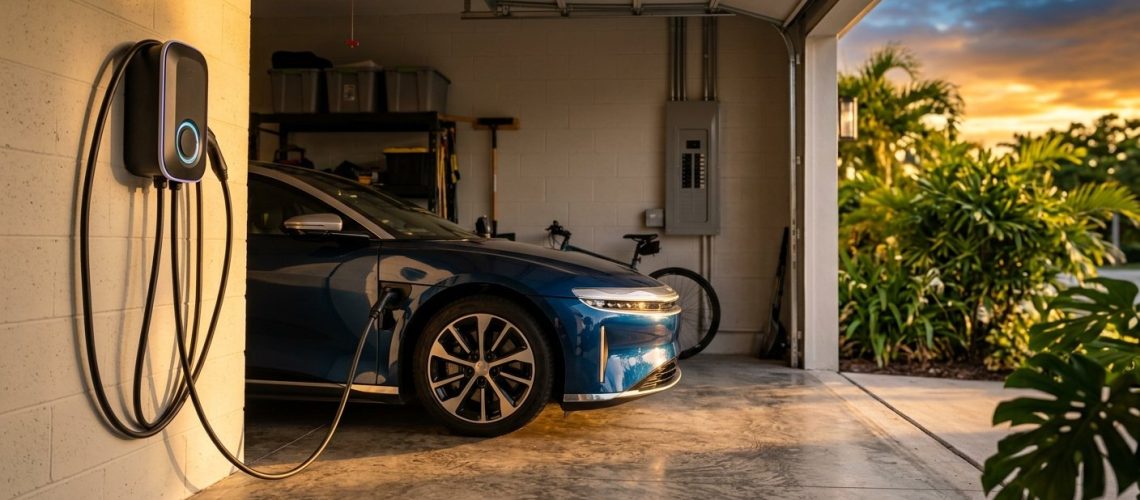
Electric vehicle ownership in Florida has grown by over 40% in the past two years, and South Florida homeowners are leading the charge — quite literally. But here’s a question many new EV owners overlook until it’s too late: is your home actually ready to charge one?
Plugging into a standard outlet might work in a pinch, but it’s slow, inefficient, and often unsafe for daily use. A proper home EV charging station requires dedicated electrical infrastructure — and in South Florida’s humid, storm-prone environment, that infrastructure needs to be right the first time. This checklist walks you through everything you need to evaluate before scheduling your EV charger installation.
Why Home Charging Readiness Matters
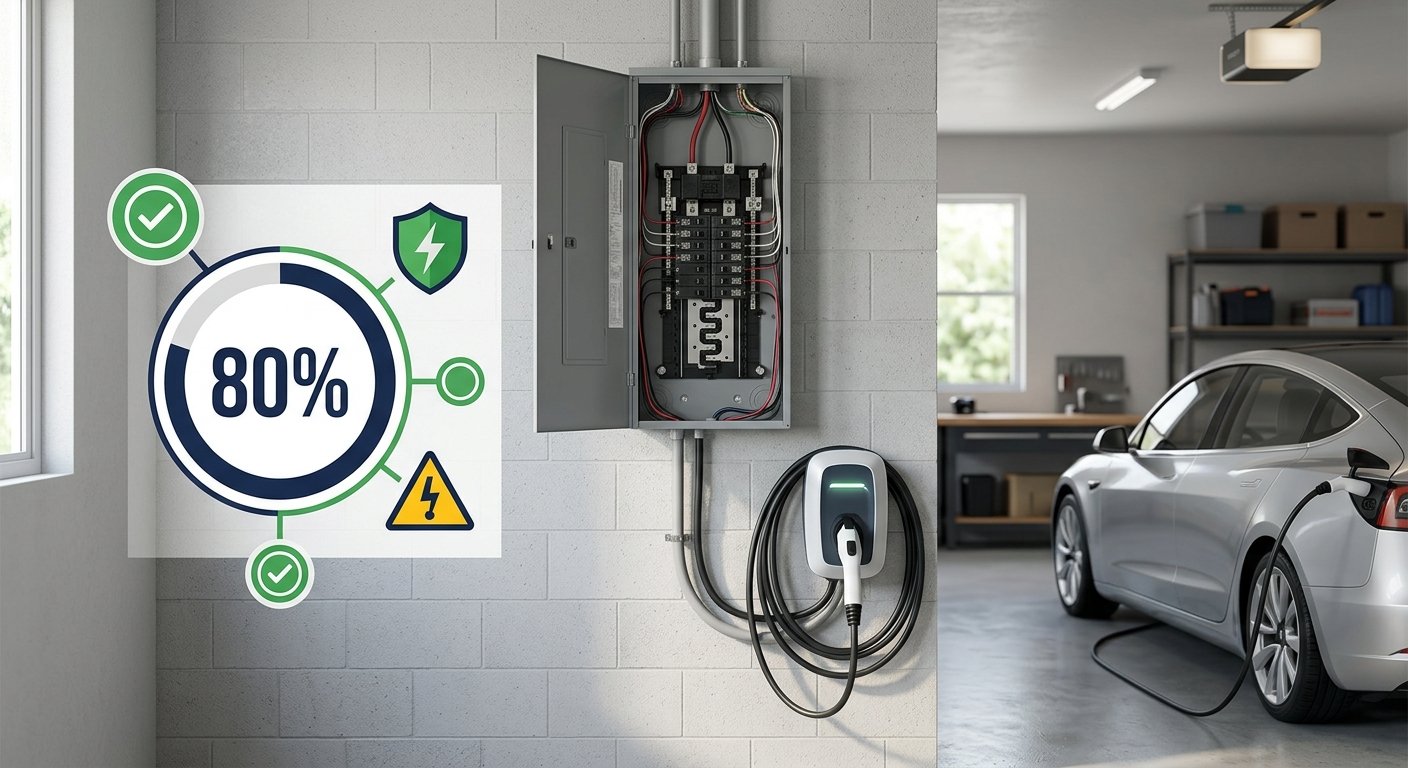
Most EV owners do roughly 80% of their charging at home, according to the U.S. Department of Energy. That means your home charging setup isn’t a luxury — it’s your primary fueling station. A poorly planned installation can lead to tripped breakers, overloaded panels, fire hazards, or a charger that simply doesn’t deliver the power your vehicle needs.
In Palm Beach, Broward, and Miami-Dade counties, homes range from mid-century concrete block construction to brand-new smart homes, and electrical systems vary just as widely. Understanding where your home stands before installation saves time, money, and headaches.
Step 1: Assess Your Electrical Panel
Your electrical panel is the foundation of any home charging station installation. A Level 2 EV charger typically requires a dedicated 240-volt circuit with a 50-amp breaker — and your panel must have the capacity to support it.
What to Check
- Panel age and type: Panels older than 20–25 years may not support modern electrical loads. Brands like Federal Pacific and Zinsco have known safety issues and should be evaluated by a licensed electrician immediately.
- Available amperage: Most homes have 100-amp or 200-amp service. A 200-amp panel is typically sufficient for EV charging alongside other household loads. A 100-amp panel may require an electrical panel upgrade before installation.
- Open breaker slots: You’ll need at least one open double-pole slot (usually 2 spaces) for a 50-amp dedicated circuit. If your panel is full, options include a subpanel or a load management device.
- Condition of existing wiring: South Florida’s humidity can accelerate corrosion on older wiring connections. A licensed electrician can identify any deterioration that needs addressing before you add new load.
Not sure where your panel stands? Our team at Global Power & AC Corp offers same-day service throughout South Florida and can assess your panel’s capacity quickly and thoroughly.
Step 2: Evaluate Your Electrical Service
Beyond the panel itself, your home’s overall electrical service — the line coming in from the utility — must be adequate. Many older homes in Delray Beach, Boynton Beach, and Boca Raton were built when electrical demand was a fraction of what it is today. Air conditioning, electric water heaters, pool pumps, and now EVs all compete for capacity.
Signs You May Need a Service Upgrade
- Breakers that trip frequently under normal use
- Lights that dim when large appliances run
- A panel rated below 200 amps
- Older aluminum wiring throughout the home
The National Electrical Code (NEC) sets the standards for safe electrical installation, and Florida follows these guidelines closely. Any service upgrade or new circuit for EV charging should be permitted and inspected — full stop.
Step 3: Choose the Right EV Charger Level
Not all EV chargers are equal. Understanding the options helps you make the right investment for your driving habits.
Level 1 Charging (120V)
This uses a standard household outlet and adds roughly 3–5 miles of range per hour of charging. It requires no special installation but is impractical for daily drivers or larger battery vehicles. Think of it as a backup option only.
Level 2 Charging (240V) — Recommended
A Level 2 EV charger is the gold standard for home use. It delivers 20–30+ miles of range per hour and can fully charge most EVs overnight. It requires a dedicated 240V circuit and professional installation by an EV charger electrician. For most South Florida homeowners, this is the practical, efficient choice.
Smart EV Chargers
Many modern Level 2 chargers integrate with home Wi-Fi, allowing you to schedule charging during off-peak utility hours, monitor energy usage, and receive alerts. These connect naturally with broader smart home electrical systems, making your home more efficient overall. If you’re building a connected home, a smart charger is worth considering from day one.
Step 4: Plan Your Installation Location
Where you install your home charging station matters as much as what you install. South Florida’s climate introduces specific considerations that homeowners elsewhere don’t face.
Indoor vs. Outdoor Installation
- Garage installation: The most common choice. Protected from the elements, easy access to your vehicle, and generally simpler to wire. Ensure adequate ventilation since some EV batteries can emit minimal vapors during charging.
- Outdoor installation: Requires a NEMA 4 or NEMA 3R-rated enclosure to handle Florida’s heat, humidity, and rain exposure. Conduit and connections must be weatherproof and corrosion-resistant.
Distance from the Panel
The farther your charger is from your electrical panel, the more wire is required — which affects both material cost and potential voltage drop. An experienced ev charger electrician will calculate the optimal wire gauge and route to ensure safe, efficient power delivery.
Hurricane Preparedness
In Palm Beach and Broward counties, outdoor electrical equipment must withstand serious wind-driven rain events. All outdoor EV charger installations should use weatherproof conduit, secure mounting hardware, and corrosion-resistant components. This is non-negotiable in South Florida.
Step 5: Verify Permits and Code Compliance
In Florida, EV charger installation requires a permit from your local municipality. This isn’t bureaucratic red tape — it’s what ensures your installation is inspected, safe, and up to code. Unpermitted electrical work can void your homeowner’s insurance, create liability issues, and cause problems when you sell your home.
At Global Power & AC Corp, we handle permitting as part of every EV charger installation we complete across Palm Beach, Broward, and Miami-Dade counties. Our work is backed by an 8-year warranty on workmanship, so you’re protected long after the installation is complete.
Step 6: Consider Utility Incentives
Florida Power & Light (FPL) and other South Florida utilities periodically offer rebates and time-of-use rate plans that can reduce the cost of EV charging equipment and lower your monthly electricity bill. The federal government also offers tax credits for EV charging equipment under the Inflation Reduction Act. Check with your tax advisor and utility provider to maximize available savings before your installation date.
Your Quick-Reference Readiness Checklist
- ✅ Panel is 200 amps or has been assessed for capacity
- ✅ At least one open double-pole breaker slot available
- ✅ No known panel safety issues (Federal Pacific, Zinsco, etc.)
- ✅ Wiring condition verified by a licensed electrician
- ✅ Charger location identified (garage or weatherproofed outdoor area)
- ✅ Level 2 charger selected and compatible with your EV model
- ✅ Smart charger considered for off-peak scheduling
- ✅ Permit pulled through licensed contractor
- ✅ Utility rebates and tax credits researched
- ✅ Installation performed by a licensed, insured electrician
Frequently Asked Questions
How much does home EV charger installation cost in South Florida?
Costs vary based on your existing electrical infrastructure, charger model, and installation complexity. A straightforward Level 2 charger installation in a home with an adequate panel typically ranges from $500 to $1,500 for labor and materials. If an electrical panel upgrade is needed, that adds to the overall project cost. A licensed electrician can provide a firm quote after assessing your home.
Do I need an electrical panel upgrade to install an EV charger?
Not always. Many homes with 200-amp service have sufficient capacity for a Level 2 EV charger without a full panel upgrade. However, older homes with 100-amp service or panels that are already near capacity may require an upgrade for safe, code-compliant installation. An on-site assessment is the only reliable way to know for certain.
Can I install an EV charger myself in Florida?
Florida law requires electrical work of this nature to be performed by a licensed electrical contractor and pulled with a permit. DIY installation of a 240V circuit is not code-compliant and won’t pass inspection. More importantly, improperly installed EV charging circuits are a documented cause of electrical fires.
How long does EV charger installation take?
In most cases, a standard Level 2 EV charger installation takes between 2 and 4 hours for a qualified electrician. If the panel requires upgrades or extensive conduit runs are needed, the project may extend to a full day. Global Power & AC Corp offers same-day service for qualifying installations throughout South Florida.
Will my EV charger work during a power outage?
Standard EV chargers require utility power to operate. If you want charging capability during outages, a whole-home standby generator can keep your circuits active. Ask about generator options when you schedule your EV charger installation consultation.
Ready to Charge Smarter in South Florida?
Installing a home EV charging station is one of the most practical electrical upgrades a South Florida homeowner can make in 2026. Done right, it’s safe, efficient, and adds real value to your property. Done wrong, it’s a liability.
Global Power & AC Corp is a licensed and insured electrical contractor serving homeowners throughout Palm Beach, Broward, and Miami-Dade counties. We handle every EV charger installation with the same commitment to quality craftsmanship, code compliance, and customer care that defines everything we do — and we back it with our 8-year warranty on workmanship.
Call us today at (561) 203-0080 or visit our EV charger installation page to schedule your assessment. Same-day service is available throughout South Florida.