
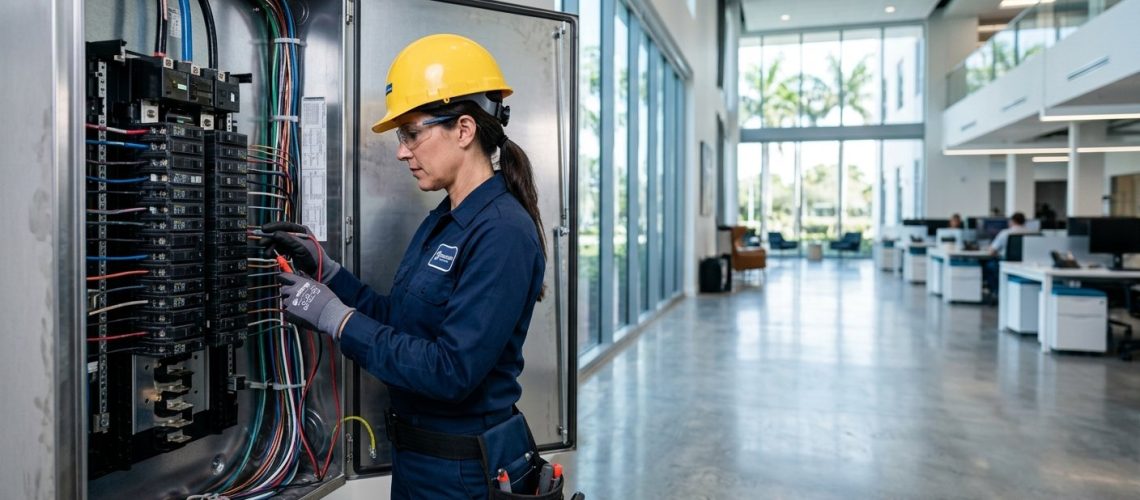
Nearly 40% of commercial electrical failures are preventable — and most trace back to deferred maintenance. For businesses operating across Palm Beach, Broward, and Miami-Dade counties, that statistic carries real weight. South Florida’s humidity, lightning-prone summers, and hurricane season create electrical stress that businesses in cooler, drier regions simply don’t face. If your commercial electrical system isn’t being proactively maintained in 2026, you’re not just risking equipment damage — you’re risking downtime, liability, and safety.
Whether you manage a retail storefront in Boca Raton, a restaurant in Fort Lauderdale, or a multi-unit property in West Palm Beach, commercial electrical maintenance isn’t optional — it’s foundational. Here’s what South Florida businesses need to know this year.
Why Commercial Electrical Maintenance Matters More in South Florida
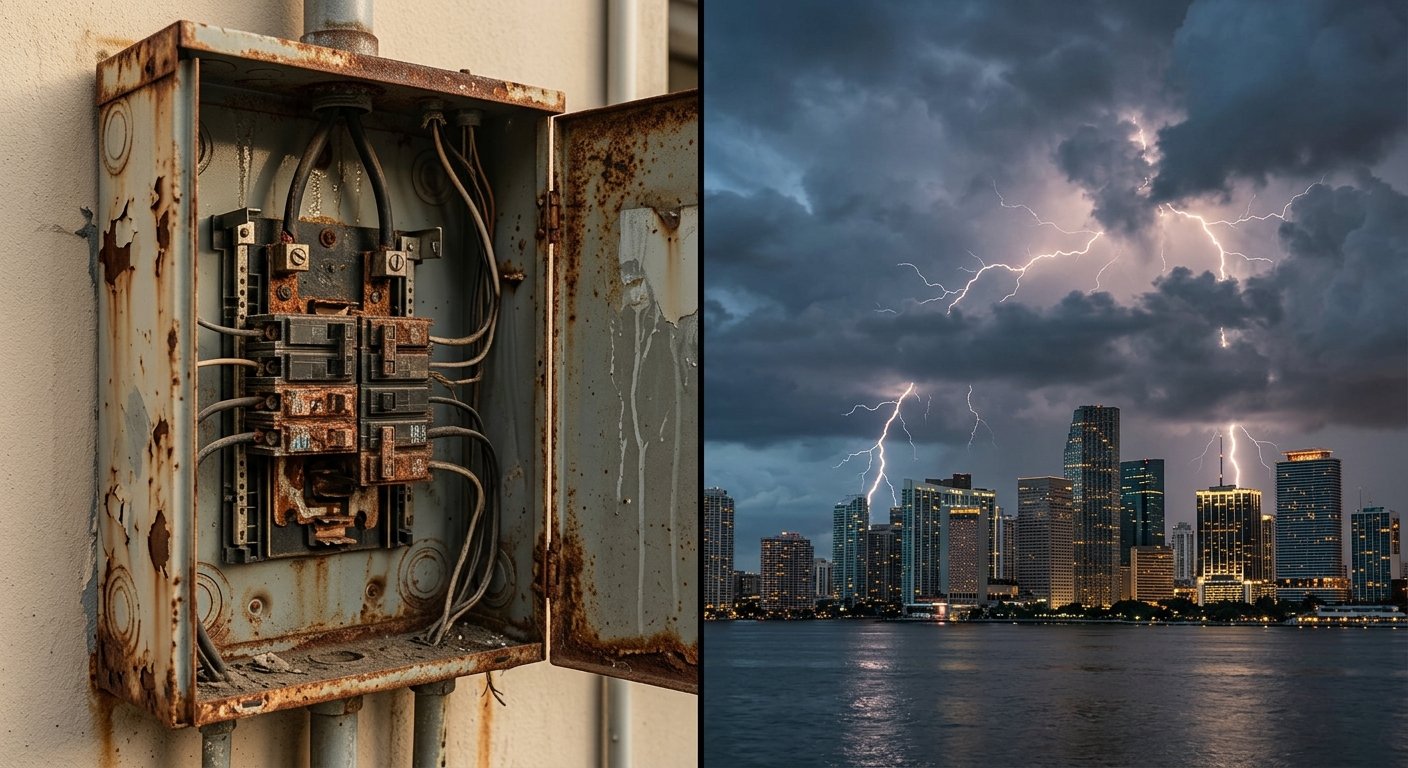
South Florida’s environment is genuinely hard on electrical infrastructure. Coastal humidity accelerates corrosion inside panels, junction boxes, and conduit connections. The region averages more lightning strikes per square mile than almost anywhere else in the country, creating consistent surge risks for unprotected commercial systems. And hurricane season, which runs June through November, introduces wind-driven moisture, flooding, and power interruptions that can leave commercial electrical systems compromised in ways that aren’t always immediately visible.
According to the National Fire Protection Association, electrical failures and malfunctions remain a leading cause of structure fires in commercial buildings. For businesses, this translates directly into lost inventory, revenue interruption, potential litigation, and in worst cases, injury to employees or customers.
Proactive commercial electrical maintenance is the single most effective way to avoid these outcomes. And in South Florida’s demanding climate, “proactive” means scheduled, not reactive.
Core Components of a Commercial Electrical Maintenance Plan
Electrical Panel Inspections and Upgrades
Your commercial electrical panel is the nerve center of your entire operation. Panels in aging commercial buildings — particularly those built before 2000 — may be undersized for modern power demands, especially with the addition of EV charging stations, energy management systems, and upgraded HVAC equipment. A licensed commercial electrician should inspect your panel annually for:
- Signs of overheating, scorching, or corrosion
- Breakers that trip frequently or fail to reset
- Outdated or recalled panel models still in use
- Inadequate amperage capacity for current load demands
- Improper wiring configurations or double-tapped breakers
If your panel inspection reveals capacity limitations or safety concerns, an electrical panel upgrade may be the most cost-effective investment you make this year. Modern panels improve reliability, accommodate load growth, and reduce the risk of electrically-caused incidents.
Wiring and Connection Testing
Loose connections and deteriorating wiring are among the most common — and most dangerous — findings during commercial electrical inspections. In South Florida, thermal cycling (the expansion and contraction of materials due to heat fluctuations) causes connections to loosen over time, creating resistance points that generate heat. Left unaddressed, this is a fire risk.
A qualified commercial electrician will use thermal imaging and load testing to identify hot spots in wiring, switchgear, and distribution panels before they become emergencies. This type of diagnostic service is particularly important for businesses that operate high-load equipment like commercial refrigeration, industrial machinery, or high-output lighting systems.
GFCI and AFCI Protection
Ground fault circuit interrupters (GFCIs) and arc fault circuit interrupters (AFCIs) are critical safety devices required by the National Electrical Code in specific commercial applications. GFCI protection is essential in areas exposed to moisture — kitchens, bathrooms, outdoor workspaces, and any area near water. In South Florida’s humid environment, this takes on added urgency.
During a commercial electrical maintenance visit, a licensed contractor will verify that all required GFCI and AFCI protection is in place and functioning correctly. Outdated or non-functional devices should be replaced promptly to maintain code compliance and protect both employees and customers.
Surge Protection for Commercial Systems
South Florida businesses face repeated power surges throughout the year — from lightning strikes, utility switching events, and post-storm power restoration. Without whole-building surge protection, sensitive equipment including POS systems, servers, smart building controls, and commercial appliances can be damaged or destroyed in seconds.
A comprehensive commercial electrical maintenance plan should include the installation and annual inspection of whole-building surge protective devices (SPDs) at the main service entrance. This is a relatively modest investment compared to the cost of replacing commercial electronics or experiencing data loss.
Emergency Preparedness: A 2026 Priority
Hurricane preparedness is non-negotiable for South Florida businesses. Electrical readiness is a core part of any business continuity plan. In 2026, more commercial clients are investing in standby generators, transfer switches, and backup power infrastructure to keep operations running during outages.
The Federal Emergency Management Agency’s business continuity guidance recommends that commercial operations identify critical electrical loads and ensure backup power is available for essential functions. A licensed commercial electrical contractor can assess your facility, determine critical circuit loads, and design a backup power solution that keeps your business operational when the grid goes down.
Transfer switches are particularly important — they safely disconnect your building from the utility grid before generator power is applied, protecting both your equipment and utility workers restoring power in your area.
Smart Building Integration and Energy Efficiency
Commercial electrical maintenance in 2026 isn’t only about safety — it’s also about efficiency. Smart building technology allows businesses to monitor energy consumption in real time, automate lighting and climate controls, and identify waste. Many South Florida businesses are discovering that smart electrical integration reduces utility costs significantly over time.
During a maintenance visit, your commercial electrician can assess whether your current electrical infrastructure supports smart controls, occupancy sensors, programmable lighting, and demand management systems. For businesses looking to reduce overhead costs in 2026, this assessment can reveal meaningful opportunities.
Compliance and Code Updates
Florida adopts updated editions of the National Electrical Code on a periodic basis. Commercial electrical systems must comply with applicable code requirements, and older buildings are often subject to upgrade requirements when significant renovations or system modifications occur. Staying current on code compliance protects businesses from liability, ensures insurability, and prevents issues during property sales or lease renewals.
A licensed commercial electrical contractor will be familiar with Florida’s current code requirements and can flag any compliance gaps during a scheduled maintenance inspection. This includes everything from proper labeling of electrical panels to required signage and clearances around electrical equipment.
How Often Should Commercial Electrical Systems Be Inspected?
For most South Florida businesses, the recommended maintenance schedule looks like this:
- Annual comprehensive inspection: Full panel, wiring, protective devices, and surge protection review
- Quarterly visual checks: Review of breaker panels, outlet condition, and visible wiring for signs of damage
- Post-storm inspection: Following any significant weather event, a licensed electrician should assess for damage before resuming full operations
- Pre-renovation assessment: Before any major build-out or equipment addition, confirm your system can handle increased load
Scheduling an electrical safety inspection is the most reliable starting point for any business that hasn’t had its system professionally evaluated in the past year.
Frequently Asked Questions
How do I know if my commercial electrical system needs immediate attention?
Warning signs include frequently tripping breakers, flickering or dimming lights, burning smells near outlets or panels, outlets that feel warm to the touch, and visible signs of corrosion or scorching inside electrical panels. Any of these symptoms warrant a prompt call to a licensed commercial electrician — same-day service is available through Global Power & AC Corp at (561) 203-0080.
Is commercial electrical maintenance required by law in Florida?
While Florida does not mandate a specific inspection schedule for all commercial buildings, businesses are required to maintain electrical systems in compliance with applicable codes. Many commercial leases, insurance policies, and local ordinances also require periodic inspections. Failing to maintain electrical systems can also create significant liability exposure if an incident occurs.
What’s the difference between a commercial electrician and a residential electrician?
Commercial electricians are trained to work with higher-voltage three-phase systems, larger panel configurations, industrial-grade wiring, and complex load management that residential systems don’t require. Commercial electrical maintenance involves a broader scope of compliance requirements and typically serves buildings with more demanding electrical loads. Always hire a licensed contractor with demonstrated commercial experience.
How much does commercial electrical maintenance cost?
Costs vary based on the size of the facility, the scope of work required, and the age of the existing electrical infrastructure. Preventive maintenance is consistently less expensive than emergency repairs or equipment replacement following an electrical failure. Contact Global Power & AC Corp for a site-specific assessment and accurate pricing for your South Florida business.
Can Global Power & AC Corp service businesses outside of Palm Beach County?
Yes. Global Power & AC Corp serves commercial and residential clients throughout Palm Beach, Broward, and Miami-Dade counties, including West Palm Beach, Boca Raton, Delray Beach, Fort Lauderdale, and surrounding communities.
Partner With a Trusted Commercial Electrical Contractor
South Florida businesses deserve an electrical partner who understands the local environment, meets the highest standards of workmanship, and shows up when it matters. Global Power & AC Corp is a licensed and insured commercial electrical contractor serving Palm Beach, Broward, and Miami-Dade counties with same-day service availability and an 8-year warranty on workmanship.
From panel inspections and surge protection to smart system integration and emergency preparedness, we bring family-owned care and corporate-level quality to every commercial project we take on.
Don’t wait for an electrical problem to become a business emergency. Call Global Power & AC Corp today at (561) 203-0080 to schedule your commercial electrical inspection or discuss a custom maintenance plan for your South Florida business.