
The electric vehicle revolution is gaining momentum across South Florida, with more Palm Beach, Broward, and Miami-Dade homeowners making the switch to cleaner transportation. One of the most common questions during the transition to EV ownership is whether your existing electrical system can support a home ev charging station or if you’ll need an expensive electrical panel upgrade. The answer isn’t always straightforward, but understanding your options can save you time, money, and frustration.
Many homeowners are relieved to learn that installing an EV charger doesn’t automatically require a 200 amp panel upgrade. However, the feasibility depends on several critical factors including your current electrical capacity, the type of charger you select, and how your existing circuits are allocated. Let’s explore what determines whether your home is ready for ev charger installation or needs electrical infrastructure improvements first.
Understanding Your Current Electrical Capacity
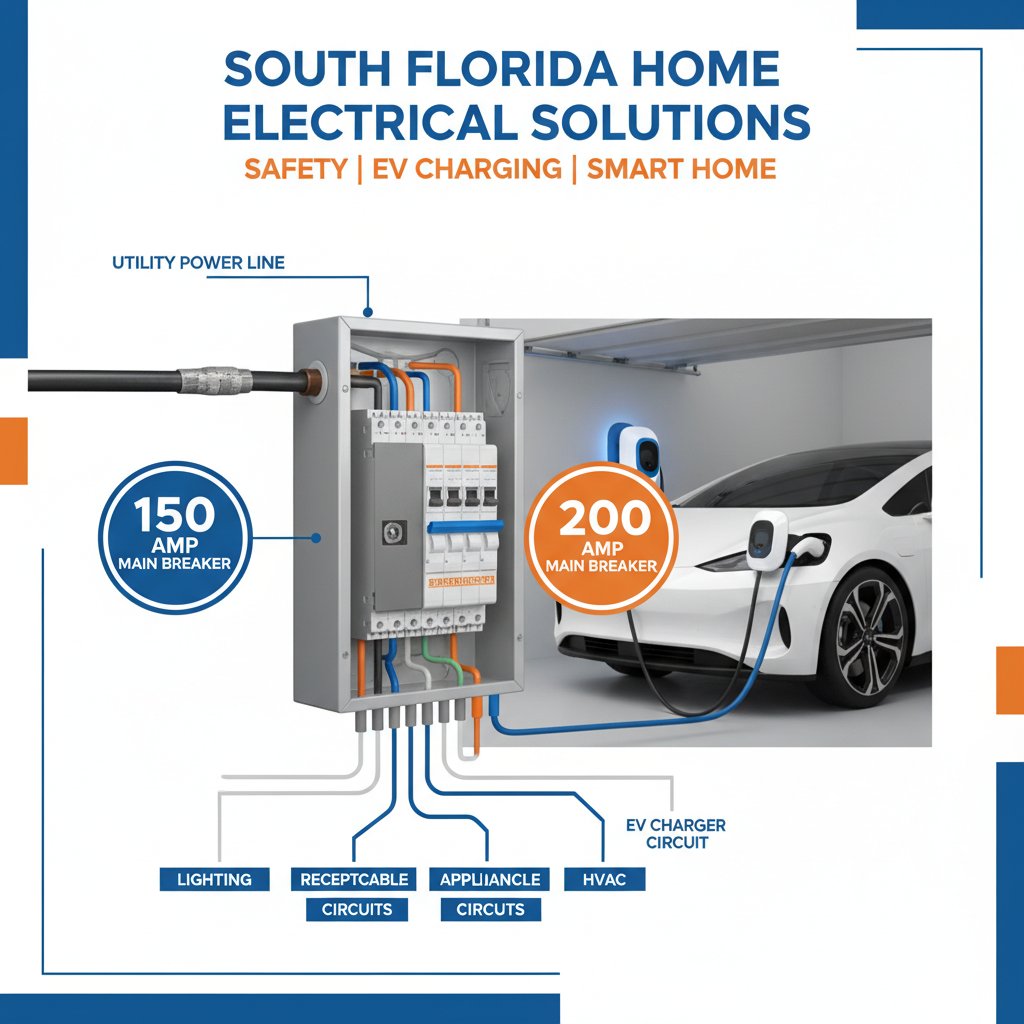
Before considering any electric car charger installation, you need to assess your home’s electrical service capacity. Most South Florida homes built after 1990 have either 150-amp or 200-amp service panels, which typically provide adequate capacity for EV charging. However, older homes in historic neighborhoods throughout Miami-Dade and Palm Beach may still operate on 100-amp or even 60-amp service panels, which significantly limit your options.
The key question isn’t just the total amperage of your panel, but how much spare capacity remains after accounting for your home’s existing electrical loads. Your air conditioning system, water heater, pool pump, kitchen appliances, and other high-demand devices all draw power from your panel’s total capacity. An ev charger electrician can perform a load calculation to determine exactly how much available capacity you have for adding new circuits.
Calculating Available Capacity
Professional load calculations follow the National Electrical Code (NEC) guidelines and consider both continuous and non-continuous loads. In South Florida’s climate, air conditioning represents one of the largest electrical demands, running for extended periods during our hot, humid months. A qualified electrician will review your current panel’s main breaker rating, evaluate all existing circuits, and calculate the maximum demand your home actually uses.
Many homes don’t simultaneously use all available circuits at maximum capacity. This diversity factor often reveals more available capacity than homeowners expect, creating opportunities for ev charger installation without a circuit breaker panel upgrade.
Level 2 Charger Requirements and Alternatives
Most home EV charging stations are Level 2 chargers, which operate at 240 volts and typically require a dedicated 40-amp or 50-amp circuit. These chargers can fully replenish most EV batteries overnight, making them ideal for daily commuters throughout Broward and the surrounding counties. However, not everyone needs maximum charging speed.
If your load calculation reveals insufficient capacity for a standard Level 2 charger, you have several alternatives:
- Lower-amperage Level 2 chargers: Some manufacturers offer 16-amp or 24-amp models that require smaller dedicated circuits while still charging faster than a standard household outlet.
- Smart load-sharing chargers: Advanced systems can share circuits with other high-demand appliances like dryers or water heaters, automatically managing power distribution to prevent overloads.
- Load management systems: These sophisticated controllers monitor your home’s total electrical consumption and dynamically adjust EV charging rates to stay within available capacity.
- Time-of-use charging: Programming your EV to charge during off-peak hours when other household demands are minimal can prevent circuit overloads.
When Panel Upgrades Are Necessary
Despite the alternatives, some situations absolutely require an electrical panel upgrade before ev charger installation can proceed safely and legally. Attempting to install a charging station without adequate capacity creates serious fire risks and violates south florida electrical codes.
A 200 amp panel upgrade becomes essential when:
- Your home has a service panel rated below 100 amps
- Your existing panel is completely full with no available slots for new breakers
- Load calculations show your current usage already exceeds 80% of your panel’s capacity
- Your panel contains outdated or unsafe components like Federal Pacific or Zinsco breakers
- You’re planning multiple major electrical upgrades simultaneously (EV charger, solar panels, pool equipment, kitchen remodel)
- Your panel shows signs of corrosion, overheating, or other damage common in South Florida’s humid coastal environment
While panel upgrades represent a significant investment, they provide long-term value by supporting your home’s electrical needs for decades and preventing dangerous overload conditions. Additionally, upgrading to modern panels with enhanced safety features protects your home from electrical fires and ensures electrical code compliance.
Smart Load Management Technology
Recent advances in electrical technology have created innovative solutions for homes with limited electrical capacity. Smart load management systems represent a game-changing option that allows ev charger installation without panel upgrades in many situations.
These intelligent systems continuously monitor your home’s total electrical consumption and automatically adjust EV charging current to prevent exceeding your service panel’s capacity. When your air conditioning kicks on during a hot South Florida afternoon, the system reduces charging speed temporarily. When household demand drops at night, charging accelerates to maximum available capacity.
Some advanced load management systems can even share circuits with major appliances. For example, since most people don’t simultaneously dry clothes and charge their vehicle, a smart system can safely share the dryer’s 240-volt circuit with an EV charger, alternating between the two devices as needed.
South Florida Electrical Code Considerations
Electric car charger installation throughout Palm Beach, Broward, and Miami-Dade counties must comply with both the National Electrical Code and local amendments specific to South Florida. These regulations exist to ensure safety in our unique environment characterized by high humidity, frequent thunderstorms, and hurricane threats.
Key code requirements for home ev charging station installations include:
- Dedicated circuits protected by appropriate overcurrent devices
- GFCI protection for chargers installed in garages or outdoor locations
- Proper wire sizing based on circuit length and amperage
- Secure mounting that can withstand high winds during tropical storms
- Appropriate weatherproof enclosures for outdoor installations in our humid climate
- Proper grounding and bonding to protect against lightning strikes
- Required permits and inspections by local building departments
Working with a licensed ev charger electrician familiar with south florida electrical codes ensures your installation meets all requirements and passes inspection on the first attempt.
The Installation Process and Timeline
Once you’ve determined whether your home can support ev charger installation without an electrical panel upgrade, understanding the installation process helps set realistic expectations.
Initial Assessment
A qualified electrician will visit your home to inspect your electrical panel, assess its condition and capacity, and identify the optimal charger location. This assessment typically takes 30-60 minutes and should include a detailed load calculation.
Permit Application
Your electrician will obtain required permits from your local building department. Permit processing times vary by municipality but typically range from a few days to two weeks across South Florida counties.
Installation Day
For straightforward installations without panel upgrades, most ev charger installation projects take 3-6 hours. The electrician will install the dedicated circuit breaker, run appropriate wiring to your charger location, mount the charging station, and connect all components according to manufacturer specifications and electrical code compliance requirements.
Inspection and Activation
After installation, your local building department will inspect the work to verify code compliance. Once approved, your charging station is ready for use. Many electrical contractors offer same-day service for qualifying installations, minimizing disruption to your daily routine.
Cost Considerations and Long-Term Value
The investment required for home ev charging station installation varies significantly based on whether you need a circuit breaker panel upgrade. Understanding the cost breakdown helps you make informed decisions.
Installing an EV charger without panel upgrades typically costs between $800 and $2,500, depending on wiring distance, charger selection, and installation complexity. When a 200 amp panel upgrade is necessary, expect additional costs of $2,000 to $5,000, depending on panel location, service entrance condition, and whether utility company coordination is required.
While these numbers might seem significant, consider the long-term savings from charging at home versus using public charging stations, which can cost three to four times more per kilowatt-hour. Additionally, federal tax credits and local utility incentives may offset installation costs. Many South Florida utilities offer rebates for Level 2 charger installations or time-of-use rates that significantly reduce charging costs during off-peak hours.
Making the Right Decision for Your Home
Determining whether you can install an EV charger without upgrading your panel requires professional assessment of your specific situation. While many homes can accommodate charging stations with existing electrical infrastructure, attempting to bypass necessary upgrades creates serious safety hazards.
The best approach is scheduling a consultation with a licensed electrician who specializes in ev charger installation. They’ll evaluate your electrical system, discuss your charging needs, explain available options, and provide transparent pricing for recommended solutions. This professional guidance ensures your installation is safe, code-compliant, and optimized for your household’s unique electrical demands.
Frequently Asked Questions
Can I use my existing dryer outlet to charge my electric vehicle?
While technically possible with an adapter, this approach isn’t recommended as a permanent solution. Dryer circuits aren’t designed for the continuous loads that EV charging requires, and sharing circuits can create safety issues. A dedicated circuit provides safer, more reliable charging and ensures electrical code compliance.
How long does it take to charge an electric vehicle at home?
Charging time depends on your vehicle’s battery size and your charger’s amperage. A 40-amp Level 2 charger typically adds 25-30 miles of range per hour of charging, meaning most EVs fully charge overnight. Lower-amperage chargers take proportionally longer but still handle daily commuting needs for most South Florida drivers.
Will installing an EV charger increase my home insurance rates?
Professionally installed EV chargers that meet electrical code compliance requirements typically don’t increase insurance premiums. In fact, some insurance companies offer discounts for EV owners. Contact your insurance provider to discuss any potential impacts on your specific policy.
What happens if I charge my EV during a thunderstorm?
Modern EV charging systems include safety features that protect against lightning strikes and power surges common during South Florida’s frequent thunderstorms. However, unplugging during severe weather provides additional peace of mind, just as you would with other valuable electronics.
Can I install an outdoor EV charger in South Florida’s humid climate?
Absolutely. Quality EV chargers are designed for outdoor installation and feature weatherproof enclosures rated for humid, coastal environments. Proper installation with appropriate weatherproofing and corrosion-resistant components ensures reliable operation in South Florida’s challenging climate conditions.
Trust the Experts for Your EV Charging Installation
Whether your home needs a simple ev charger installation or requires a comprehensive electrical panel upgrade first, Global Power & AC Corp brings the expertise South Florida homeowners trust. Our licensed electricians conduct thorough electrical assessments, provide transparent recommendations, and deliver quality craftsmanship backed by an industry-leading 8-year warranty.
We understand that every home has unique electrical requirements, and we take the time to design solutions that meet your specific needs while prioritizing safety and code compliance. Our same-day service availability means you can start enjoying the convenience of home EV charging sooner than you might expect.
Ready to explore your options for electric car charger installation? Contact Global Power & AC Corp today to schedule your electrical assessment and discover the most cost-effective solution for bringing EV charging home. Our team serves homeowners throughout Palm Beach, Broward, and Miami-Dade counties with the professional service and customer care that has made us South Florida’s trusted electrical experts.