
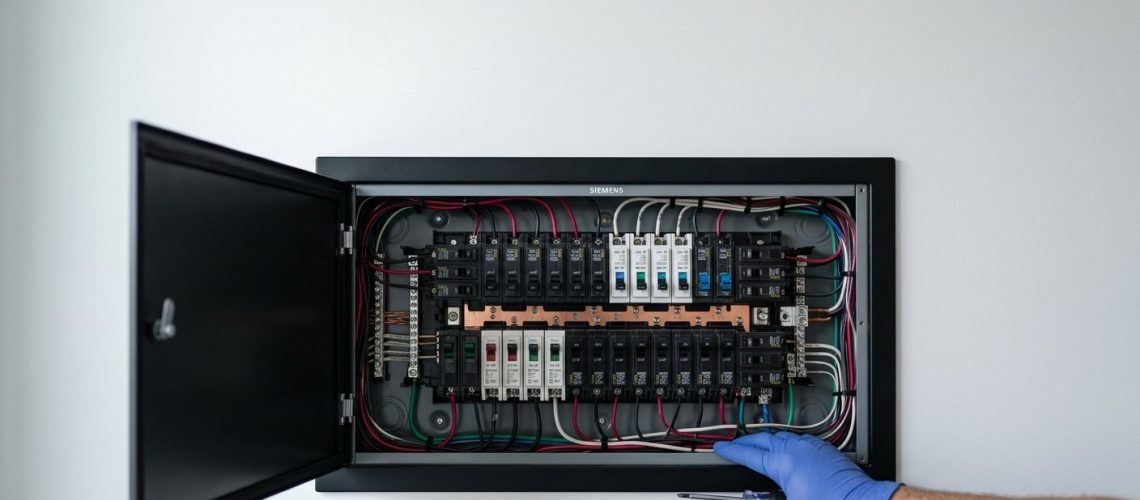
Nearly 51,000 home electrical fires occur in the United States each year, according to the U.S. Fire Administration — and faulty or outdated circuit breakers are a leading contributing factor. If you’re a homeowner in Palm Beach, Broward, or Miami-Dade County, understanding the circuit breakers protecting your home isn’t just smart — it could be life-saving.
South Florida’s intense humidity, frequent thunderstorms, and hurricane season create unique demands on residential electrical systems. Choosing the right circuit breaker type isn’t one-size-fits-all. This guide breaks down exactly what’s available, what the code requires, and how to determine what your home genuinely needs.
What Is a Circuit Breaker and Why Does It Matter?
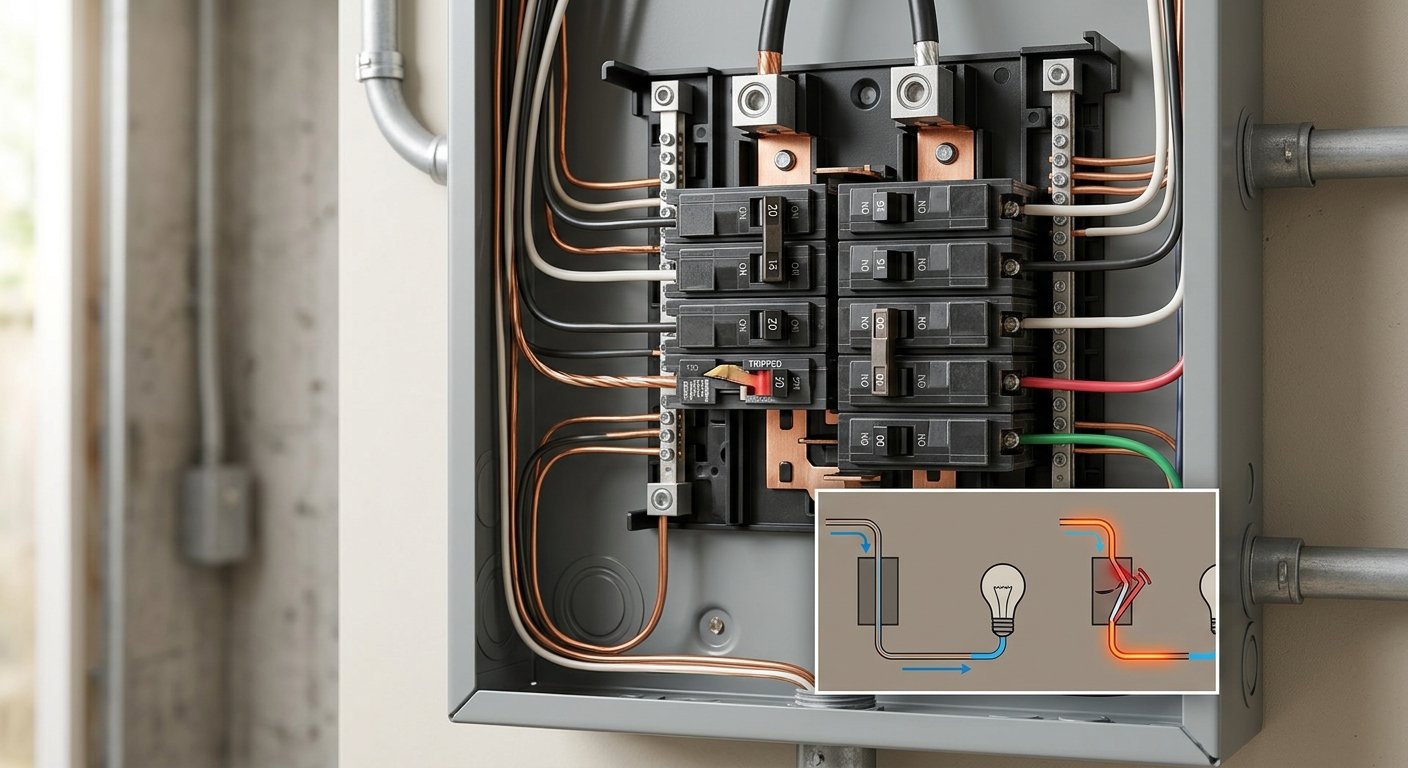
A circuit breaker is an automatic safety switch designed to protect electrical wiring and devices from damage caused by overloads or short circuits. When too much current flows through a circuit, the breaker trips — cutting power before heat or sparks can cause a fire or equipment damage.
Think of your electrical panel as the command center of your home. Every circuit breaker inside that panel is a guardian for a specific area or appliance. If any one of them is the wrong type, undersized, or simply outdated, your home’s safety is compromised — regardless of how new or well-built the rest of the home is.
For South Florida homeowners dealing with aging electrical systems — especially in homes built before the 1990s — understanding breaker types is often the first step toward a necessary electrical panel upgrade.
The Main Types of Circuit Breakers
1. Standard Single-Pole Breakers
These are the most common breakers found in residential panels. A single-pole breaker controls one hot wire and typically handles 15 or 20 amps of current. They protect standard 120-volt circuits — your lights, outlets, small appliances, and general-use circuits throughout the home.
If your panel is full of only single-pole breakers, that’s not necessarily a problem — but it may indicate your panel hasn’t been updated to include the safety enhancements now required by Florida building codes.
2. Double-Pole Breakers
Double-pole breakers occupy two slots in your electrical panel and handle 240-volt circuits. These power larger appliances like electric dryers, water heaters, central air conditioning units, and EV chargers. They typically range from 15 to 200 amps depending on the application.
If you’re planning to install a Level 2 EV charger installation at your home, a dedicated double-pole breaker — usually between 40 and 60 amps — is required. This is one of the most common panel-related upgrades homeowners across Boca Raton and Fort Lauderdale are requesting right now as EV ownership grows throughout South Florida.
3. GFCI Breakers
Ground Fault Circuit Interrupter (GFCI) breakers protect against ground faults — situations where electricity strays outside its intended path and potentially through a person. They’re critically important in wet areas: bathrooms, kitchens, garages, and outdoor spaces.
Florida building codes, aligned with the National Electrical Code (NEC), require GFCI protection in specific areas of every new home. In South Florida’s humid, coastal environment — where moisture intrusion is a constant concern — GFCI breakers are not just code-compliant, they’re essential.
A panel-level GFCI breaker protects the entire circuit rather than just a single outlet. This is a more comprehensive solution than individual GFCI outlets alone.
4. AFCI Breakers
Arc Fault Circuit Interrupter (AFCI) breakers detect dangerous arc faults — abnormal electrical arcs caused by damaged, deteriorating, or loose wiring. These arcs don’t always trip a standard breaker, but they generate intense heat capable of igniting nearby materials.
Florida’s adoption of updated NEC standards has expanded AFCI requirements significantly. Most living areas in newly constructed or significantly renovated homes now require AFCI protection. If your home still has older wiring without AFCI breakers, this is one of the most important upgrades you can make for electrical code compliance.
5. Dual-Function AFCI/GFCI Breakers
Combining both technologies, dual-function breakers offer maximum protection in a single device. They guard against both arc faults and ground faults simultaneously — making them the preferred choice for areas like kitchens and laundry rooms where both hazards exist.
As South Florida electrical codes continue to evolve, many licensed electrical contractors are defaulting to dual-function breakers in renovations and new panel installations. The added cost is minimal compared to the level of protection they provide.
6. Tandem Breakers
Tandem breakers (also called slim or twin breakers) fit two circuits into a single panel slot. They’re a practical solution when a panel is nearly full but needs to accommodate additional circuits — for a new appliance, a home addition, or a smart home device.
However, not every electrical panel is rated for tandem breakers. Using them in the wrong panel is a code violation and a safety hazard. A licensed professional can assess whether your panel is compatible before installation.
South Florida Electrical Codes and What They Require
Florida has adopted the NEC with state-specific amendments, and local jurisdictions in Palm Beach, Broward, and Miami-Dade counties may apply additional requirements. The Florida Building Code’s electrical standards have grown increasingly stringent — particularly around AFCI and GFCI protections — with updates that took effect in recent years.
Key points South Florida homeowners should know:
- AFCI protection is required for most bedroom and living area circuits in new construction and major renovations
- GFCI protection is required in all wet or damp locations: bathrooms, kitchens, garages, outdoor outlets, and near swimming pools
- Replacement breakers must match panel specifications — using mismatched breakers is a common and dangerous code violation
- Any new circuits added during remodeling must comply with current code, regardless of when the home was built
- Hurricane preparedness upgrades — including whole-home generator connections — must include proper breaker configurations and transfer switches
Homes built before 2000 in communities like Delray Beach, Boynton Beach, and West Palm Beach frequently have panels that predate current code requirements. A professional assessment can reveal what’s missing — and what’s putting your family at risk.
Signs Your Panel or Breakers Need Attention
Not sure if your circuit breakers are keeping up? Watch for these warning signs:
- Breakers that trip frequently or won’t reset
- A burning smell or signs of scorching near the panel
- Flickering or dimming lights throughout the home
- Outlets or switches that feel warm to the touch
- An older Federal Pacific or Zinsco panel — both have documented safety concerns
- No GFCI protection in wet areas of an older home
- A panel with fuses instead of breakers
Any of these symptoms warrants a prompt inspection. In South Florida’s storm-prone environment, a compromised panel becomes especially dangerous when power surges hit during hurricane season.
When a Full Circuit Breaker Panel Upgrade Makes Sense
Sometimes replacing individual breakers isn’t enough. A full circuit breaker panel upgrade may be the right solution if your home has:
- A panel rated for 100 amps or less in a home with modern electrical demands
- No room for additional breakers to support new appliances or EV charging
- Consistent tripping that points to an undersized system
- Outdated equipment that can’t accept modern AFCI or GFCI breakers
Upgrading to a 200-amp or 400-amp panel not only brings your home into electrical code compliance — it future-proofs your electrical system for smart home integration, electric vehicle charging, and whatever technology comes next. You can explore the full scope of smart home readiness in our smart home electrical services overview.
According to the U.S. Consumer Product Safety Commission, electrical failures and malfunctions are responsible for thousands of injuries and significant property damage annually — most of which are preventable with proper equipment and professional installation.
Frequently Asked Questions
How do I know what type of circuit breaker my home needs?
The right circuit breaker depends on the circuit’s voltage, amperage requirements, location in the home, and current Florida electrical code requirements. A licensed electrician can evaluate your panel and recommend the appropriate breaker types for each circuit. Never assume that replacing an old breaker with any available model is safe — compatibility with your specific panel is critical.
Are AFCI breakers required in older South Florida homes?
AFCI requirements apply primarily to new construction and significant renovations. However, if you’re upgrading your panel or adding new circuits to an older home in Palm Beach, Broward, or Miami-Dade County, those new circuits must comply with current code — which typically includes AFCI protection in living spaces. An inspection will clarify exactly what’s required for your specific situation.
Can I replace a circuit breaker myself?
Electrical panel work involves live voltage that can be fatal. In Florida, electrical work on panels requires a licensed electrical contractor. Attempting DIY panel work also voids warranties, may violate your homeowner’s insurance policy, and risks code violations that complicate future home sales. Always hire a licensed professional for any breaker replacement or panel work.
How much does a circuit breaker panel upgrade cost in South Florida?
Costs vary based on panel size, the complexity of the installation, and any additional work required — such as updating wiring or adding circuits. A licensed electrical contractor can provide an accurate estimate after assessing your home. The investment in a proper panel upgrade typically pays for itself through improved safety, code compliance, and increased home value.
How long does a circuit breaker panel upgrade take?
Most residential panel upgrades are completed in a single day by an experienced crew. The process includes disconnecting power, removing the old panel, installing the new equipment, reconnecting circuits, and arranging for the required permit inspection. Same-day service is available for urgent situations throughout our South Florida service area.
Get Expert Guidance from a Trusted Local Electrical Contractor
Choosing the right circuit breakers — and ensuring your entire panel is safe, code-compliant, and sized for your home’s current and future needs — is not a guessing game. At Global Power & AC Corp, our licensed and insured team serves homeowners and businesses throughout West Palm Beach, Boca Raton, Fort Lauderdale, and surrounding communities in Palm Beach, Broward, and Miami-Dade counties.
We back every installation with an 8-year warranty on workmanship, offer same-day service for urgent electrical needs, and bring family-owned values to every job — without cutting corners on safety or quality.
Ready to find out exactly what your home’s electrical system needs? Call Global Power & AC Corp today at (561) 203-0080 to schedule your professional electrical assessment. Don’t wait for a tripped breaker to become a bigger problem — let our South Florida electrical experts give you peace of mind.

About Global Power & AC Corp
Global Power & AC Corp is a trusted electrical contractor serving homeowners and businesses throughout South Florida's Palm Beach, Broward, and Miami-Dade counties. The company specializes in residential electrical services including panel upgrades, EV charger installation, standby generators, smart home integration, and comprehensive electrical safety solutions. With a commitment to quality craftsmanship backed by an 8-year warranty and same-day service availability, Global Power & AC Corp combines family-owned values with corporate-level professionalism to deliver reliable electrical solutions tailored to South Florida's unique climate challenges. Visit globalpowerpb.com →