
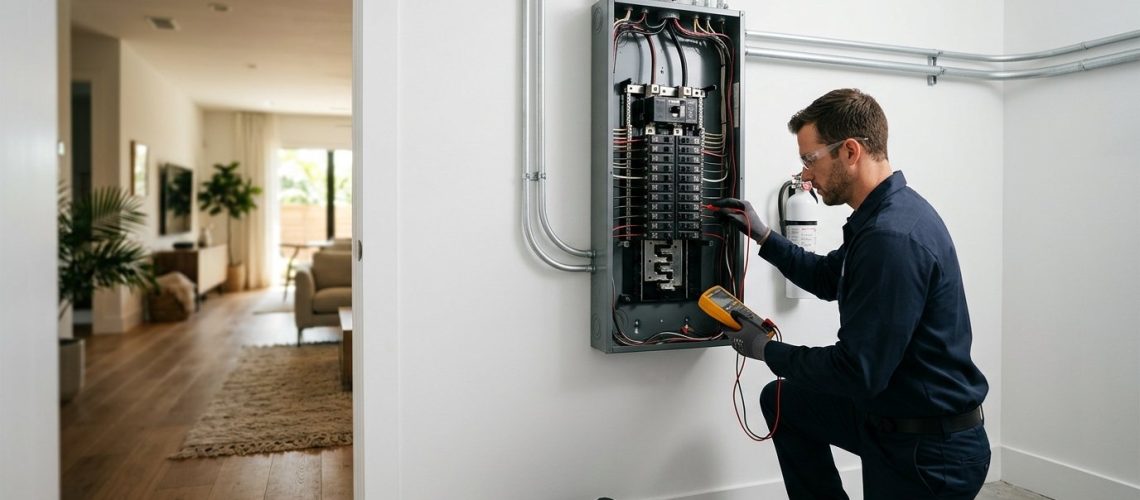
Electrical fires account for approximately 51,000 home fires every year in the United States, causing hundreds of deaths and nearly $1.3 billion in property damage annually, according to the U.S. Fire Administration. For homeowners in Palm Beach, Broward, and Miami-Dade counties, the risk is compounded by South Florida’s intense humidity, frequent thunderstorms, and aging housing stock — a combination that accelerates electrical system wear in ways homeowners rarely see coming.
The good news? Most electrical fires are entirely preventable. With the right knowledge, a few proactive upgrades, and a commitment to routine maintenance, you can dramatically reduce your risk. Here’s what every South Florida homeowner needs to know in 2026.
Why South Florida Homes Face Elevated Electrical Hazards
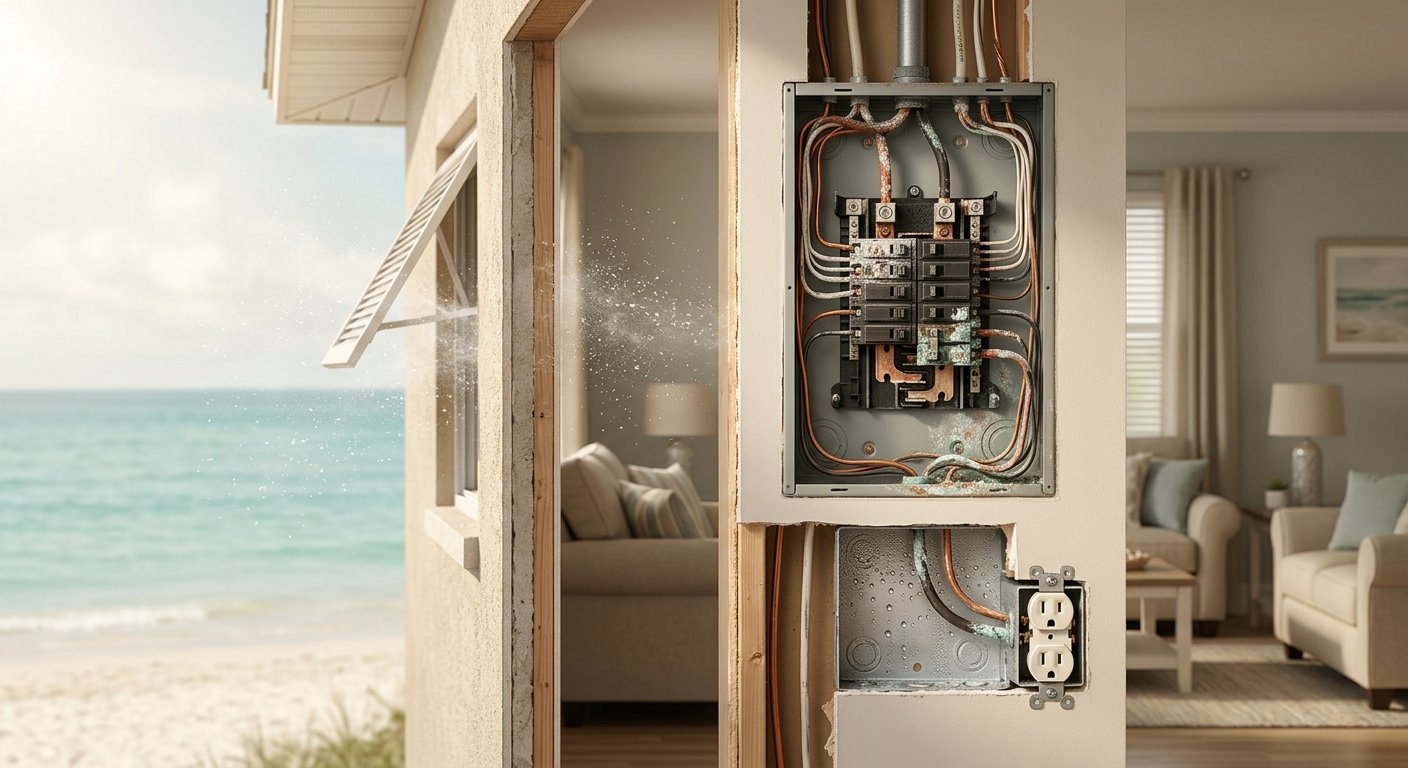
South Florida’s climate creates electrical challenges that homeowners in other parts of the country simply don’t face at the same intensity. High humidity accelerates corrosion inside electrical panels, outlets, and junction boxes. Salt air — especially for homes near the coast in areas like Boca Raton, Delray Beach, or Fort Lauderdale — degrades wiring insulation and metal contacts faster than inland environments.
Then there’s hurricane season. Repeated power surges during storms, followed by outages and restorations, place enormous stress on your home’s electrical infrastructure. Many homes throughout Palm Beach County and Broward County were built in the 1970s, 80s, and 90s — and their electrical panels were never designed to handle today’s load demands, let alone the smart devices, EV chargers, and modern appliances drawing power today.
Understanding these specific risks is the first step toward meaningful electrical fire prevention.
Common Electrical Hazards to Watch For
Many electrical hazards are hidden inside walls or inside your electrical panel — invisible until something goes wrong. But others show warning signs you can catch early.
Overloaded Circuits and Outdated Panels
Overloaded circuits are one of the leading causes of residential electrical fires. When too many devices draw power from a single circuit, the wiring heats up. If the breaker fails to trip — which is common in older or defective panels — that heat can ignite surrounding insulation or framing. If your home still has a Federal Pacific or Zinsco panel, both known for breaker failure issues, a panel upgrade should be a priority.
Outdated or Damaged Wiring
Homes built before 1985 may contain aluminum wiring, which expands and contracts differently than copper and creates loose connections over time — a known fire risk. Knob-and-tube wiring, found in older construction, lacks the grounding and insulation standards required today. Even newer wiring can become compromised by pest damage, improper stapling, or years of heat cycling in South Florida’s attic spaces where temperatures regularly exceed 130°F in summer.
Faulty Outlets and Switches
Outlets that spark, feel warm to the touch, or don’t hold plugs securely are clear warning signs. Discoloration or scorch marks around a faceplate indicate that arcing has already occurred inside the wall. These issues require immediate professional attention — not a DIY fix.
Extension Cord and Power Strip Misuse
Extension cords are designed for temporary use, not as permanent wiring solutions. Running them under rugs, through walls, or daisy-chaining power strips dramatically increases fire risk. If you regularly rely on extension cords to power appliances, it’s a sign your home needs additional circuits.
Your 2026 Home Electrical Safety Checklist
Use this checklist to assess your home’s current electrical safety and identify areas that may need professional attention:
- Panel condition: Is your panel 20+ years old? Do breakers trip frequently or fail to reset? Are there signs of rust, burning smell, or scorch marks inside?
- GFCI protection: Are all outlets within six feet of water sources (bathrooms, kitchens, garages, outdoor areas, and pool equipment) protected by GFCI outlets or breakers?
- AFCI protection: Does your home have Arc Fault Circuit Interrupter protection in bedrooms and living areas as required by current National Electrical Code standards?
- Outlet condition: Do you have any outlets with loose plugs, discoloration, or that have stopped working entirely?
- Lighting fixtures: Are all bulbs within the correct wattage rating for their fixtures? Oversized bulbs create excess heat that can ignite fixture materials.
- Appliance cords: Are any power cords frayed, pinched, or positioned under furniture where heat can’t dissipate?
- Smoke detectors: Are smoke detectors installed on every floor, inside each bedroom, and within 10 feet of every sleeping area? Were batteries replaced in the past year?
- Surge protection: Does your home have whole-house surge protection installed at the panel — especially critical in storm-prone South Florida?
If you checked several boxes on this list, scheduling a professional electrical safety inspection is the single most effective step you can take.
The Role of GFCI and AFCI Protection
Two technologies have fundamentally changed residential electrical fire prevention over the past two decades: Ground Fault Circuit Interrupters (GFCIs) and Arc Fault Circuit Interrupters (AFCIs).
GFCIs detect current leaking to ground — the kind of fault that causes electrocution near water — and cut power in milliseconds. In South Florida, where outdoor outlets, pool areas, and garage spaces see moisture year-round, GFCI protection isn’t just code-required; it’s life-saving.
AFCIs detect the irregular electrical arcing that causes fires in walls before a conventional breaker would trip. According to the National Fire Protection Association, arc faults are responsible for more than 30,000 home fires annually. Current NEC code requires AFCI protection in virtually all living spaces in new construction — but millions of older homes across Miami-Dade, Broward, and Palm Beach counties lack this protection entirely.
Upgrading to AFCI breakers is a smart, cost-effective investment that older homes especially need.
Smart Home Technology and Fire Prevention
Modern smart home electrical upgrades are doing more than adding convenience — they’re actively helping prevent fires. Smart outlets and smart breakers can detect anomalous power draw and alert homeowners in real time. Some systems allow you to remotely cut power to specific circuits if you leave home and aren’t sure whether an appliance was left on.
Smart smoke detectors integrated with whole-home systems can send alerts to your phone and even trigger smart plugs to cut power to affected areas. For homeowners in West Palm Beach, Boynton Beach, Fort Lauderdale, and throughout the tri-county region, these integrations are increasingly accessible and affordable.
When combined with a properly upgraded electrical panel and whole-house surge protection, smart home technology creates multiple layers of electrical fire prevention that older systems simply can’t match.
When to Call a Licensed Electrician
Some electrical maintenance tasks — replacing a faceplate, resetting a tripped breaker — are straightforward. But electrical fire prevention requires professional assessment for anything beyond the surface level. Call a licensed electrician when you experience:
- Repeated tripping on the same circuit
- Flickering or dimming lights not caused by a bulb issue
- Burning smell or unusual heat near outlets, switches, or the panel
- Sparking when plugging in devices
- A panel that’s 20 or more years old
- Planning any significant electrical addition — EV charger, hot tub, major appliance
At Global Power & AC Corp, our licensed electricians serve homeowners throughout Palm Beach, Broward, and Miami-Dade counties. We back every job with an 8-year warranty on workmanship, and we offer same-day service because electrical hazards don’t wait for convenient appointment windows.
Frequently Asked Questions
What are the most common causes of electrical fires in homes?
The most common causes include overloaded circuits, outdated wiring, faulty outlets, defective electrical panels, and misuse of extension cords or power strips. In South Florida, humidity and storm-related power surges also accelerate the electrical wear that leads to these hazards.
How often should I have a residential electrical inspection?
Most electrical safety experts recommend a full inspection every 10 years for newer homes and every 3–5 years for homes over 40 years old. You should also schedule an inspection after purchasing a home, following major storm damage, or before adding significant electrical loads like an EV charger or generator.
Are AFCI breakers required in older homes?
Current National Electrical Code requires AFCI protection in new construction. Older homes are not automatically required to retrofit unless work is being done — but upgrading is strongly recommended. AFCI breakers protect against the arc faults that conventional breakers miss and are one of the most effective electrical fire prevention upgrades available.
Can I install surge protection myself?
Plug-in surge protectors for individual devices can be used without professional help. However, whole-house surge protection — installed at the electrical panel — must be handled by a licensed electrician. This type of protection is especially important in South Florida where thunderstorm activity is among the highest in the nation.
What’s the difference between a GFCI and an AFCI outlet or breaker?
GFCIs protect people from electrocution by detecting ground faults — current escaping to unintended paths, often through a person. AFCIs protect against fires by detecting dangerous arc faults in wiring. Both serve different safety purposes, and modern electrical codes require both in residential installations depending on location within the home.
Take Action Before a Problem Becomes a Fire
Electrical fire prevention isn’t a one-time project — it’s an ongoing commitment to understanding and maintaining one of your home’s most critical systems. South Florida’s unique combination of humidity, storms, and aging housing stock makes that commitment especially important for homeowners in Palm Beach, Broward, and Miami-Dade counties.
Global Power & AC Corp is here to help. Whether you need a comprehensive electrical safety inspection, a panel upgrade, AFCI/GFCI protection, or smart home integration, our licensed team delivers quality workmanship backed by an 8-year warranty and same-day service availability.
Don’t wait for warning signs to turn into emergencies. Call Global Power & AC Corp today at (561) 203-0080 to schedule your residential electrical inspection and protect your home, your family, and your investment.