
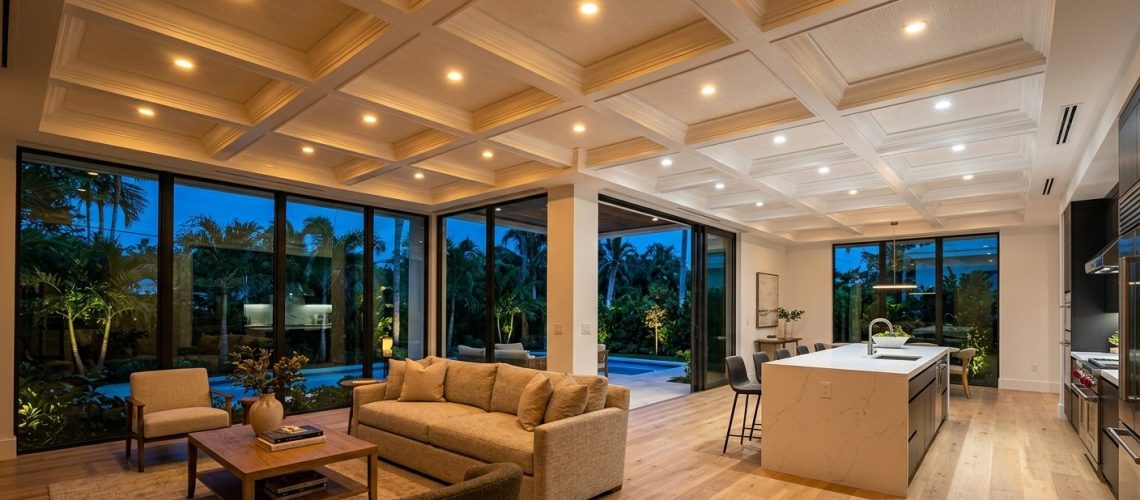
Nearly 70% of homeowners report that better lighting dramatically transforms how they feel about their living spaces — yet lighting is one of the most overlooked elements in home renovation planning. If you’ve been living with dim, outdated fixtures or harsh overhead bulbs, LED recessed lighting offers a clean, modern solution that improves aesthetics, energy efficiency, and home value all at once.
This guide walks South Florida homeowners through everything they need to know about recessed lighting installation — room by room — so you can make smart decisions about your next home lighting upgrade.
Why LED Recessed Lights Are Worth the Investment
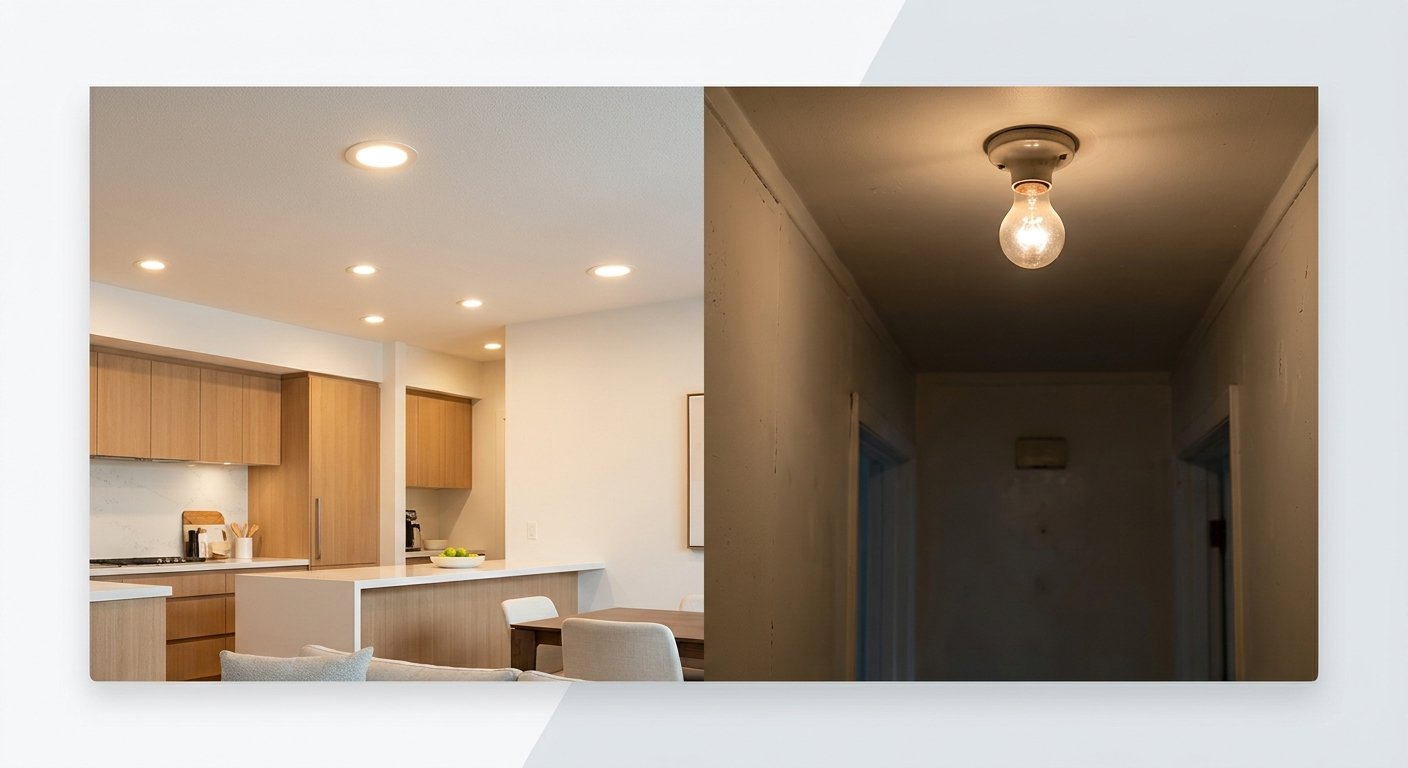
LED recessed lights have become the standard choice for modern home lighting, and for good reason. Compared to traditional incandescent or halogen fixtures, LEDs consume up to 75% less energy and last significantly longer, according to the U.S. Department of Energy’s lighting guidance. For South Florida homeowners running air conditioning around the clock, reducing heat output from light fixtures is an added benefit — traditional bulbs generate substantial heat that can raise indoor temperatures.
Beyond efficiency, LED recessed lights offer versatility. They’re available in a wide range of color temperatures — from warm 2700K tones ideal for bedrooms to cool 5000K outputs suited for garages or workshops. Many modern fixtures are dimmable and compatible with smart home systems, making them a natural complement to whole-home automation upgrades.
Understanding Recessed Lighting Basics Before You Start
Before diving into room-specific recommendations, it helps to understand a few key concepts:
- Can size: Recessed lights are typically 4-inch or 6-inch in diameter. Smaller cans work well in tighter spaces; larger ones provide broader light distribution.
- Trim style: Baffle trims (ribbed interior) reduce glare; reflector trims maximize brightness; eyeball trims allow directional adjustment.
- IC vs. non-IC rated: In Florida homes where insulation in the ceiling is common, IC-rated (insulation contact) fixtures are essential for safety and code compliance.
- Wet vs. damp ratings: Bathrooms and covered outdoor areas require fixtures rated for wet or damp environments.
South Florida’s humidity levels and frequent thunderstorms add another layer of consideration. Moisture can infiltrate ceiling cavities, making proper fixture ratings and professional installation even more critical in our region.
Room-by-Room Recessed Lighting Design Guide
Living Room and Main Living Areas
The living room demands flexible lighting that can shift from bright and functional during the day to warm and relaxed in the evening. A layered approach works best here:
- Space 6-inch recessed lights approximately 4 feet apart in a grid pattern for even general lighting.
- Add directional eyeball trim fixtures to accent artwork, built-in shelving, or architectural features.
- Install dimmer switches to control ambiance — this requires compatible LED fixtures and dimmers rated for LED loads.
- Aim for a color temperature of 2700K to 3000K for a warm, inviting feel.
In open-concept homes common throughout Palm Beach and Broward County, recessed lighting helps define zones without the visual clutter of multiple pendant lights or floor lamps.
Kitchen Lighting
Kitchens require the most strategic recessed lighting design of any room. You’ll want bright, shadow-free task lighting for prep areas alongside gentler ambient light for the overall space.
- Position recessed lights directly above countertops, islands, and the sink — not just in the center of the room.
- Use 4-inch cans over the island for focused task lighting; 6-inch fixtures work well for general ceiling illumination.
- Choose a color temperature of 3000K to 4000K for accurate food preparation visibility without feeling clinical.
- Ensure any fixtures above the sink are rated for damp locations.
If your kitchen still relies on a single center-mounted fixture, switching to a recessed lighting layout is one of the most impactful home lighting upgrades you can make.
Master Bedroom
Bedroom lighting should prioritize comfort over brightness. Heavy overhead lighting that can’t be dimmed is one of the most common lighting complaints homeowners have.
- Use a warm 2700K color temperature to encourage relaxation.
- Position recessed lights around the perimeter of the room rather than directly above the bed — avoiding downlighting directly into your eyes when lying down.
- Add directional fixtures near closets or dressing areas for functional visibility.
- Always pair bedroom recessed lights with dimmable LED fixtures and a compatible dimmer switch.
Bathrooms
Bathroom lighting is where moisture ratings become non-negotiable. Florida’s humidity makes this especially important — steam and condensation can damage improperly rated fixtures over time, creating both a safety hazard and a code violation.
- Use wet-rated fixtures in showers and tub areas; damp-rated is acceptable for the general bathroom ceiling.
- Position lights on either side of the vanity mirror (or above it) to reduce facial shadows during grooming tasks.
- A color temperature of 3000K to 3500K provides flattering, accurate light for bathrooms.
- Consider smaller 4-inch fixtures in bathrooms to maintain a clean, proportional look.
Home Office
With remote work continuing to be a major part of professional life in 2026, home office lighting matters more than ever. Poor lighting contributes to eye strain, headaches, and reduced productivity.
- Choose a cooler color temperature of 4000K to 5000K to support alertness and concentration.
- Position recessed lights to avoid creating glare on computer monitors — side placement rather than directly overhead works better for desk setups.
- Add directional fixtures to illuminate bookshelves or whiteboards used for video calls.
Garage and Utility Spaces
Garages are one of the most underlit spaces in most homes. For homeowners in Miami-Dade and Palm Beach County who are also adding EV chargers, proper garage lighting becomes even more practical. Well-lit garage spaces support safer vehicle maneuvering and charging station use. Learn more about EV charger installation services if you’re planning a full garage upgrade.
- Use 5000K daylight-range LED fixtures in garages for maximum visibility.
- Space fixtures every 4 to 6 feet depending on ceiling height.
- Ensure fixtures are appropriately rated for dusty or humid environments.
LED Retrofit Installation: Upgrading Existing Fixtures
If your home already has recessed fixtures but they use older incandescent or CFL bulbs, an LED retrofit installation is an efficient solution. Retrofit kits fit into existing housings, converting them to LED without the cost or disruption of full replacement.
However, not every existing housing is compatible with every retrofit kit. A licensed electrician can assess your current fixtures, verify compatibility, confirm safe insulation clearance, and ensure proper wiring connections. This is especially important in older Palm Beach County and Broward County homes where wiring may be decades old.
The National Electrical Code (NEC), updated regularly by NFPA, governs safe electrical installation practices — including lighting retrofits — and Florida has adopted its own state amendments. Professional installation ensures your upgrade meets all applicable code requirements.
How Many Recessed Lights Do You Need?
A simple rule of thumb: divide your ceiling height by 2 to determine spacing distance between fixtures. For an 8-foot ceiling, space lights approximately 4 feet apart. For a 10-foot ceiling, space them about 5 feet apart.
For total fixture count, divide the room’s square footage by the spacing distance squared. In practice, most 12×15 living rooms benefit from 6 to 8 recessed fixtures to achieve even light distribution without dark corners.
That said, every room is different. A professional recessed lighting design consultation accounts for natural light sources, furniture placement, ceiling features, and your specific preferences.
Frequently Asked Questions
Can I install recessed lighting without an electrician?
In most cases, recessed lighting installation requires accessing your home’s electrical system — including running new wiring, connecting to circuit breakers, and ensuring proper load balancing. In Florida, this work must be performed by or under the supervision of a licensed electrical contractor. Attempting DIY electrical work without proper licensure can create safety hazards, void homeowner’s insurance, and result in code violations that complicate future home sales.
How long does recessed lighting installation take?
A typical room with 6 to 8 new recessed fixtures can usually be completed in half a day to a full day, depending on ceiling accessibility and wiring requirements. LED retrofit installation in existing housings is generally faster. Your electrician can provide a more accurate timeline after assessing your specific home.
Are LED recessed lights compatible with smart home systems?
Yes — many LED recessed fixtures are designed to work with popular smart home platforms. However, compatibility depends on your specific smart home ecosystem and the type of dimmers or switches involved. A licensed electrician familiar with smart home integration can ensure your new lighting works seamlessly with your existing or planned system.
How much does recessed lighting installation cost in South Florida?
Costs vary based on the number of fixtures, ceiling accessibility, whether new wiring is needed, and permit requirements. Getting a detailed quote from a licensed local contractor is always the best approach for accurate pricing specific to your home.
Do LED recessed lights require a permit in Florida?
Permits are generally required when adding new circuits or making significant changes to existing electrical systems. Your licensed electrician will determine permit requirements for your specific project and handle the permitting process accordingly.
Ready to Upgrade Your Home’s Lighting?
LED recessed lighting transforms how your home looks and feels — improving functionality, reducing energy costs, and adding lasting value to your property. Whether you’re planning a single-room refresh or a whole-home lighting redesign, professional installation ensures the job is done safely, correctly, and backed by quality you can count on.
Global Power & AC Corp is a licensed and insured electrical contractor serving homeowners and property managers throughout Palm Beach, Broward, and Miami-Dade counties. We offer same-day service availability and stand behind our work with an 8-year workmanship warranty. From recessed lighting installation to panel upgrades and smart home integration, our team delivers reliable electrical solutions tailored to South Florida homes.
Call us today at (561) 203-0080 to schedule your lighting consultation and take the first step toward a brighter, more beautiful home.