
Electric vehicle adoption across Palm Beach, Broward, and Miami-Dade counties has increased dramatically, with thousands of South Florida homeowners making the switch to cleaner transportation. One of the most common questions new EV owners ask is: how long will it take to install a home charging station? The answer depends on several factors specific to your property, existing electrical infrastructure, and local permitting requirements.
Understanding the timeline for EV charger installation helps you plan accordingly and ensures you’re never left waiting to charge your vehicle. While some installations can be completed in just a few hours, others may require multiple days depending on electrical panel upgrades, permit processing, and homeowner association approvals common throughout South Florida communities.
Typical Installation Timeframes for Home EV Charging Stations
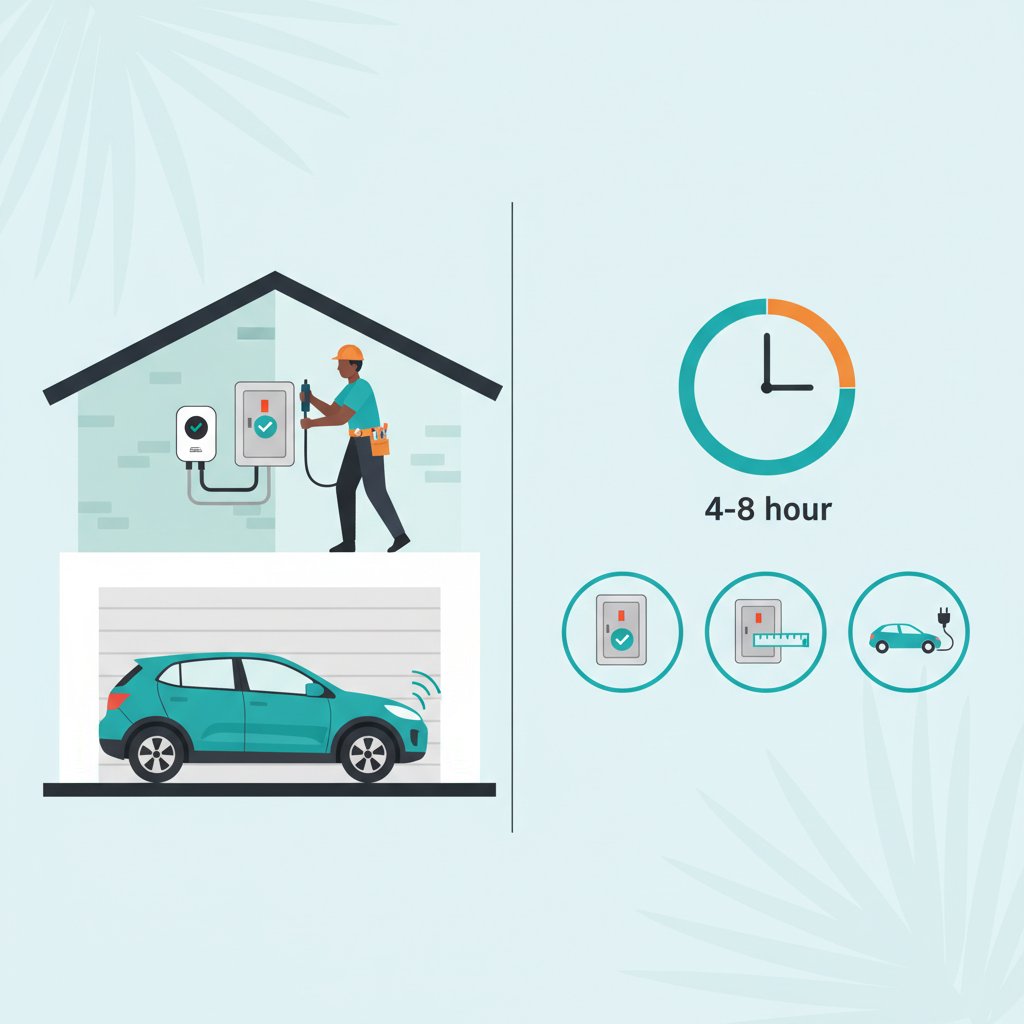
Most straightforward Level 2 EV charger installations in South Florida take between 4 to 8 hours when performed by a qualified ev charger electrician. This timeframe assumes your existing electrical panel has adequate capacity, the charger location is within reasonable distance of the panel, and no major electrical upgrades are required.
For more complex installations requiring panel upgrades, trenching for underground conduit, or extensive wiring runs, the complete project timeline can extend from 2 to 5 days. This extended timeframe includes permitting, inspection scheduling, and actual installation work.
Same-Day Installation Scenarios
Same-day ev charger installation is possible under ideal conditions. If your electrical panel is modern with available breaker space, located near your desired charging location, and you’ve already obtained necessary permits, an experienced electrician can complete the installation within a single visit. This typically includes mounting the charging unit, running appropriate gauge wiring, installing a dedicated circuit breaker, and final testing.
Homes built within the last ten years in newer South Florida developments often have electrical systems designed to accommodate additional loads, making them prime candidates for faster installations. Many builders in communities throughout Miami-Dade and Broward counties have begun pre-wiring garages for future EV charging needs.
Multi-Day Installation Projects
When electrical panel upgrades are necessary, the ev charger installation cost increases along with the timeline. Upgrading from a 100-amp to 200-amp service requires coordination with your local utility company, which can add several days to the project. The actual upgrade work typically takes 6 to 10 hours, but scheduling the utility disconnect and reconnect adds time.
Properties requiring significant wiring runs from the panel to a detached garage or distant parking area also need additional time. Running conduit through walls, underground, or along exterior surfaces requires careful planning and execution to meet code requirements while maintaining your property’s aesthetics.
Factors That Affect EV Charger Installation Duration
Several variables unique to South Florida properties influence how long your home ev charging station installation will take. Understanding these factors helps set realistic expectations.
Electrical Panel Capacity and Condition
Your home’s electrical panel is the starting point for any EV charger installation assessment. A Level 2 EV charger typically requires a dedicated 40 to 60-amp circuit, representing a significant electrical load. Panels without available capacity or those showing signs of age-related wear require upgrades before charger installation can proceed.
South Florida’s humid climate accelerates corrosion in older electrical panels, particularly in coastal areas of Palm Beach and Broward counties. Panels more than 20 years old often benefit from replacement regardless of EV charging needs, and combining these projects makes practical and financial sense.
Distance from Panel to Charging Location
The physical distance between your electrical panel and desired charger mounting location directly impacts installation time. Each additional foot of wiring requires conduit installation, wire pulling, and securing—all time-intensive tasks when done properly according to National Electrical Code standards.
Installations where the panel sits on the opposite side of the home from the garage can add 2 to 4 hours to the project. Exterior conduit runs must withstand South Florida’s intense sun exposure and occasional hurricane-force winds, requiring robust mounting and weather-resistant materials.
Permitting and Inspection Requirements
Palm Beach, Broward, and Miami-Dade counties all require electrical permits for Level 2 EV charger installations. Permit processing times vary by municipality, ranging from same-day approval in some areas to 5 to 10 business days in others.
After installation, a county or municipal electrical inspector must verify the work meets code requirements before the system can be energized. Scheduling inspections typically adds 1 to 3 business days to the overall timeline, though some jurisdictions offer same-day or next-day inspection appointments.
Working with an experienced electrical contractor familiar with local permitting processes significantly reduces delays. Established companies maintain relationships with permitting offices and understand specific requirements for each South Florida jurisdiction.
Homeowner Association Approvals
Many South Florida residential communities operate under homeowner association governance, requiring approval before installing visible electrical equipment. HOA approval processes range from quick administrative reviews to monthly board meetings, potentially adding weeks to your timeline.
Condo installations present additional complexity, often requiring building management approval and coordination with shared electrical infrastructure. Some newer condo developments in Miami-Dade have established streamlined EV charging approval processes, while older buildings may need engineering assessments before approving installations.
Charger Type and Features
The specific home ev charging station model you select affects installation complexity. Basic hardwired units offer straightforward installation, while smart chargers with WiFi connectivity, load management features, or integration with home automation systems require additional configuration time.
Wall-mounted chargers generally install faster than pedestal-mounted units requiring concrete footings. Tesla Wall Connectors, ChargePoint Home Flex, and JuiceBox chargers each have specific installation requirements that qualified electricians must follow to maintain warranty coverage.
The Step-by-Step Installation Process
Understanding the complete installation process helps you appreciate why quality work takes time and why choosing experienced professionals matters for safety and reliability.
Initial Assessment and Planning
A qualified ev charger electrician begins with a thorough site assessment, examining your electrical panel, determining optimal charger placement, planning the wiring route, and identifying potential obstacles. This assessment typically takes 30 to 60 minutes and provides the foundation for accurate time and cost estimates.
During this phase, electricians measure distances, check panel capacity, assess wire gauge requirements, and discuss your charging needs and vehicle specifications. This information determines whether your project falls into the simple 4-hour category or requires more extensive work.
Permitting and Approval
Once you approve the installation plan, your electrical contractor submits permit applications to the appropriate local building department. Complete applications include circuit details, charger specifications, installation diagrams, and sometimes load calculations demonstrating your electrical system can safely handle the additional demand.
Professional electrical companies handle permit applications on your behalf, ensuring accuracy and completeness to avoid delays. They also schedule required inspections at appropriate project stages.
Physical Installation Work
On installation day, electricians arrive with all necessary materials, including the charging unit, appropriate gauge copper wiring, dedicated circuit breaker, conduit, mounting hardware, and safety equipment. The physical installation follows a methodical sequence:
- Mounting the charging unit at the predetermined location, ensuring proper height and clearances
- Installing conduit from the electrical panel to the charger location
- Pulling appropriate gauge wire through the conduit (typically 6 AWG or larger for 40-50 amp circuits)
- Installing the dedicated circuit breaker in the electrical panel
- Making all electrical connections following manufacturer specifications
- Sealing all penetrations to prevent moisture intrusion in South Florida’s humid climate
- Testing the complete system for proper operation and safety
Quality installations include proper grounding, GFCI protection where required, and secure mounting capable of withstanding accidental vehicle contact or extreme weather events.
Inspection and Final Approval
After completing installation work, the county or municipal electrical inspector verifies compliance with National Electrical Code requirements and local amendments. Inspectors check wire sizing, breaker ratings, grounding, mounting security, and overall workmanship.
Passing inspection typically happens on the first visit when work is performed by experienced professionals. Failed inspections require corrections and re-inspection, adding days to the timeline and potentially increasing costs.
Cost Considerations and Installation Timing
The ev charger installation cost correlates somewhat with installation duration, as more complex projects requiring additional time also involve more materials and labor. Understanding cost factors helps you budget appropriately.
Basic installations for homes with adequate panel capacity and short wiring runs typically range from $800 to $1,500 in South Florida, representing 4 to 6 hours of skilled electrical work plus materials. These straightforward projects can often be completed within one day.
Installations requiring panel upgrades range from $2,500 to $5,000 or more, depending on the scope of electrical improvements needed. These projects take multiple days due to utility coordination, permit processing, and the additional work involved in service upgrades.
Extensive projects involving long wiring runs, trenching, or multiple charging stations can exceed $6,000 and require a week or more to complete properly. While these timelines and costs may seem substantial, they reflect the complexity of safely adding significant electrical loads to your home.
Choosing the Right Electrician for Your Installation
Selecting a qualified, experienced electrical contractor significantly impacts both installation quality and timeline. Not all electricians have specific training and experience with EV charging systems, and working with specialists ensures efficient, code-compliant installations.
Look for contractors offering comprehensive warranties on their installation work. Quality companies stand behind their craftsmanship with guarantees extending several years, protecting your investment and providing peace of mind.
Same-day service availability demonstrates a company’s responsiveness and resource capacity. Established electrical contractors throughout Palm Beach, Broward, and Miami-Dade counties maintain adequate staff and inventory to handle installations promptly without compromising quality.
Verify that your chosen electrician pulls proper permits and schedules required inspections. Some contractors cut corners by skipping permitting, which creates liability issues and potentially violates local codes. Legal, permitted work protects you and maintains your property value.
Preparing Your Home for Faster Installation
Homeowners can take several steps to minimize installation time and ensure smooth project completion.
Clear the garage or parking area where charger installation will occur, removing vehicles, storage items, and obstacles that might impede work. Electricians work more efficiently when they have unobstructed access to both the installation location and electrical panel.
If you live in an HOA community, begin the approval process early. Submit your application with detailed installation plans well before scheduling electrical work to avoid delays.
Discuss your vehicle’s charging requirements with your electrician during the assessment phase. Different EV models have varying charging capabilities, and matching your home ev charging station to your vehicle’s specifications ensures optimal charging speeds without over-building the system.
Consider scheduling installation during South Florida’s dry season from November through April. While quality electrical work proceeds safely year-round, avoiding the peak of hurricane and thunderstorm season can prevent weather-related delays.
Trust Professional Installation for Safety and Reliability
While DIY approaches might seem cost-effective, EV charger installation involves high-voltage electrical work requiring professional expertise. Improper installations create fire hazards, damage your vehicle’s charging system, and void both equipment and home insurance coverage.
Licensed electricians understand the intricacies of Level 2 EV charger requirements, including proper wire sizing for South Florida’s high ambient temperatures, appropriate circuit protection, and secure mounting capable of withstanding environmental stresses. Their training and experience ensure installations that perform reliably for years.
Professional installation also maintains your home’s resale value. Unpermitted electrical work discovered during home inspections creates complications for future sales, while properly permitted installations with passed inspections demonstrate quality improvements.
Ready to install your home EV charging station? Global Power & AC Corp provides expert EV charger installation throughout Palm Beach, Broward, and Miami-Dade counties, backed by an industry-leading 8-year warranty on all installation work. Our licensed electricians complete most installations within one day, handling all permitting and inspections while you focus on enjoying your electric vehicle. Contact us today for a free assessment and discover why South Florida homeowners trust us for safe, reliable electrical solutions.
Frequently Asked Questions
How long does a basic Level 2 EV charger installation take?
A straightforward Level 2 EV charger installation typically takes 4 to 8 hours when your electrical panel has adequate capacity and the charger location is near the panel. Most homeowners can have their charging station operational within a single day under ideal conditions.
What causes EV charger installation to take longer than expected?
Electrical panel upgrades, long wiring runs from the panel to the charging location, permit processing delays, HOA approval requirements, and inspection scheduling can extend installation timelines from days to weeks. Working with experienced contractors who handle permitting and scheduling helps minimize delays.
Do I need a permit for EV charger installation in South Florida?
Yes, Palm Beach, Broward, and Miami-Dade counties all require electrical permits for Level 2 EV charger installations. Permits ensure work meets safety codes and typically add 1 to 10 days to the overall timeline depending on the municipality. Professional contractors handle permitting as part of their service.
Can an electrician install my EV charger the same day I call?
While some electrical companies offer same-day service, EV charger installation usually requires an initial assessment, permit acquisition, and scheduling. The physical installation work can often be completed in one day, but the complete process from initial contact to final inspection typically takes several days to two weeks.
How much does EV charger installation cost in South Florida?
Basic installations with adequate existing electrical capacity range from $800 to $1,500, while installations requiring panel upgrades cost $2,500 to $5,000 or more. Complex projects with extensive wiring runs can exceed $6,000. Costs reflect materials, labor, permits, and the specific requirements of your property.
What’s the difference between a hardwired and plug-in EV charger installation?
Hardwired chargers connect directly to your electrical system without a plug, typically installing slightly faster and providing a cleaner appearance. Plug-in chargers require a NEMA 14-50 or similar outlet installation, offering portability if you move. Both options require dedicated circuits and professional installation for safety.